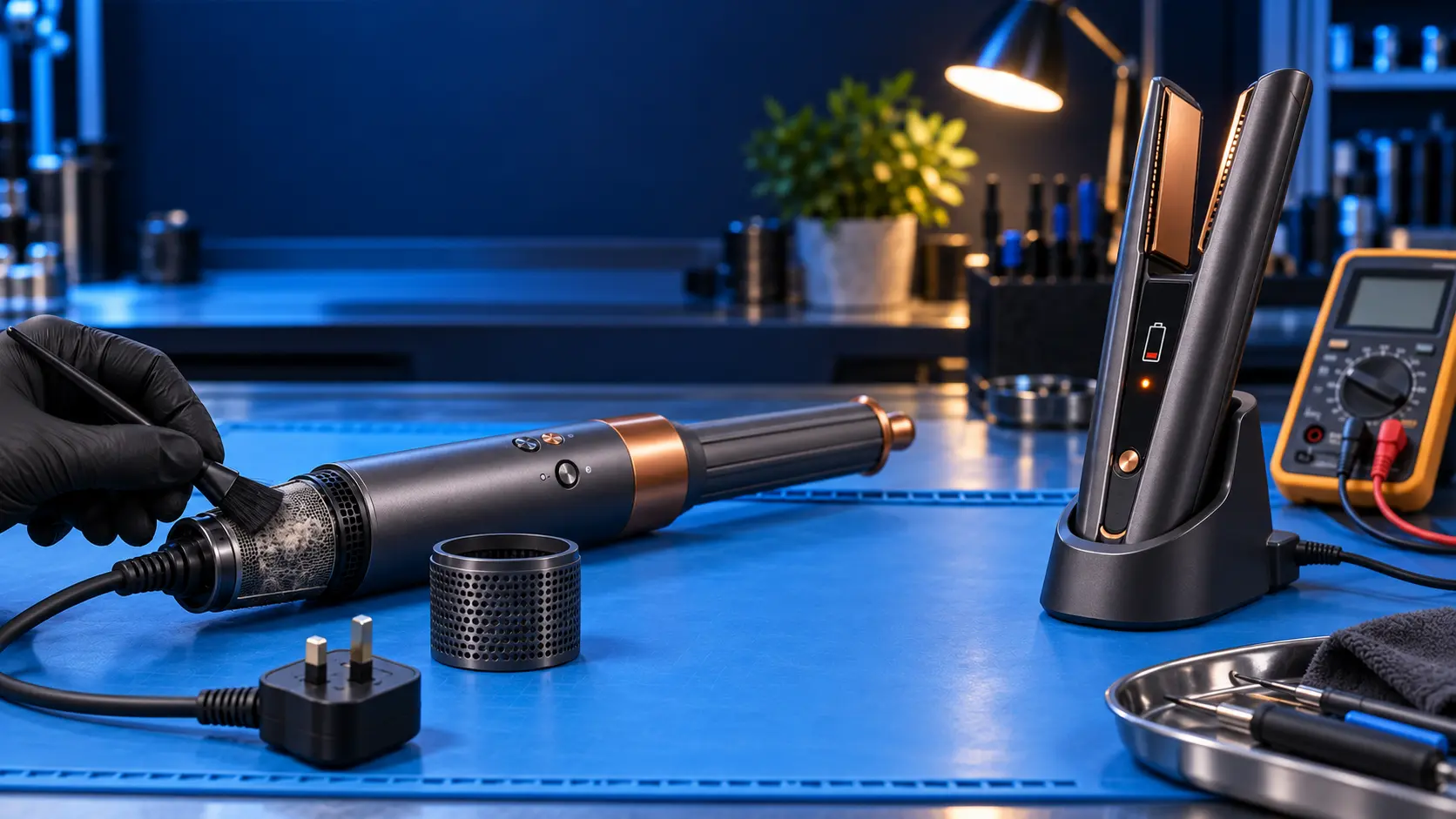
Once a month for normal home use, weekly if it's working in a salon, and straight away whenever the three white lights start flashing — that's the short answer, and for most people the monthly figure is Dyson's own recommendation and it's the right one.
The longer answer is that "normal use" covers an enormous range, and what you put on your hair matters more than how often you switch the dryer on.
How often, by how you actually use it
Everyday use at home, once or twice a day — monthly. This is Dyson's figure and it's the one to work to.
A few times a week, minimal product — every couple of months is honestly fine.
Heavy product user — hairspray, dry shampoo, serums, mousse — every two weeks. Product is what blocks filters, not air.
Salon or any commercial use — weekly as a minimum, and don't be surprised if it wants doing more often than that.
The three white lights flashing continuously — now, whatever the calendar says.
If you're somewhere between two of those, round down to the shorter interval. The job takes two minutes and costs nothing, and there is no such thing as cleaning it too often.
Why monthly is a floor, not a target
Filters don't block gradually and politely. They block slowly for months and then quickly.
What actually happens is that product mist dries onto the mesh in layers. For a long time the airflow barely changes and you notice nothing. Then you cross a threshold, the restriction starts making the motor work harder, the temperature climbs, and suddenly the dryer is cutting out mid-blow-dry and you think it's broken.
The dryer that arrives here "faulty" is very often a dryer that was fine six weeks ago. Nothing failed. It just crossed the line.
So monthly isn't a maintenance schedule so much as a way of never getting near that line in the first place.
Salons are a different question entirely
A salon dryer runs for hours a day in a room where hairspray hangs in the air. It will block many times faster than the same machine at home, and weekly is genuinely the minimum rather than a cautious suggestion.
Worth knowing too: Dyson's consumer guarantee doesn't cover commercial use, or use beyond a couple of hours a day. That's precisely why the Professional edition exists as a separate machine with a heavy-duty filter. If you're running consumer Supersonics on a salon floor you're outside the manufacturer's cover no matter how new they are — which makes the filter routine the only thing standing between you and buying another one.
I've written more on what salon use does to these if you're running them commercially.
The lights will tell you, if you let them
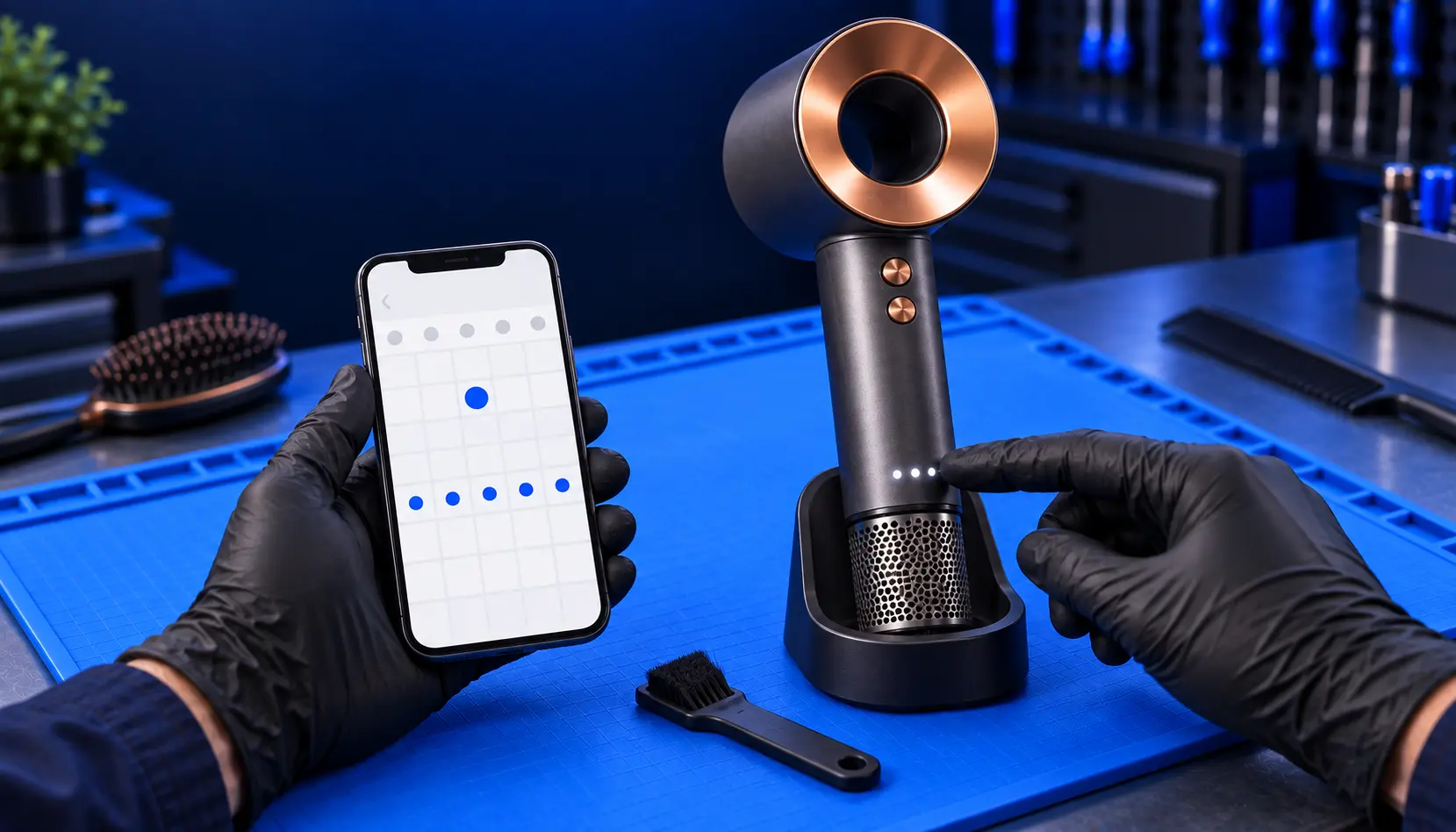
Three white LEDs flashing continuously is the filter warning. It isn't a fault, nothing has failed, and there's no code to look up — it's the machine asking for the two-minute job.
Most people I speak to have never known what it meant, which is a shame, because it's the one bit of maintenance a Supersonic genuinely asks you for.
Don't wait for it, though. By the time it flashes you've already had reduced airflow for a while.
Common questions
What if I've never cleaned it and it's years old?
Clean it today, and don't expect that alone to fix everything. Once deposits are past the mesh and into the airflow path, brushing the outside won't reach them. Here's how to do the clean properly, and if the airflow doesn't come back afterwards, the restriction is further in.
Does cleaning it more often wear it out?
No, as long as you're brushing it dry and gently rather than scrubbing or washing it. Light, frequent cleans are far kinder to a filter than occasional hard ones.
Should I replace the filter cage instead of cleaning it?
Usually not — the cage is cleanable and only needs replacing if it's physically damaged or the mesh has been deformed. That's a judgement call, and I've been through when it's worth replacing rather than cleaning.
My dryer still cuts out after a monthly clean. Now what?
Then the filter wasn't the problem, or wasn't the whole problem. That's the point for a proper strip and clean of the whole airflow path with a new inner filter — £49, with nothing else to pay.
If you take one thing from this: put it in your phone as a recurring reminder. Monthly at home, weekly in a salon.
It's two minutes, it costs nothing, and it's the difference between a Supersonic that lasts a decade and one that arrives on my bench at five.
The Repair Works is an independent UK repair service, run by me, Paul — 25 years of hands-on repair experience, working by post for customers across the whole country. Not affiliated with or endorsed by Dyson.