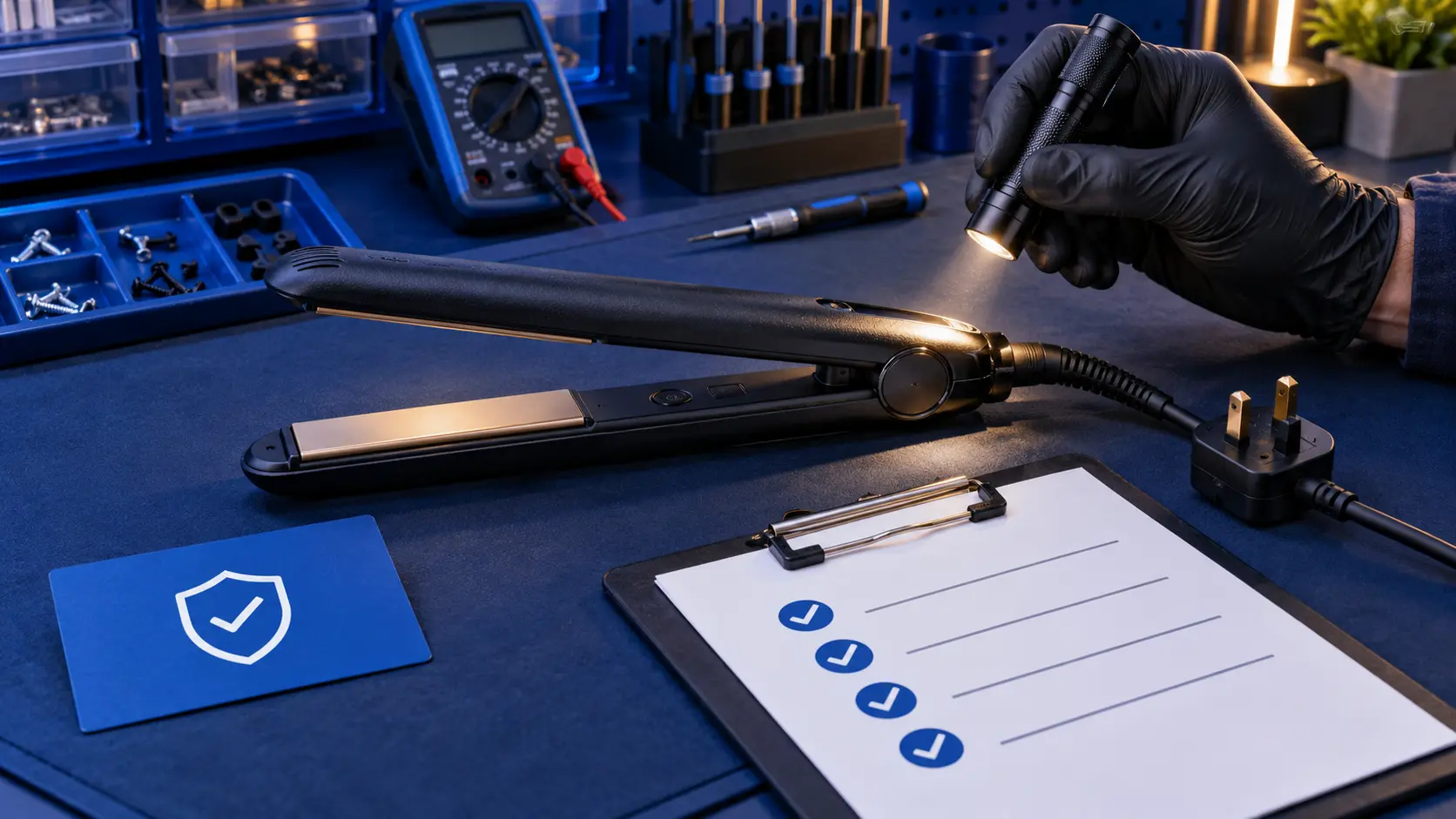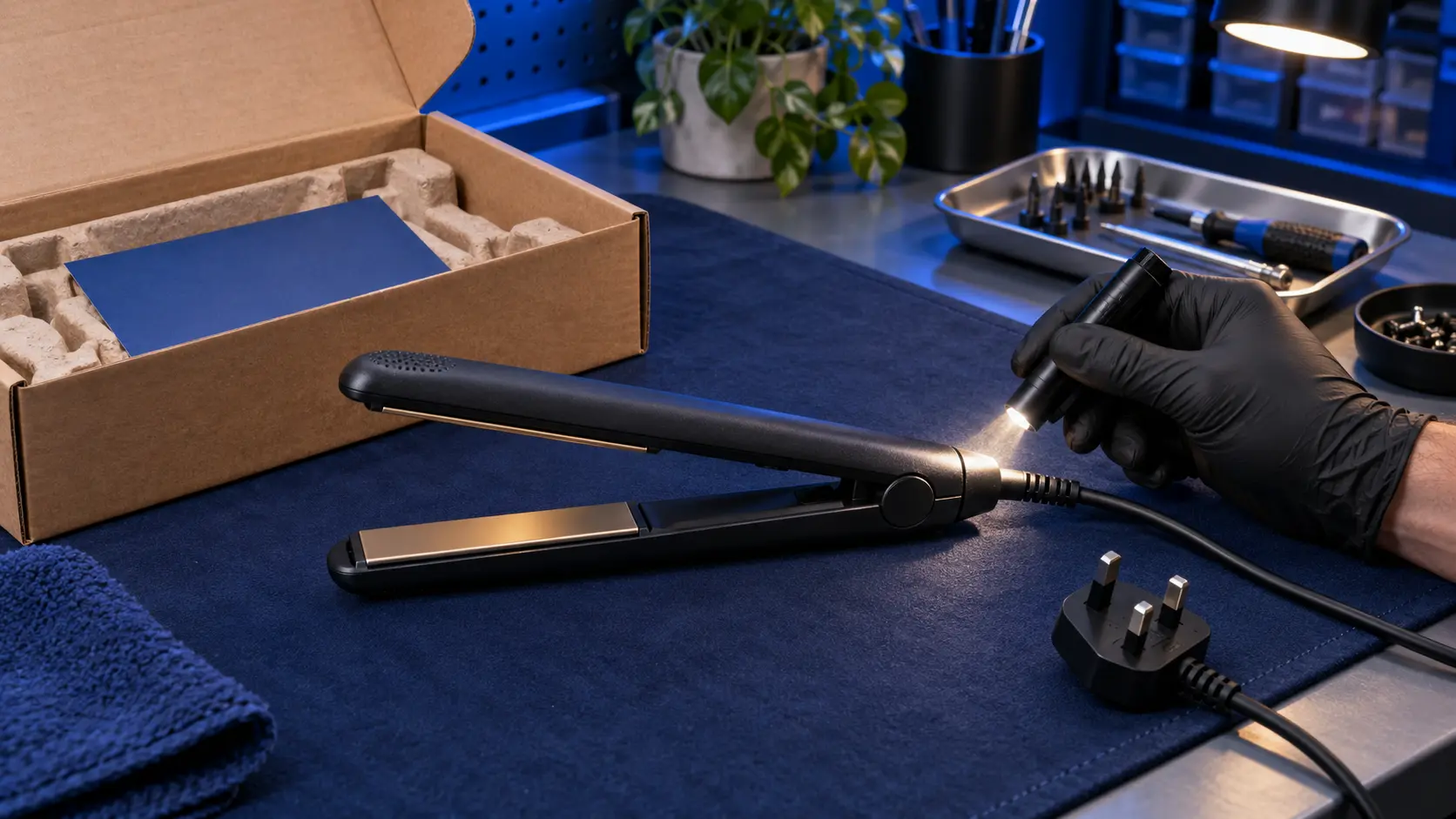
The GHD Mk4 is one of the true classics — a workhorse straightener that's still going strong in bathrooms up and down the country years after it was made. And that longevity is exactly why it's worth repairing: a Mk4 that's stopped working has usually just lost one small, cheap component, while the rest of it is as good as ever. These are among the most repairable GHDs there are, and they're straightforward to fix. Here's what typically goes wrong and how it's put right.
I've been repairing electronics for over 25 years, so this is the honest, practical guide for the Mk4 range.
First — is yours a Mk4?
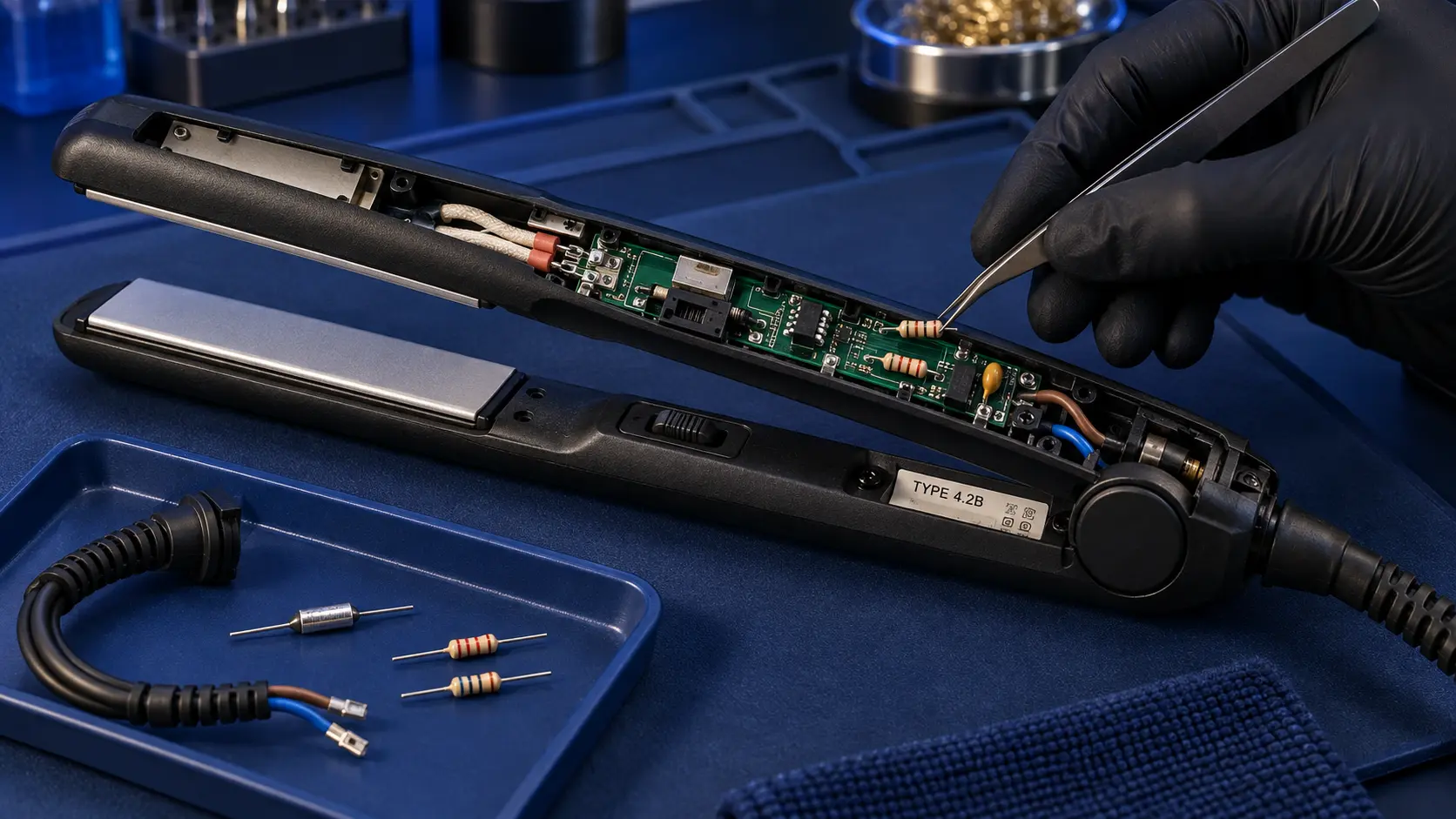
The Mk4 came in several sub-versions, all with a sliding on/off switch, including the 4.0, 4.1, 4.2 and the very common 4.2b (plus wide-plate SS4.0 and mini MS4.0 variants). You'll find the model number on the label inside the arm. If it starts with a 4. you're in Mk4 territory.
Good news up front: because the Mk4 has a sliding switch, it's a repairable model — and being one of the older, simpler designs, it's often one of the more straightforward and satisfying GHDs to bring back to life. If you're unsure whether you've got a Mk4 or the very similar Mk5, how to find your GHD model number will settle it (and much of this guide applies to the Mk5 too).
The most common GHD Mk4 faults
Won't heat up — and the famous R8/R11 fault
The most common Mk4 fault is powering on with the usual lights and beep, but the plates staying cold. On the Mk4 this is often the thermal fuse — but there's a second culprit that Mk4 (and Mk5) owners should specifically know about: the R8 and R11 resistors.
These two small resistors on the circuit board are a well-known weak spot in the Mk4 design. When they fail, they can stop the straighteners heating — and, crucially, they often fail alongside a thermal fuse, or cause a fault to come straight back if they're ignored. This is where a lot of cheaper or less thorough repairs go wrong: swap the fuse, straighteners work for a week, fault returns.
My approach on every Mk4 (and Mk5) repair is to replace R8 and R11 as a preventative measure even if they haven't failed yet — because on these models, doing so is the difference between a repair that lasts and one that doesn't. It's exactly the kind of model-specific knowledge that comes from years on the bench, and it's what a lasting repair depends on. My guide to GHDs that won't heat up explains the R8/R11 fault in more detail.
Cutting out or only working when you hold the cable
The Mk4's mains cable can fail where it flexes near the iron — a classic, inexpensive fix. See my guide to GHD cable faults.
Completely dead
No lights at all points to a power fault — cable, plug fuse or internal fuse (and on the Mk4, sometimes those R8/R11 resistors again). Check the free things first (GHD won't turn on) before it comes in.
One plate cold
One plate heating while the other stays cold is usually a failed heater element on the dead side — repairable, and the Mk4's simpler construction makes this a well-understood job.
What a GHD Mk4 repair costs
The Mk4 is a standard-tier model, so it's a flat £29 all-in — the part, labour, return postage and a full PAT safety test, no hidden charges. (The R8/R11 preventative replacement is included in that price on every Mk4 repair — it's not an extra.) Every repair is backed by my no-fix-no-fee promise — if I can't fix it, you don't pay for the repair — and a 12-month warranty against the same fault returning.
How the repair works
Send your Mk4 in and I'll diagnose the actual fault, fit the correct parts, replace R8/R11 as a preventative so the same fault is less likely to come back, then heat-test the straighteners to confirm both plates reach the right temperature and PAT safety-test them before they come back. I do the work myself, in-house, from start to finish.
Is it worth repairing a GHD Mk4?
Honestly, the Mk4 is one of the most worthwhile GHDs to repair. These are well-built straighteners that have already proven they last, and a fault is almost always a single cheap component rather than the end of the road. £29 to keep a genuinely good, long-lived pair going — instead of £100-plus on a replacement — is an easy call, and it keeps a classic out of landfill. A lot of Mk4 owners are attached to theirs precisely because they've lasted so well; there's rarely any reason to give that up over a £5 part.
If your GHD Mk4 or 4.2b has stopped working, you can book a not heating repair here — or see all the GHD repairs I offer. I'll send simple instructions for posting your straighteners in, confirm the exact fault when they arrive, and get them back to you working as they should.
The Repair Works is an independent UK repair service, run by me, Paul — 25 years of hands-on repair experience, working by post for customers across the whole country. Not affiliated with or endorsed by GHD.