If you've got an early GHD — the Original, or the 3.1b — that's stopped working, you probably already know these were built to last, because yours has. It's not unusual for me to repair straighteners of this era that are fifteen or even twenty years old and still worth every penny of the fix. These early models are simpler than the ones that came after, genuinely repairable, and often deeply worth keeping going. Here's what typically goes wrong and how it's put right.
I've been repairing electronics for over 25 years, so here's the honest guide.
First — is yours an Original or 3.1b?
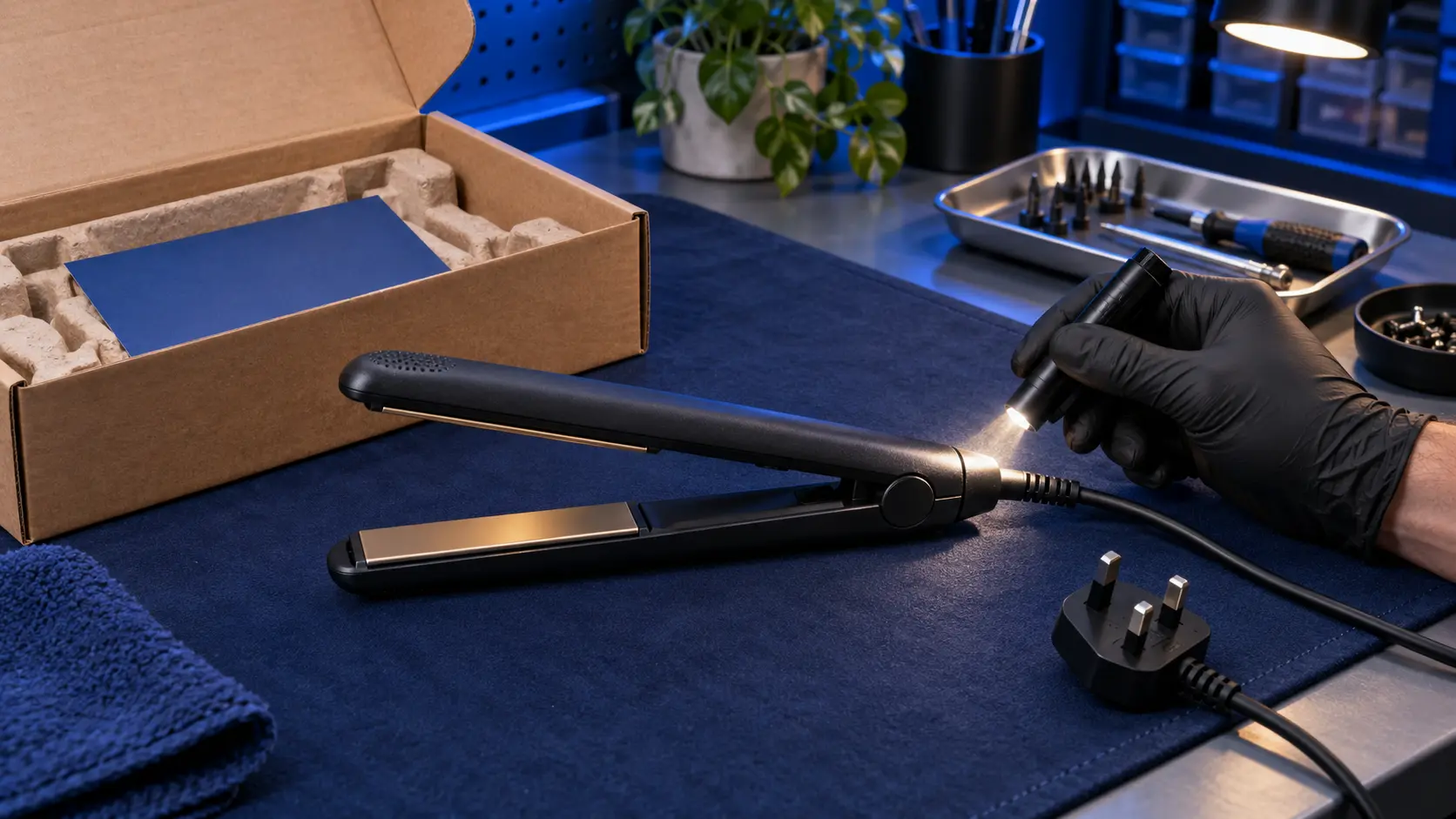
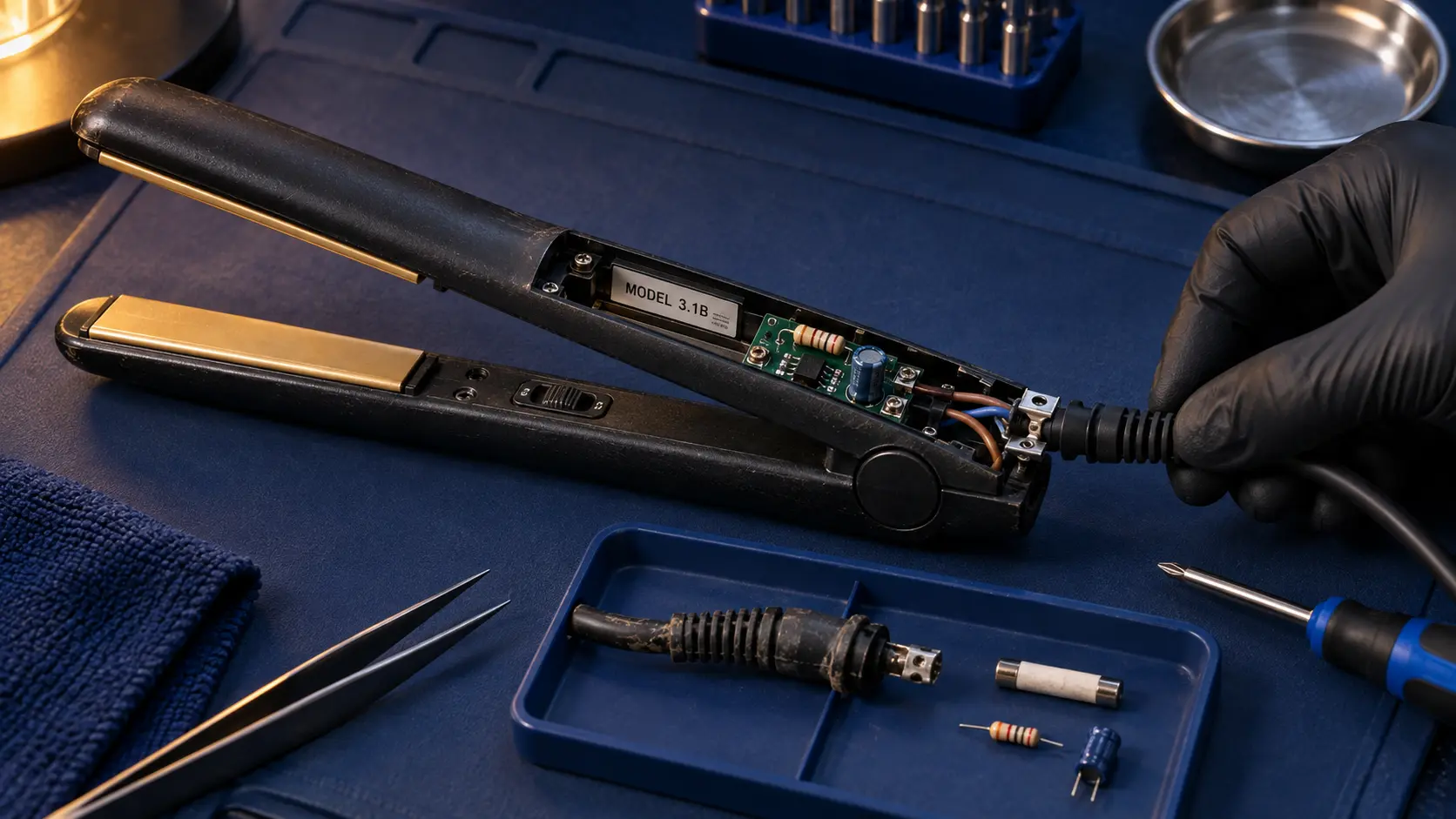
These are among the earliest GHD straighteners, with a sliding on/off switch and a plainer, more utilitarian look than the sleek later models. The 3.1b in particular is the classic of the era. The model marking is usually on the label inside the arm, though on straighteners this age it can be worn — if you can't read it, the give-away is the age and the simple styling. If you're unsure, how to find your GHD model number may help.
Being sliding-switch models, they're repairable — and pleasingly straightforward to work on, thanks to their simpler design.
What's different about repairing an early GHD
A couple of things set these apart from the later models, and they're worth knowing:
No "shiver mode". The cold-weather beeping feature that causes so much confusion on later GHDs (where they refuse to heat below about 11°C) didn't exist on the earliest models. So if your Original or 3.1b won't heat, you can skip the shiver mode check that applies to newer straighteners — it's genuinely a fault rather than a cold-weather quirk.
No R8/R11 resistor fault. The circuit-board weak spot that affects the Mk4 and Mk5 doesn't apply here — the earlier design predates it. So the fault profile is simpler.
In short, these are simpler machines with fewer things to go wrong — which is a big part of why so many have lasted so long.
The most common Original / 3.1b faults
Won't heat up
The classic fault: powers on, but the plates stay cold. On these early models it's very commonly the thermal fuse — a small, inexpensive safety component that weakens and fails with age (and after this many years, age is exactly what these straighteners have). It's a straightforward, satisfying fix. See my guide to GHDs that won't heat up for the full picture.
Cutting out or only working when you hold the cable
After fifteen-plus years of being wound up and unwound, the mains cable on these is a very common point of failure — the internal wires fatigue and break where the flex enters the iron, giving intermittent power. It's a simple, inexpensive replacement. See my guide to GHD cable faults.
Completely dead
No lights at all points to a power fault — most often the cable or the internal thermal fuse on straighteners of this age. Worth checking the plug fuse first (it's free), then it's a standard repair.
One plate cold
A failed heater element on one side — repairable, and the simple construction of these early models makes it a well-understood job.
What a GHD Original / 3.1b repair costs
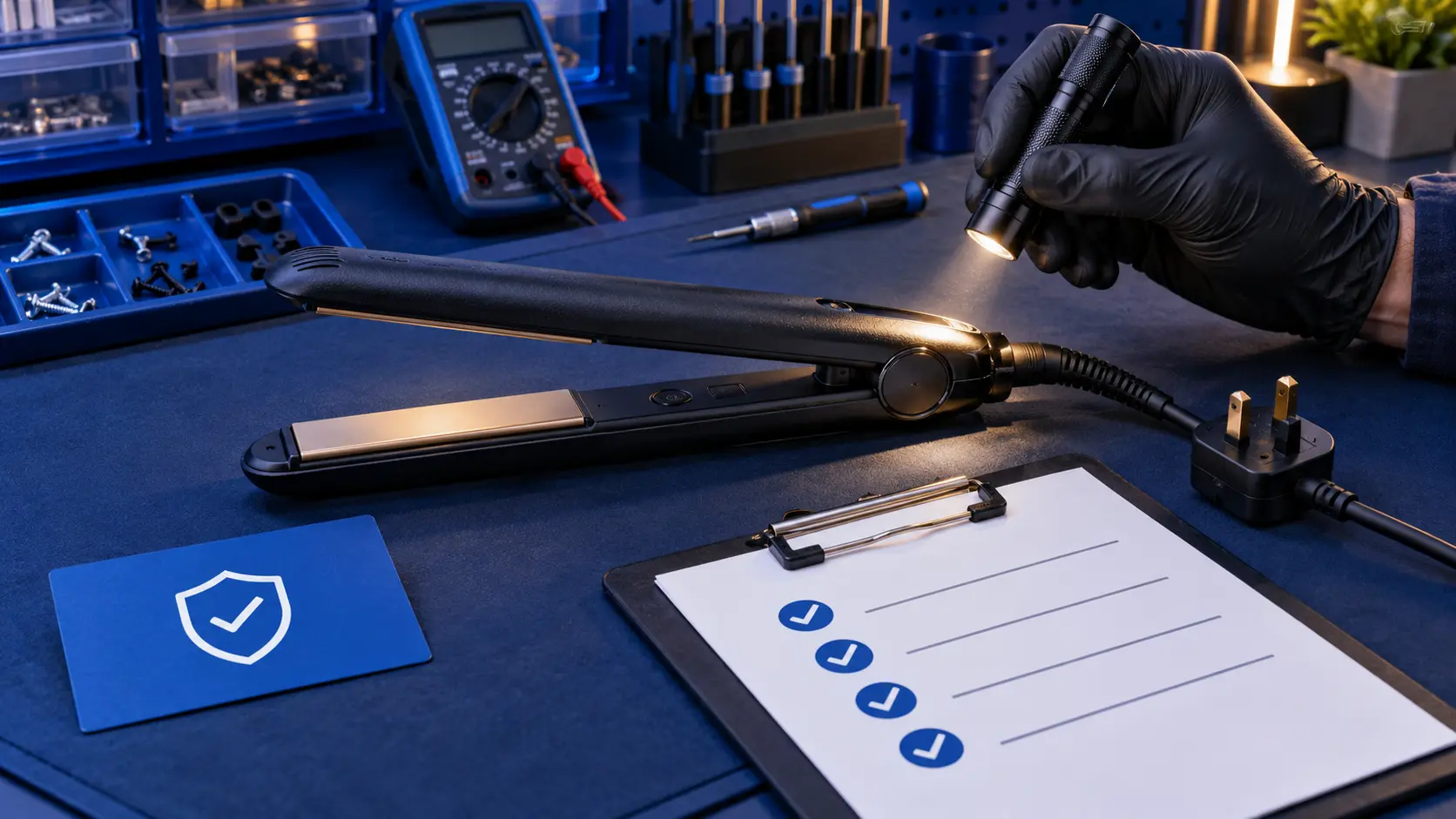
These early models are standard-tier, so it's a flat £29 all-in — the part, labour, return postage and a full PAT safety test, no hidden charges. Every repair is backed by my no-fix-no-fee promise — if I can't fix it, you don't pay for the repair — and a 12-month warranty against the same fault returning. (That safety test is especially reassuring on a straightener of this age.)
Is it worth repairing an old GHD?
This is the big question about the early models, and my honest answer is: usually, yes — and often more than people expect. These straighteners were genuinely well made, they've already proven they last, and there's a good chance yours has plenty of life left once a single worn component is replaced. A £29 repair to keep a fifteen- or twenty-year-old classic going — one that still performs as well as anything newer — is a lovely bit of value, and there's real satisfaction in keeping a good old tool out of landfill.
The only real caution is severe wear or damage — but for a straightener that's simply stopped one day after years of faithful service, the odds are firmly on a worthwhile fix. And if yours genuinely isn't worth repairing, I'll tell you straight.
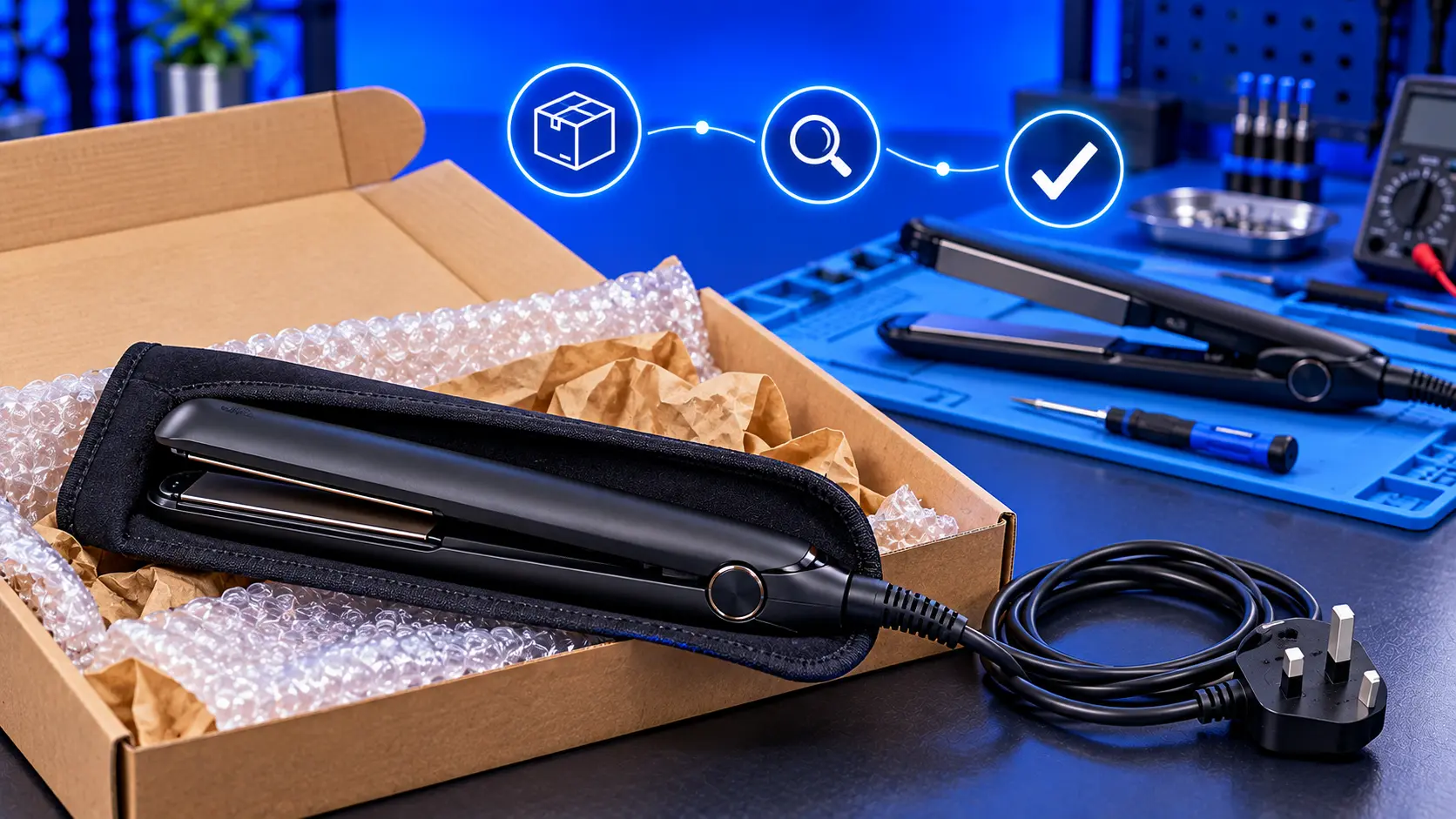
If your GHD Original or 3.1b has stopped working, you can book a not heating repair here — or see all the GHD repairs I offer. I'll send simple instructions for posting your straighteners in and get your classic back to you working as it should.
The Repair Works is an independent UK repair service, run by me, Paul — 25 years of hands-on repair experience, working by post for customers across the whole country. Not affiliated with or endorsed by GHD.