It's one of the most frustrating faults there is: your GHDs power on, the lights come up, you hear the familiar beep — and then nothing. The plates stay stone cold no matter how long you wait. The good news is that a GHD that powers on but won't heat is almost always repairable, and in most cases it's down to one of just three inexpensive parts.
I've been repairing electronics for over 25 years, and "powers on but won't heat" is one of the most common GHD faults. Here's what's actually going on inside, the three usual culprits, and how to get your straighteners working again.
First, rule out the free fix
Before we get into faults, one quick check that costs you nothing. If your GHDs have been somewhere cold — a chilly bathroom, a car, a bag overnight — they may simply be in "shiver mode", a built-in safety feature that stops them heating until they've warmed up. If that might be your situation, it's worth ruling out first, because it isn't a fault at all and you can fix it yourself in minutes. I've explained exactly how in this short guide to GHDs that beep and won't heat.
If you've warmed them through and they still won't heat, then yes — you're looking at a genuine fault. Here are the three most likely causes, in order.
Cause 1: A blown thermal fuse (by far the most common)
If I had to bet on a single cause of a GHD that won't heat, it would be the thermal fuse — this is the culprit in the large majority of cases.
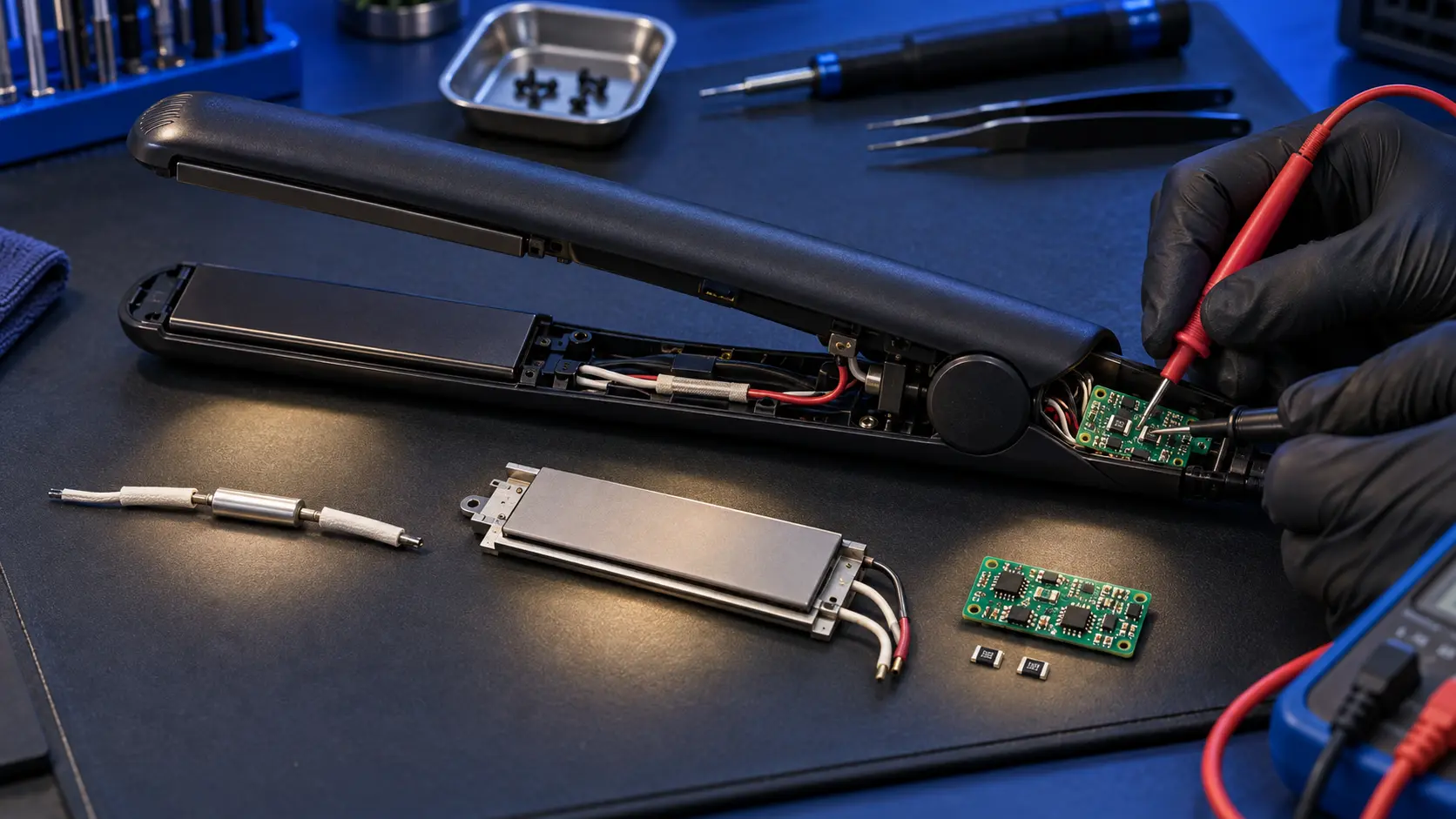
The thermal fuse is a small safety component built into the straighteners. Its job is to cut the power to the heaters if the iron ever gets dangerously hot, protecting you and the device. The trouble is that with age and normal use, these fuses simply weaken and eventually fail — and once a thermal fuse goes, it cuts the heat permanently, even though everything else about the straighteners is working perfectly. That's why you get the classic symptom: full power, all the lights and beeps as normal, but cold plates.
The reassuring part is that a thermal fuse is an inexpensive component and replacing it is a straightforward job for someone who knows GHDs. The important bit — and where DIY guides online often go wrong — is that the replacement fuse must be the correct temperature rating for safety. Fit the wrong one and you remove the very protection the fuse exists to provide, which on a mains-powered device that runs at over 180°C is not something to get wrong.
Cause 2: A failed heater element
The heater elements are what actually get your plates hot. Each plate has its own, and over time one can fail.
The tell-tale sign of a heater element fault is usually one plate heating while the other stays cold. If that's your symptom specifically, it's almost certainly a failed element on the cold side rather than a fuse. (I've written more on that exact fault here.) Occasionally both can be affected, giving you no heat at all.
Replacing a heater element is a more involved job than a fuse — it sits deep in the plate assembly and the straighteners have to be properly stripped down and rebuilt — but it's very much a repairable fault, and far cheaper than replacing the whole pair.
Cause 3: The R8 and R11 resistors (Mk4 and Mk5 models)
This one is specific to certain models, and it's a genuine weak spot in GHD's design. On Mk4 and Mk5 straighteners, two small resistors on the circuit board — known as R8 and R11 — are prone to failing, and when they go they can stop the iron heating.
What makes these worth knowing about is that they often fail alongside a thermal fuse, or cause a repair to come straight back if they're ignored. This is why, on every Mk4 and Mk5 repair I do, I replace R8 and R11 as a preventative measure even if they haven't failed yet — so the same fault can't return a few weeks later. It's the difference between a repair that lasts and one that doesn't, and it's the kind of thing you only know to do after years on the bench.
Whether your straighteners are affected depends on which model you have — so it's worth knowing how to find your GHD model number.
How I fix a "won't heat" GHD
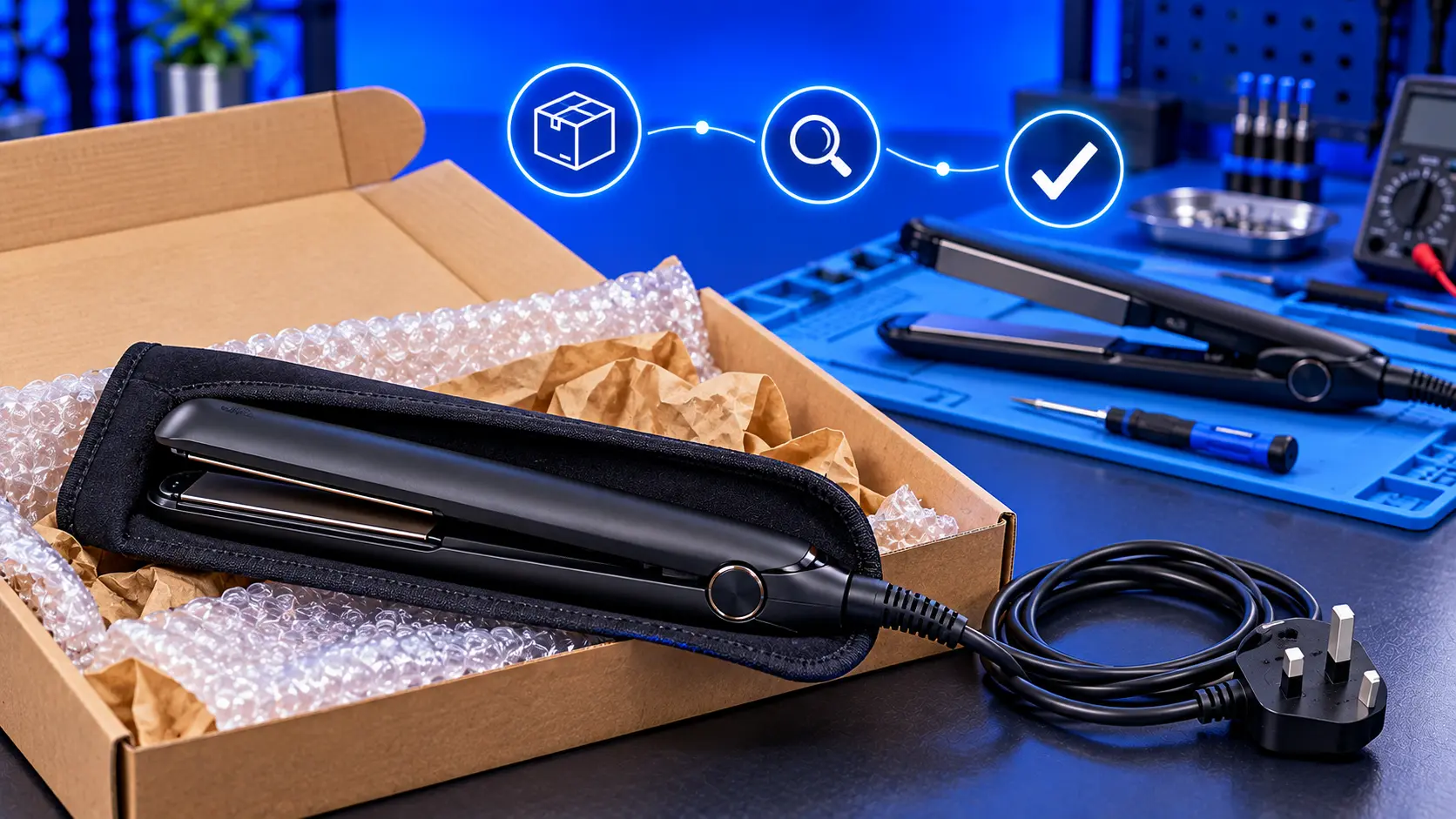
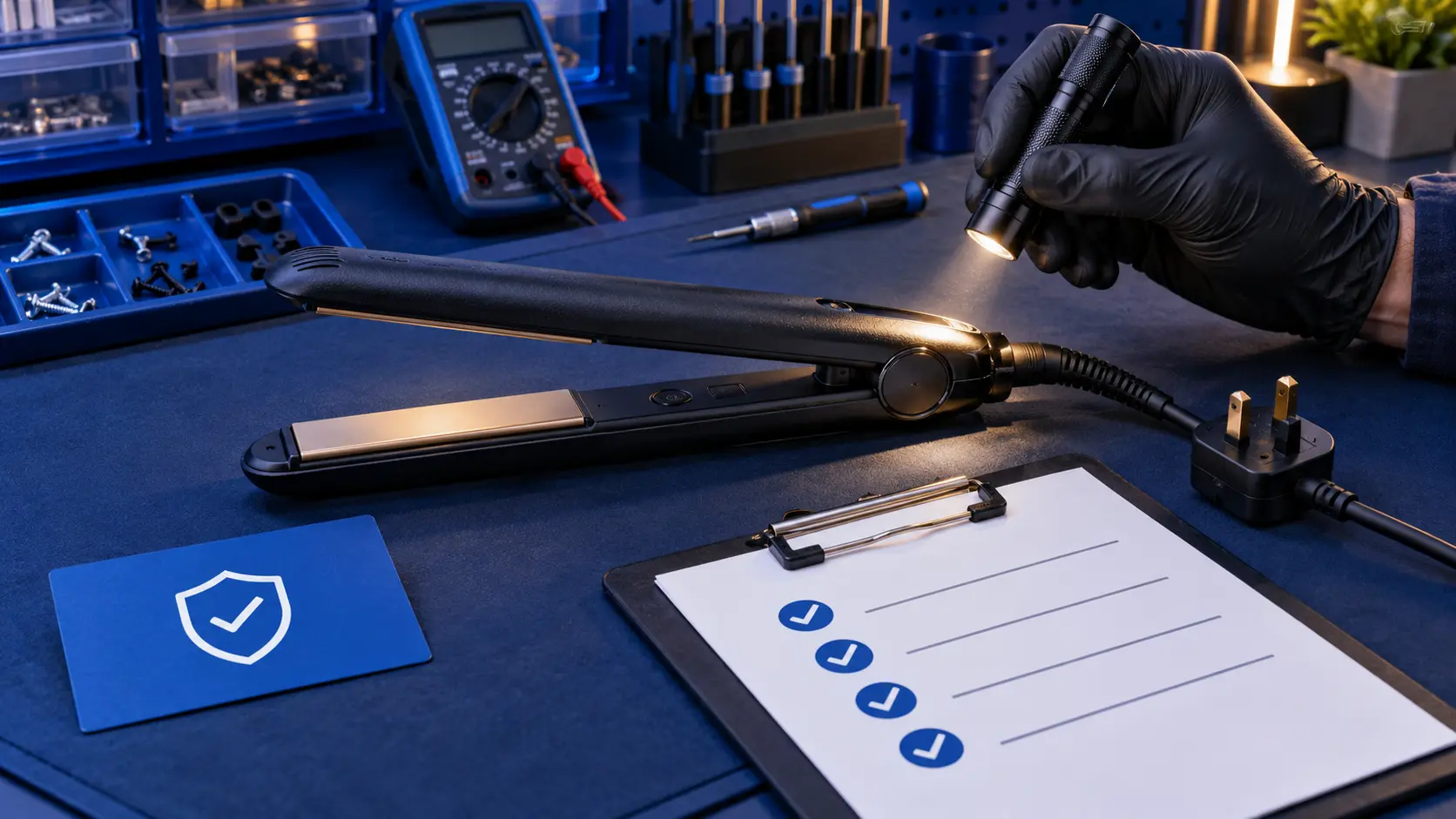
When a GHD comes in with a no-heat fault, I don't just swap one part and hope. I open it up, test the components properly to find the actual cause, replace what's failed — and, on Mk4/Mk5 models, replace R8/R11 as a preventative so the same fault is less likely to come back. The straighteners are then heat-tested to make sure the plates reach the correct temperature, and PAT safety-tested before they come back to you.
It's a flat £29 all-in for standard models (£39 for Gold, Max and Platinum+), and that covers parts, labour, return postage and the safety test — no hidden charges. Every repair is backed by my no-fix-no-fee promise and a 12-month warranty against the same fault returning: if I can't fix it, you don't pay for the repair.
Is it worth repairing?
Almost always, yes. A £29 repair against £100-plus for a new pair is an easy decision — and it keeps a good pair of straighteners out of landfill over a single, fixable part. The main exceptions are the round-button Eclipse and Platinum (S8T261) models, which GHD designed so that no one can repair them; for those, the only option is a replacement mains cable if the fault happens to be the cable.
If your GHDs power on but won't heat, and you've ruled out the cold-weather cause, you can book a not heating repair here — it takes a couple of minutes and I'll send simple instructions for posting them in.
The Repair Works is an independent UK repair service, run by me, Paul — 25 years of hands-on repair experience, working by post for customers across the whole country. Not affiliated with or endorsed by GHD.