This is one of the more frustrating GHD faults, precisely because the straighteners seem fine at first. You switch them on, they heat up properly, you start styling — and then, a few minutes in, the heat fades away and the plates go cold. Sometimes switching them off and back on brings the heat back for another few minutes before it drops again. It feels intermittent and unpredictable, and it makes the straighteners all but unusable.
The good news is that this behaviour usually points to a fairly specific set of causes, and it's repairable. I've been repairing electronics for over 25 years, so here's exactly what's going on when a straightener won't hold its heat, why it happens, and how it's put right.
First, pin down your exact symptom
"Won't stay hot" can look like a couple of different faults, and getting the symptom right saves time — because each points somewhere different:
Heats up fully, then cools down after a few minutes (often resets if you switch off and on) — this page. Usually a thermal-cut out or intermittent-connection fault.
Never gets properly hot in the first place — warms up but stays underwhelming. That's a temperature-sensing fault, covered in GHD not getting hot enough.
Heat drops in and out as you move the cable — that's a cable fault, not a heat fault. See GHD cutting out and cable faults.
No heat at all, both plates always cold — a different fault again (usually the thermal fuse). See why won't my GHD heat up.
If yours specifically reaches full temperature and then loses it, read on — this is your fault.
What causes a GHD to lose heat after warming up
When a straightener heats correctly and then cools, it tells us something useful straight away: the main heating system is basically working (it got hot, after all), but something is cutting the heat once the straighteners have been running for a few minutes. That points to a small number of likely causes.
A failing thermal cut-out or thermal fuse
GHDs contain a thermal safety component whose job is to cut the heat if the iron gets too hot. As these components age and weaken, they can start tripping too early or erratically — cutting the heat during normal use even though the straighteners aren't actually overheating. The classic sign is exactly what you're seeing: heats fine, runs for a few minutes, then the safety cuts in and the plates go cold; leave it to cool, switch it on, and it works again for another short spell. It's a weakening safety component doing its job at the wrong threshold, and it's a common, repairable cause.
An intermittent internal connection
Inside the straighteners, the heating elements connect to the control board through small joints and connectors. If one of those connections has become loose, corroded, or has a failing solder joint, it can conduct heat fine when cold but break contact once everything warms up and expands slightly — heat causes metals to expand, and a marginal connection can open up at temperature. That gives you the same pattern: works when first switched on, drops out once hot. Re-making the faulty connection properly fixes it.
A failing heater element or temperature sensor
Less commonly, a heater element on its way out, or a temperature sensor (thermistor) that misreads once it's warmed up, can produce heat that fades or becomes unstable after a few minutes of use. These need testing to confirm, but they're part of the same picture — a straightener that can start hot but can't sustain it.
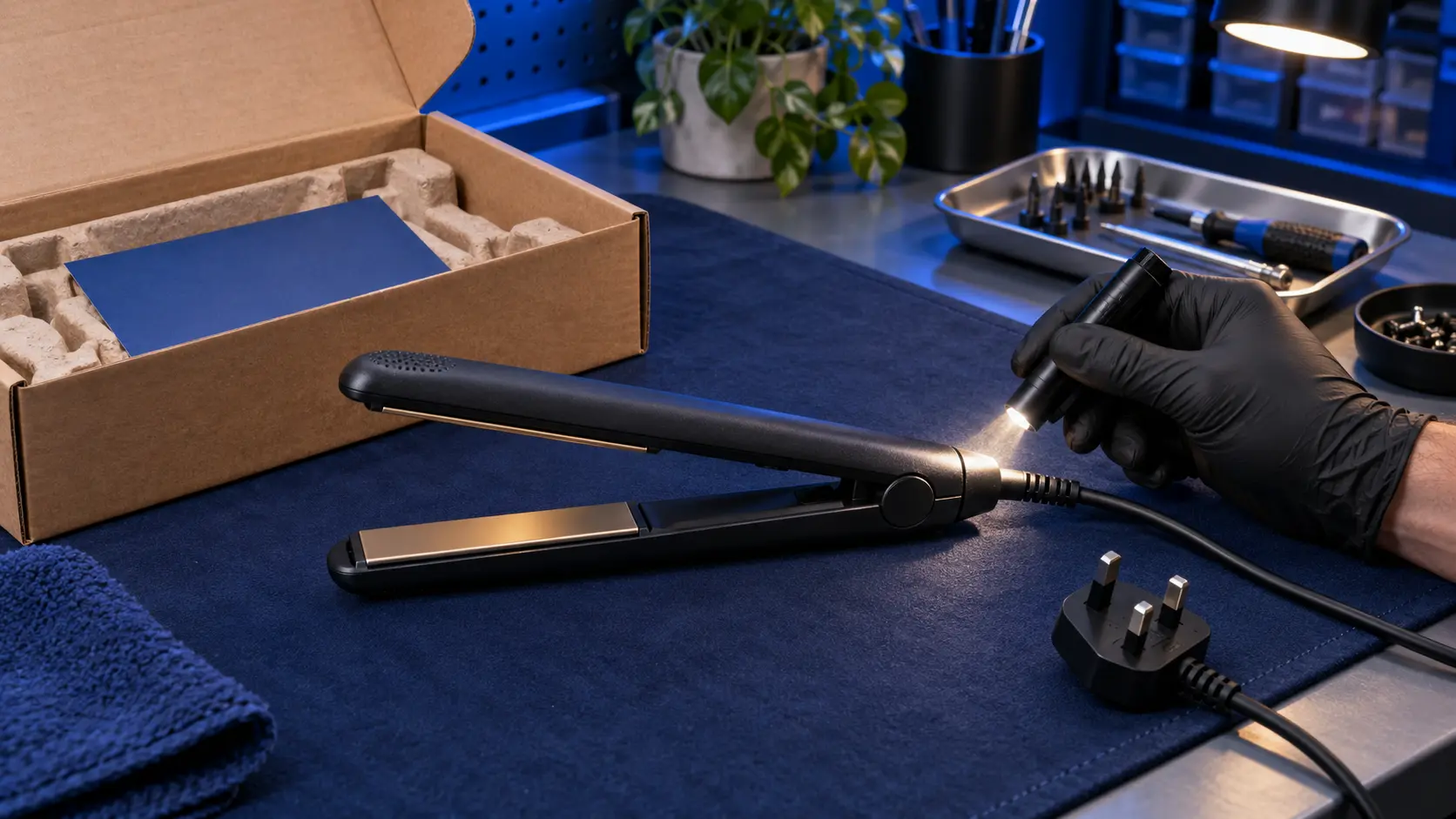
Because these causes look similar from the outside, the only reliable way to tell them apart on your specific pair is to open the straighteners up, run them, and test the components under working conditions — which is exactly what the repair involves.
Why you shouldn't just keep resetting it
It's tempting to nurse a straightener like this along — switch it off, let it cool, switch it back on, repeat. I'd gently advise against it, for a couple of reasons.
First, if the cause is a thermal safety component tripping erratically, repeatedly overriding it by cycling the power isn't ideal on a device that runs at over 180°C — the safety cut-out exists for a reason, and a component behaving unpredictably is a sign something needs attention. Second, an intermittent fault usually gets worse over time, not better: a marginal connection or a weakening component tends to deteriorate until the straighteners stop working altogether. Sorting it while it's still an intermittent annoyance is almost always easier and cheaper than waiting until they're completely dead.
How the repair works
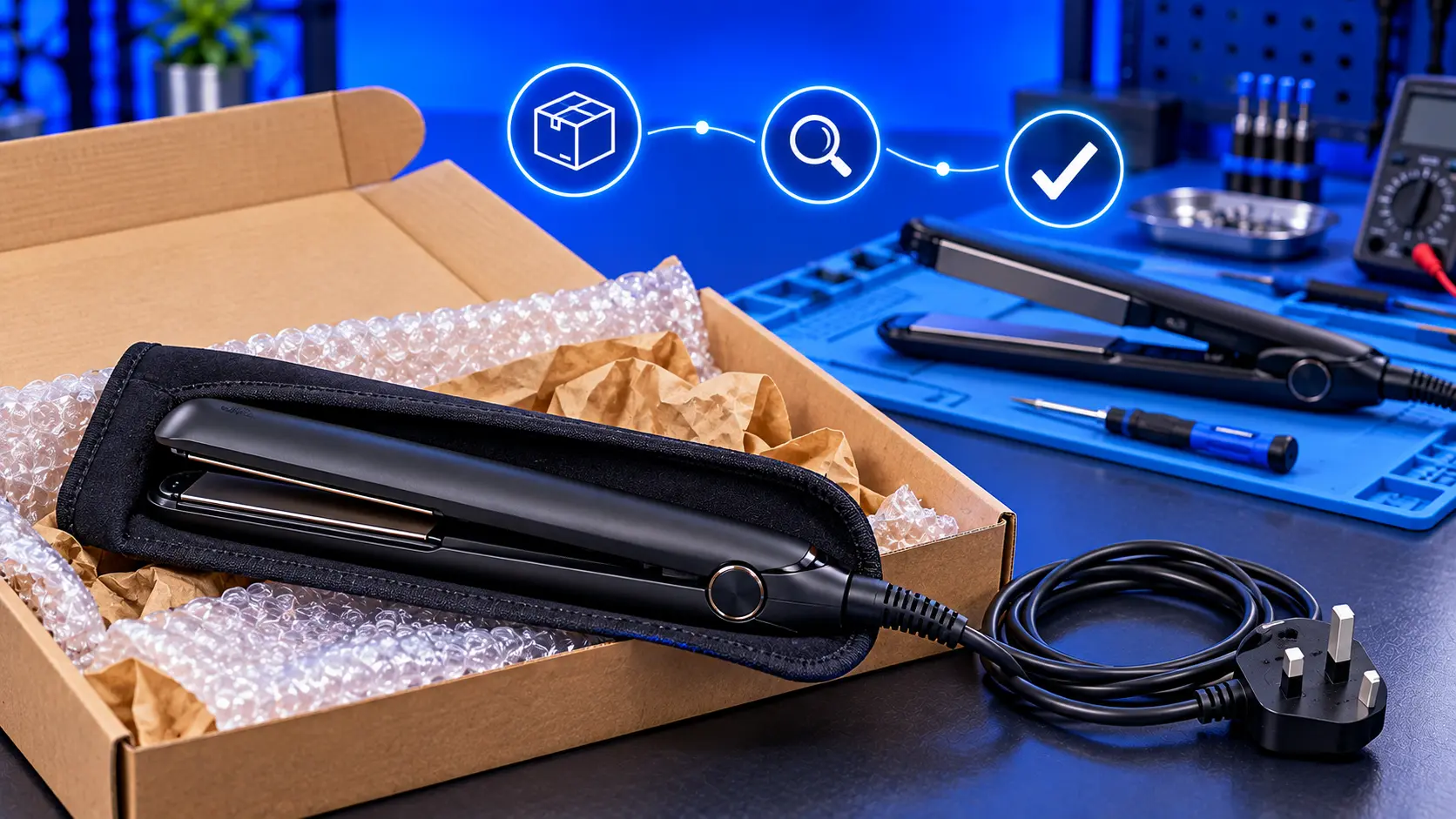
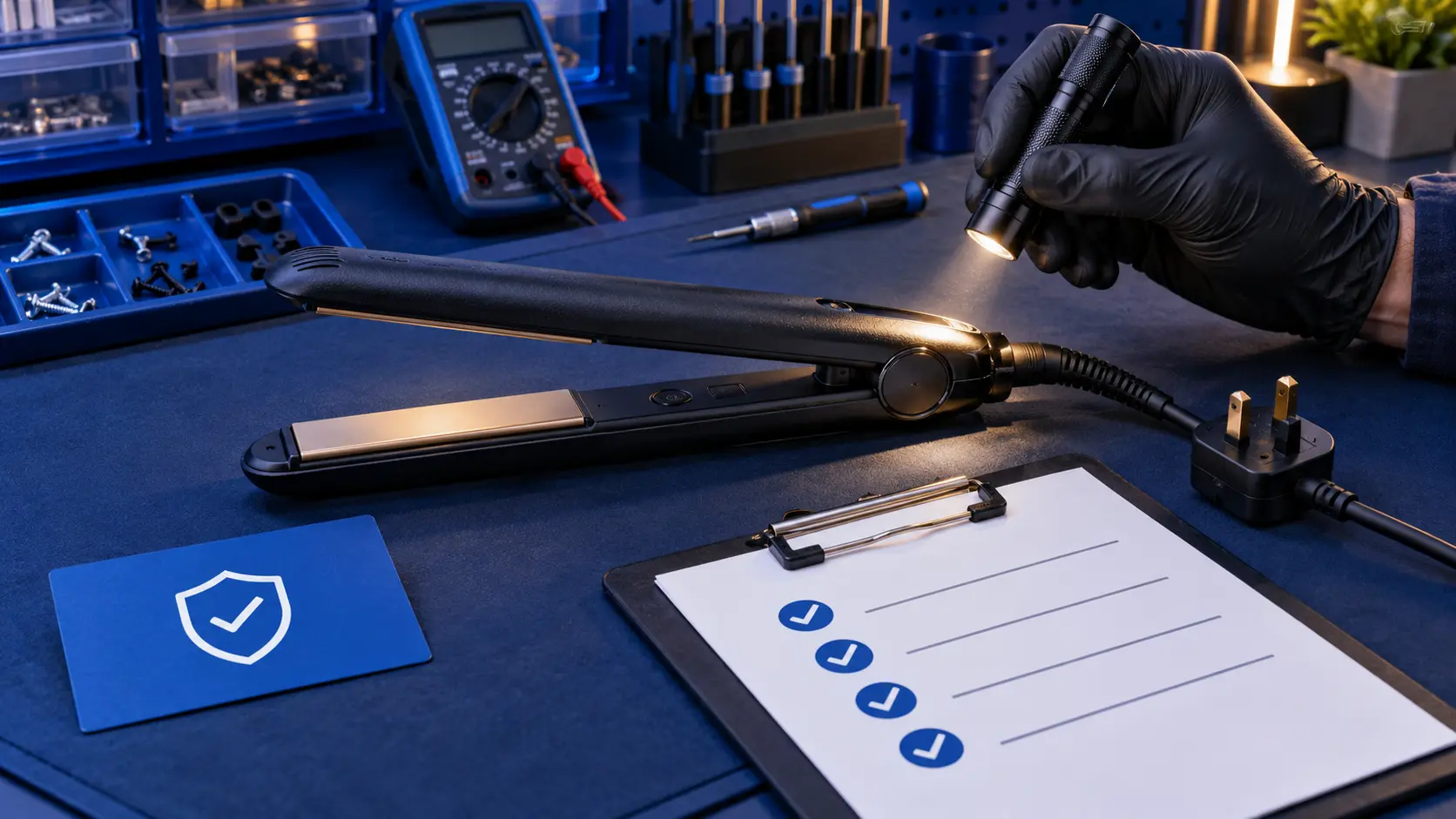
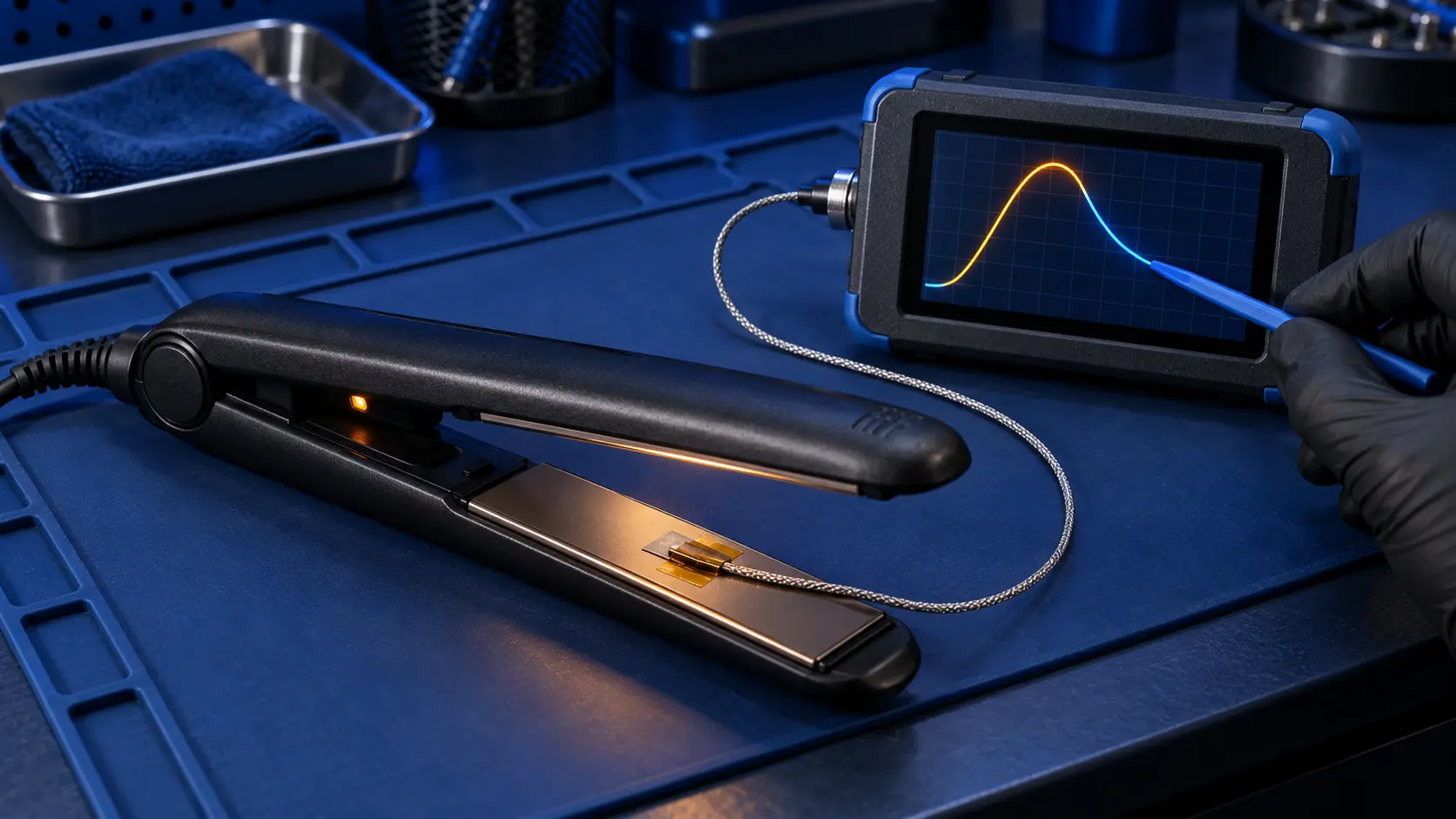
When straighteners with a "heats then cools" fault come in, I don't just swap a part and hope — because the fault only shows up once they're warm, I run them up to temperature and test them under working conditions to reproduce the fault and find the true cause. That might be a weakening thermal cut-out, an intermittent connection that opens up at temperature, a tired element or a misbehaving sensor. I fix the actual cause, then heat-test the straighteners over a sustained period to confirm they now hold their temperature properly — not just that they get hot for a minute — and PAT safety-test them before they come back.
That "test it hot, over time" step is the important bit with this particular fault. A quick power-on check would pass a straightener that then fails five minutes later; reproducing the fault properly is the only way to be sure it's genuinely fixed.
What it costs, and the warranty
A "won't stay hot" repair is covered by my complete GHD straightener service: a flat £29 all-in for standard models (£39 for Gold, Max and Platinum+), including the part, labour, return postage and the safety test — no hidden charges. Every repair is backed by my no-fix-no-fee promise — if I can't fix it, you don't pay for the repair — and a 12-month warranty against the same fault returning. Given that this is an intermittent fault, that warranty matters: it means if the same problem somehow came back within the year, it's covered.
Is it worth repairing?
Almost always, yes. A straightener that heats then cools is rarely a write-off — it's usually one weakening component or one poor connection on an otherwise perfectly good pair, and £29 to fix beats £100-plus to replace. The only real exceptions are the sealed round-button Eclipse and Platinum (S8T261) models, which can't be repaired internally.
If your GHDs heat up and then won't stay hot, you can book a straightener repair here — I'll send simple instructions for posting them in and reproduce the fault properly when they arrive to find the true cause. Not sure which fault yours is? See all the GHD repairs I offer, or send them in and I'll diagnose it for you.
The Repair Works is an independent UK repair service, run by me, Paul — 25 years of hands-on repair experience, working by post for customers across the whole country. Not affiliated with or endorsed by GHD.