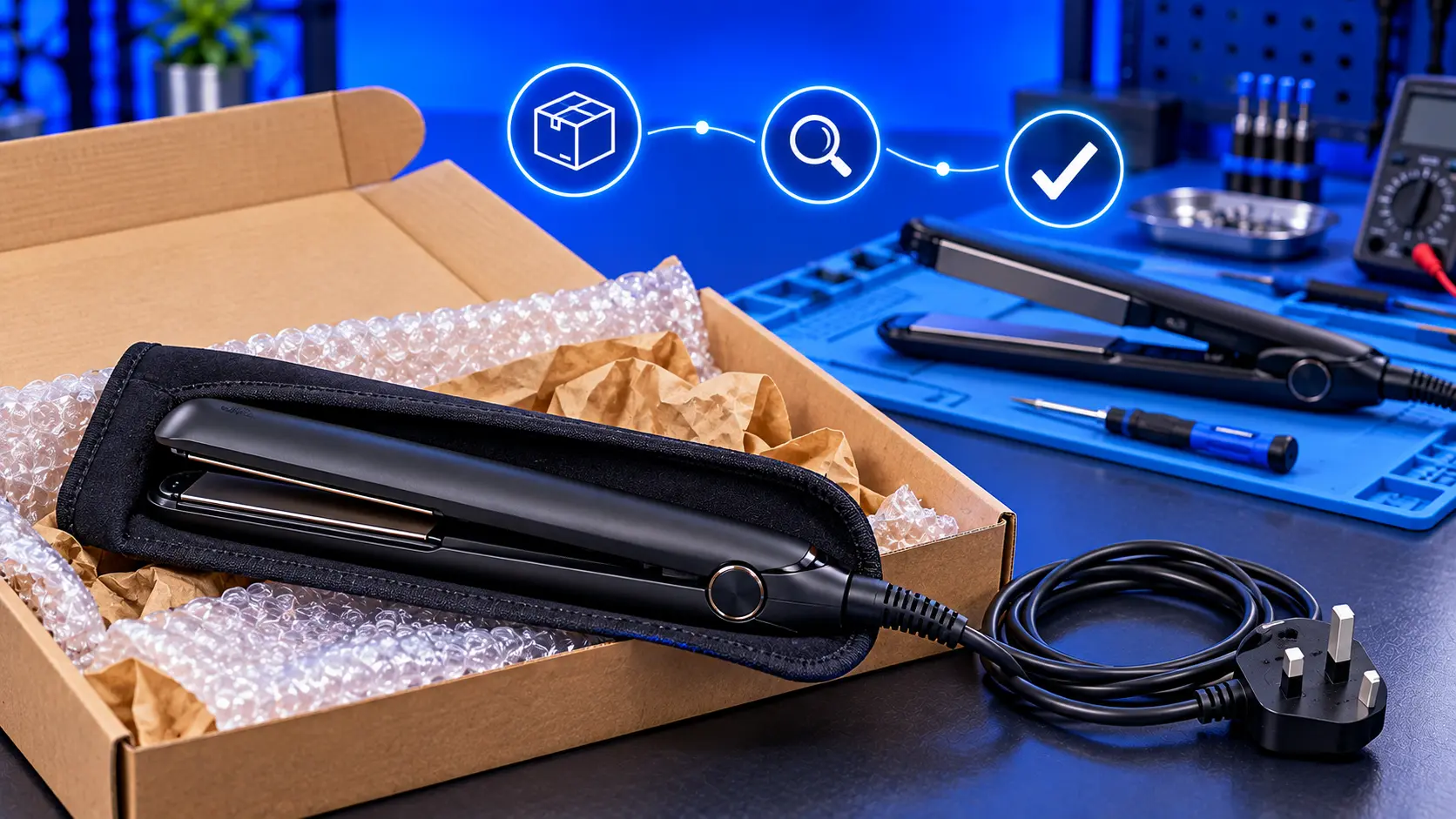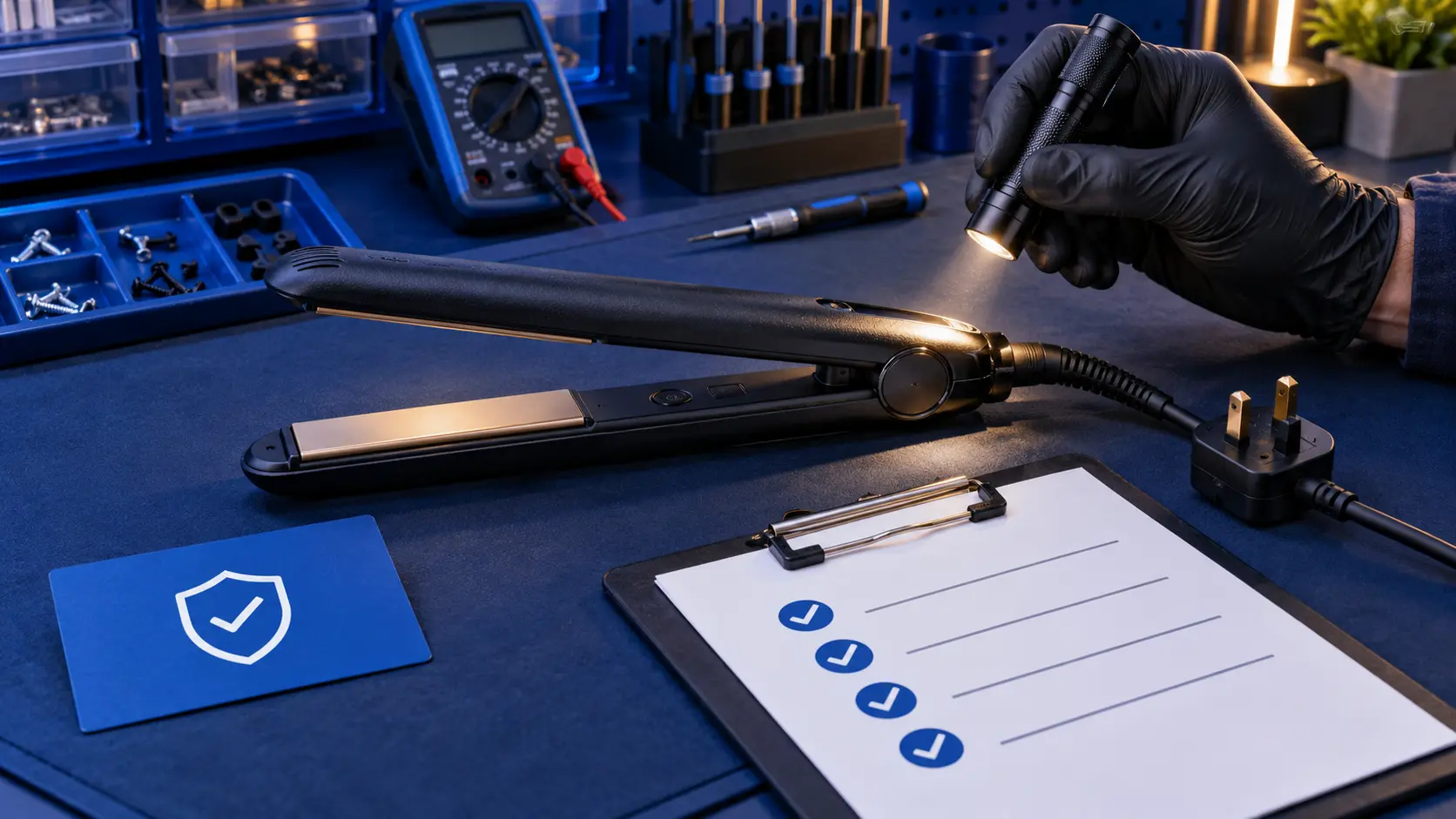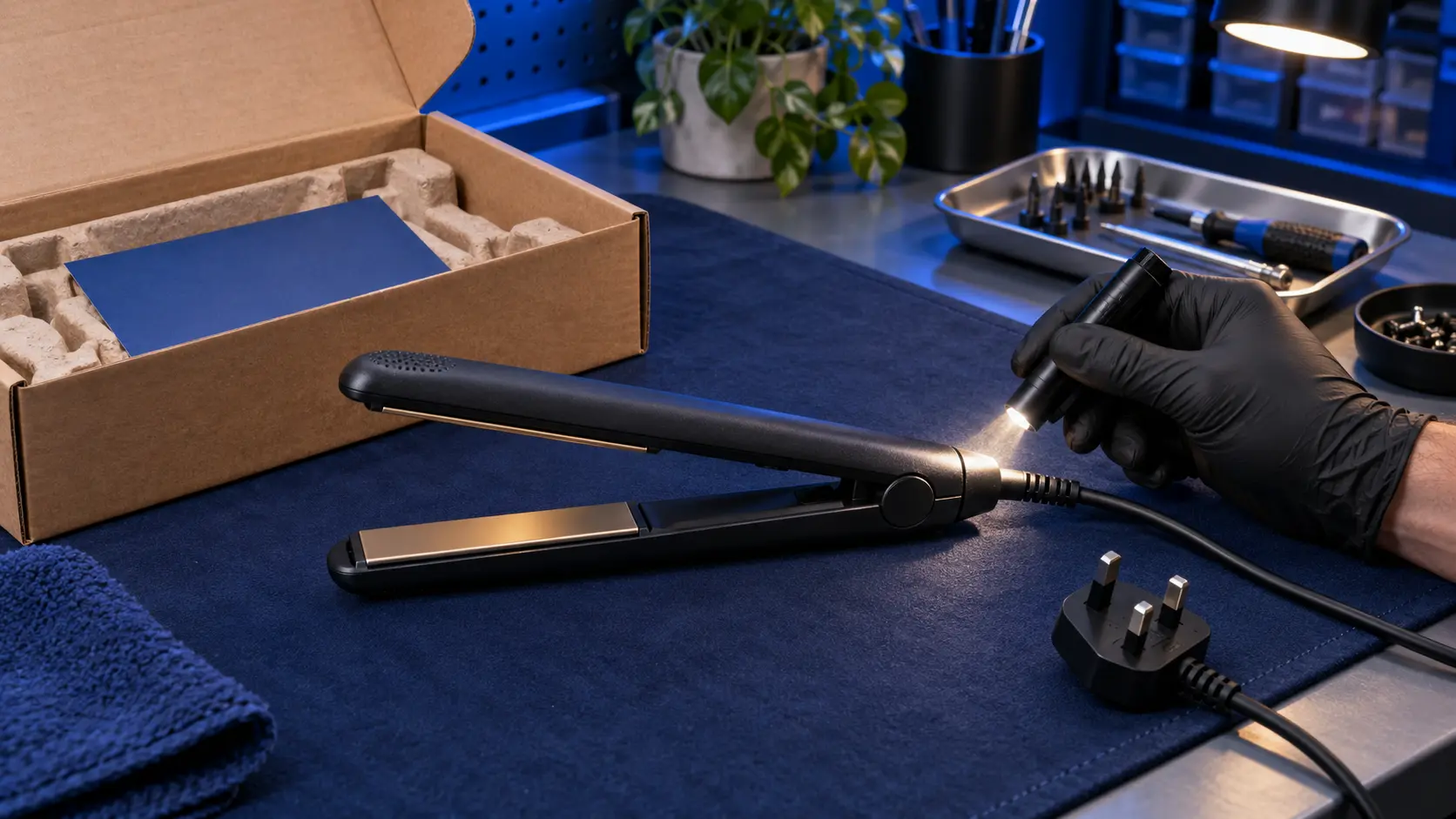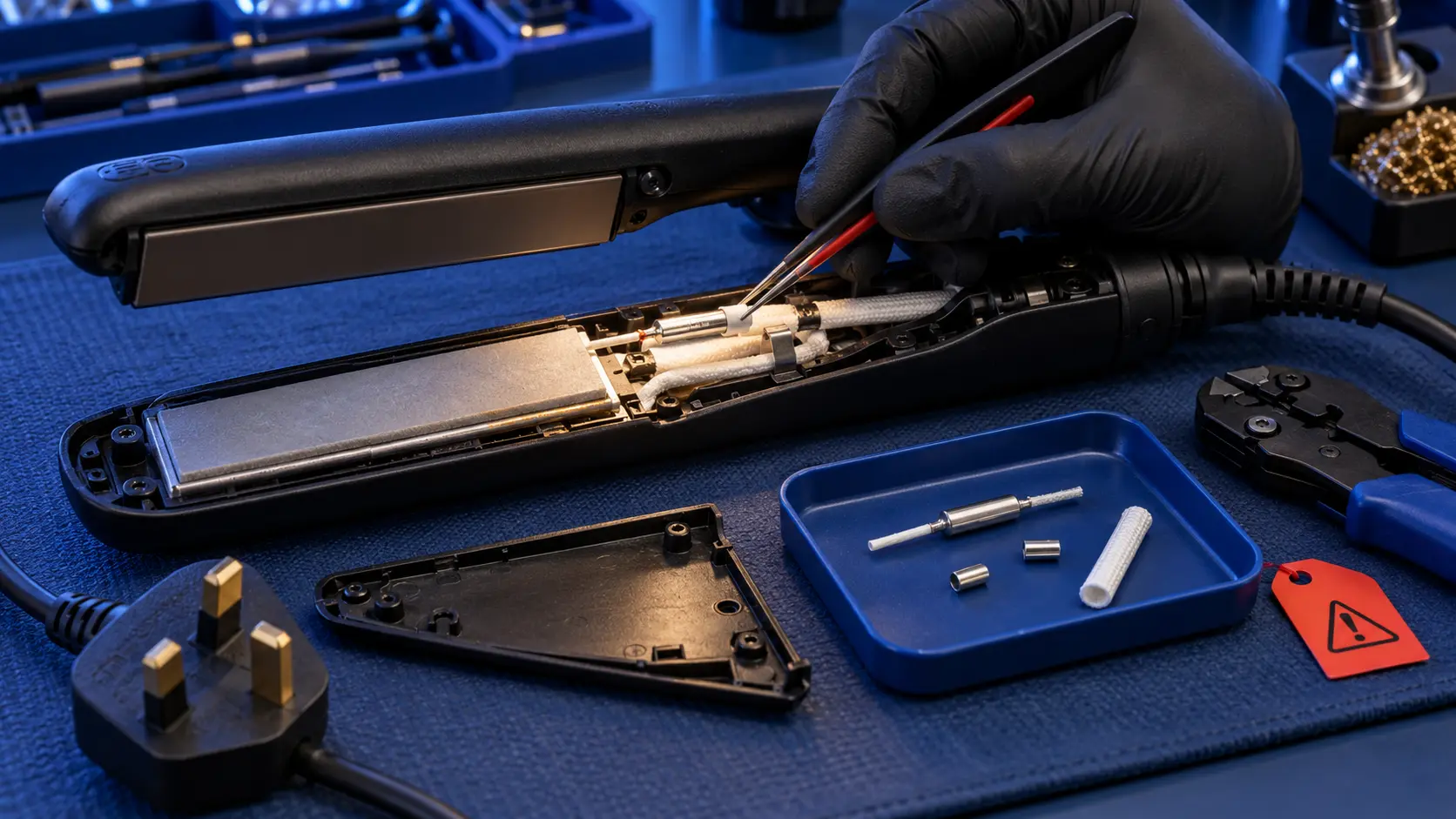
The thermal fuse is the single most common thing to fail on a GHD — it's the usual culprit behind straighteners that power on but won't heat. It's also the repair people most often search how to do themselves. So here's an honest explanation of what changing a GHD thermal fuse actually involves, and — more importantly — the safety points that make it a repair to approach with real caution, or hand to someone who does it properly.
I've been repairing electronics for over 25 years, so this is the straight version, not a "just do this" video script.
What the thermal fuse does (and why it fails)
The thermal fuse is a small safety component wired into your straighteners' heating circuit. Its job is to cut the power if the iron ever gets dangerously hot — a last line of defence against overheating. It's designed to blow (permanently) at a specific temperature.
Over time and normal use, these fuses weaken and eventually fail on their own, even when nothing else is wrong. When that happens, the fuse cuts the heat permanently — so your straighteners power on, light up and beep as normal, but the plates stay stone cold. That's the classic "won't heat up" fault, explained more fully in my guide to GHDs that won't heat up.
What changing one involves (in principle)
At a high level, replacing a GHD thermal fuse means:
Fully unplugging and cooling the straighteners.
Opening the casing to access the internals — fiddly, and easy to crack or damage the clips if you don't know how they come apart.
Locating the blown thermal fuse in the heating circuit.
Removing the old fuse and fitting the correct replacement, connected properly and safely insulated.
Reassembling so everything is seated correctly and nothing is pinched or exposed.
Safety-testing before use.
That's the shape of it. But two of those steps carry risks that are worth spelling out plainly — because this is exactly where a DIY thermal-fuse change goes wrong.
The critical bit: the fuse rating (do not get this wrong)
This is the most important thing on the whole page. The replacement thermal fuse must be the correct temperature rating for the straighteners.
Here's why it matters so much. The fuse exists to cut the power if the iron overheats. If you fit a fuse rated too high — or worse, follow one of those online "fixes" that suggests bridging or bypassing the fuse to "make it last" — you remove that protection entirely. The straightener might work again, but you've turned a device with a working safety cut-out into one without a safety cut-out, on something that runs at over 180°C and draws mains power. That's how a simple fault becomes a genuine fire or burn risk.
Fitting the correct fuse restores the straighteners and their safety. Fitting the wrong one — or none — makes them dangerous. There is no shortcut here, and it's the single reason I'd urge caution on a DIY thermal-fuse change.
The other risks
Mains electricity + high heat — as with any internal GHD repair, you're working on a mains device. A poor connection or pinched wire can cause a short, arc or shock risk.
No home safety test — even a correctly-fitted fuse should be followed by a PAT safety test to confirm the straighteners are electrically safe. At home, you've no way to verify that.
Related faults — on Mk4 and Mk5 models especially, the fuse often fails alongside the R8/R11 resistors. Change only the fuse and the fault can come straight back. A proper repair checks and addresses those too — something easy to miss if you're just swapping the obvious part.
The honest cost comparison
A thermal fuse itself is cheap. But to do the job properly you'd need the correct-rated fuse (identified for your specific model), the tools to open and reassemble the straighteners without damage, and ideally a way to safety-test the result — plus, on a Mk4/Mk5, the R8/R11 resistors too. Add the risk of getting the rating wrong or cracking the casing, and the modest saving over a professional repair often isn't worth it.
My repairs are a flat £29 all-in for standard models (£39 for Gold, Max and Platinum+) — including the correct fuse, the R8/R11 preventative replacement on Mk4/Mk5, the labour, return postage, a PAT safety test and a 12-month warranty, with the no-fix-no-fee promise. Full pricing is in my GHD repair cost guide, and I've written more broadly on whether to DIY a GHD repair here.
The bottom line
Changing a GHD thermal fuse is a real, common repair — but it's not the beginner job the videos make it look. The fuse rating must be correct, the work is on a mains, high-heat device, and it should end with a safety test. If you're experienced with mains electronics and can do all that, it's within reach. If you're not, this is exactly the kind of repair worth handing to someone who specialises in it — for the safety as much as the result.
If your GHDs won't heat and it's the thermal fuse, you can book a not heating repair here — I'll fit the correct fuse, check the related components, safety-test them, and return them with a 12-month warranty.
The Repair Works is an independent UK repair service, run by me, Paul — 25 years of hands-on repair experience, working by post for customers across the whole country. Not affiliated with or endorsed by GHD.