If you're handy and your GHDs have stopped working, it's natural to wonder whether you could just fix them yourself — there are teardown videos online, replacement parts for sale, and the faults often sound simple. So here's an honest answer, from someone who's been repairing electronics for over 25 years: yes, some GHD repairs can be done at home if you know what you're doing — but there are real risks, and for most people the sums don't add up. Here's the straight version so you can decide for yourself.
What you can technically do yourself
Some GHD jobs are, in principle, within reach of a capable DIYer:
Replacing the plug fuse — genuinely simple and safe; worth doing yourself before anything else (a blown plug fuse is a common, free-to-fix cause of a dead straightener).
A basic clean — clearing built-up product from the plates or around the hinge, which can occasionally free up stiff plates.
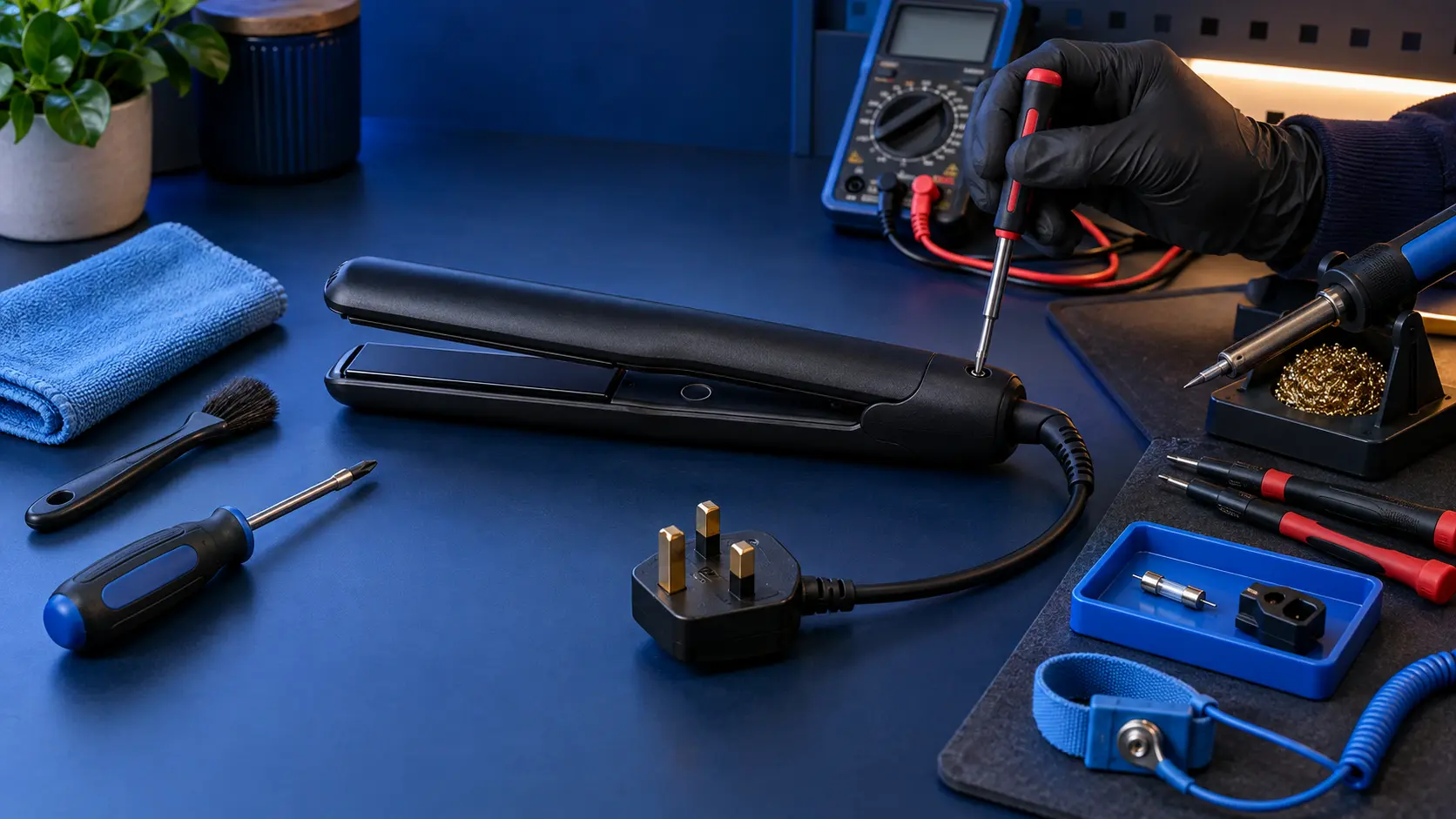
Beyond that, the internal repairs — thermal fuses, cables, heater elements, the R8/R11 resistors — are technically DIYable with the right tools and knowledge, and you can buy the parts. But "technically possible" and "sensible for most people" are two different things, and this is where honesty matters.
The real risks (why I'd think twice)
GHDs aren't a gentle bit of kit to work on. Here's what the videos often gloss over:
They run on mains electricity at over 180°C
This is the big one. A GHD is a mains-powered device that reaches styling temperatures well above 180°C. Get an internal repair wrong — a poor connection, the wrong part, a pinched wire — and you're not looking at a straightener that just doesn't work; you're looking at a genuine fire, shock or burn risk. This isn't scaremongering; it's the reason these repairs should end with a proper safety test.
The thermal fuse must be the exact right rating
The single most common GHD fault is a blown thermal fuse — and it's the repair DIYers most often get wrong. The replacement fuse must be the correct temperature rating. Fit one that's rated too high (or bridge it, as some online "fixes" suggest) and you remove the very safety protection the fuse exists to provide — turning a safe straightener into a dangerous one. This is precisely the kind of detail that matters enormously and is easy to get wrong.
No PAT safety test at home
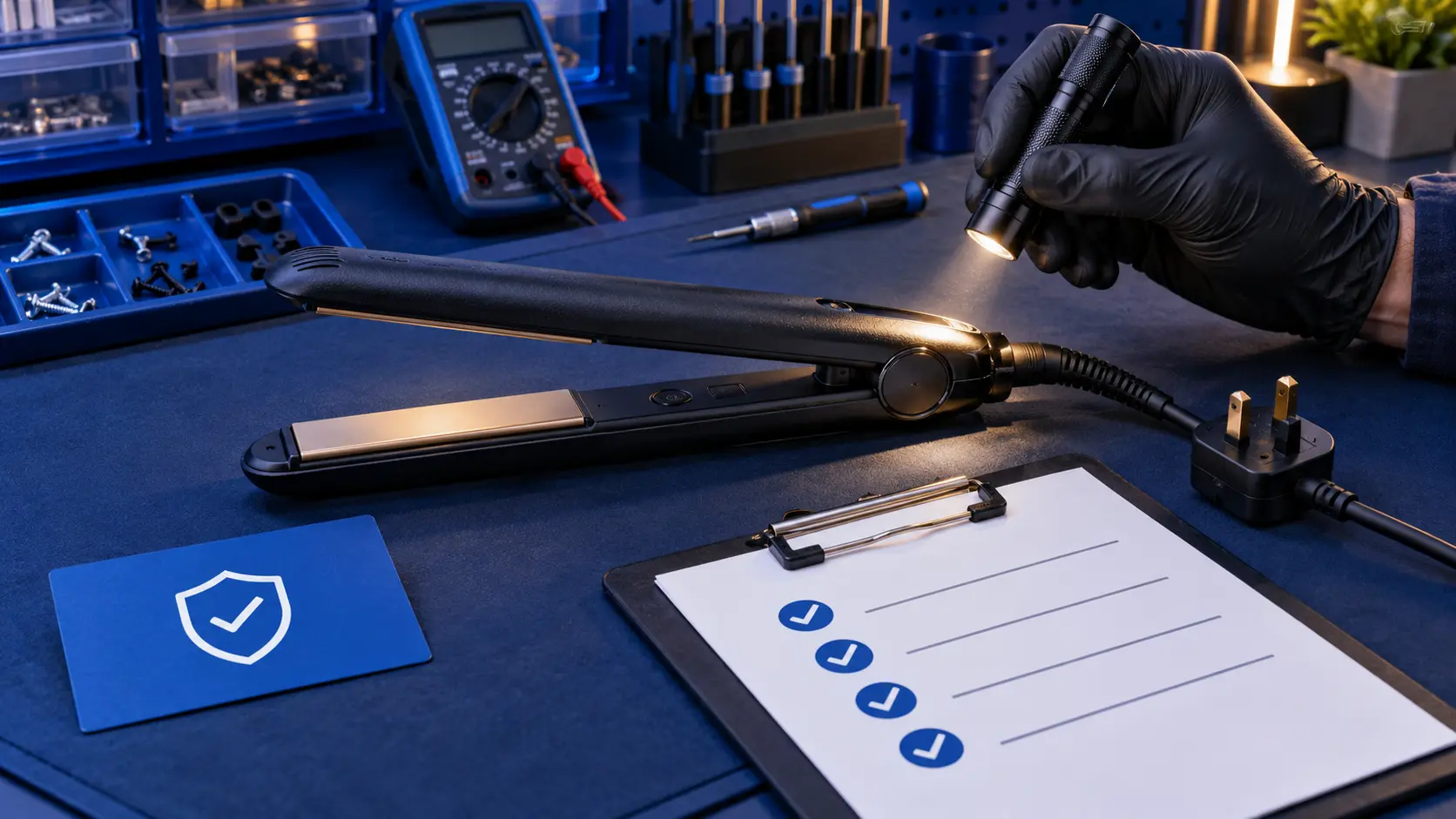
When I repair a GHD, it's PAT safety-tested before it goes back — a proper electrical safety check confirming it's safe to use. At home, you've no way to verify that. You might get it working, but "working" and "electrically safe" aren't the same thing on a mains device.
Getting them apart (and back together) without damage
GHDs are fiddly to open without cracking the casing or damaging clips, and reassembling them so the plates sit correctly and everything's seated safely takes practice. It's easy to turn a simple fault into a bigger problem.
Does the DIY route actually save money?
This is worth doing the sums on honestly. To DIY an internal GHD repair properly you'd need: the correct part (and the knowledge to identify the right one for your model), the right tools, and ideally a way to safety-test the result. By the time you've bought a part and the right tools — and factored in the risk of getting it wrong and damaging the straighteners further — you're often not far off, or even above, the cost of a professional repair.
My repairs are a flat £29 all-in for standard models (£39 for Gold, Max and Platinum+) — including the correct part, the labour, return postage, a PAT safety test, and a 12-month warranty, with the no-fix-no-fee promise. For most people, once you weigh the cost of parts and tools against that — and the peace of mind of a safety-tested repair with a 12-month warranty — the DIY saving largely disappears. You can see the full pricing in my GHD repair cost guide.
My honest advice
If you're genuinely experienced with mains electronics, have the right parts and tools, and can safety-test your work — then yes, some GHD repairs are within your reach, and there's satisfaction in doing it yourself. I'd never tell a capable person they can't.
But for most people, the honest answer is that the risks (electrical safety above all), the fiddliness, and the borderline cost saving mean a professional repair is the better call. It's not that GHD repairs are impossibly hard — it's that the margin for error on a mains, high-heat device is small, and the cost and safety benefits of having it done properly are real.
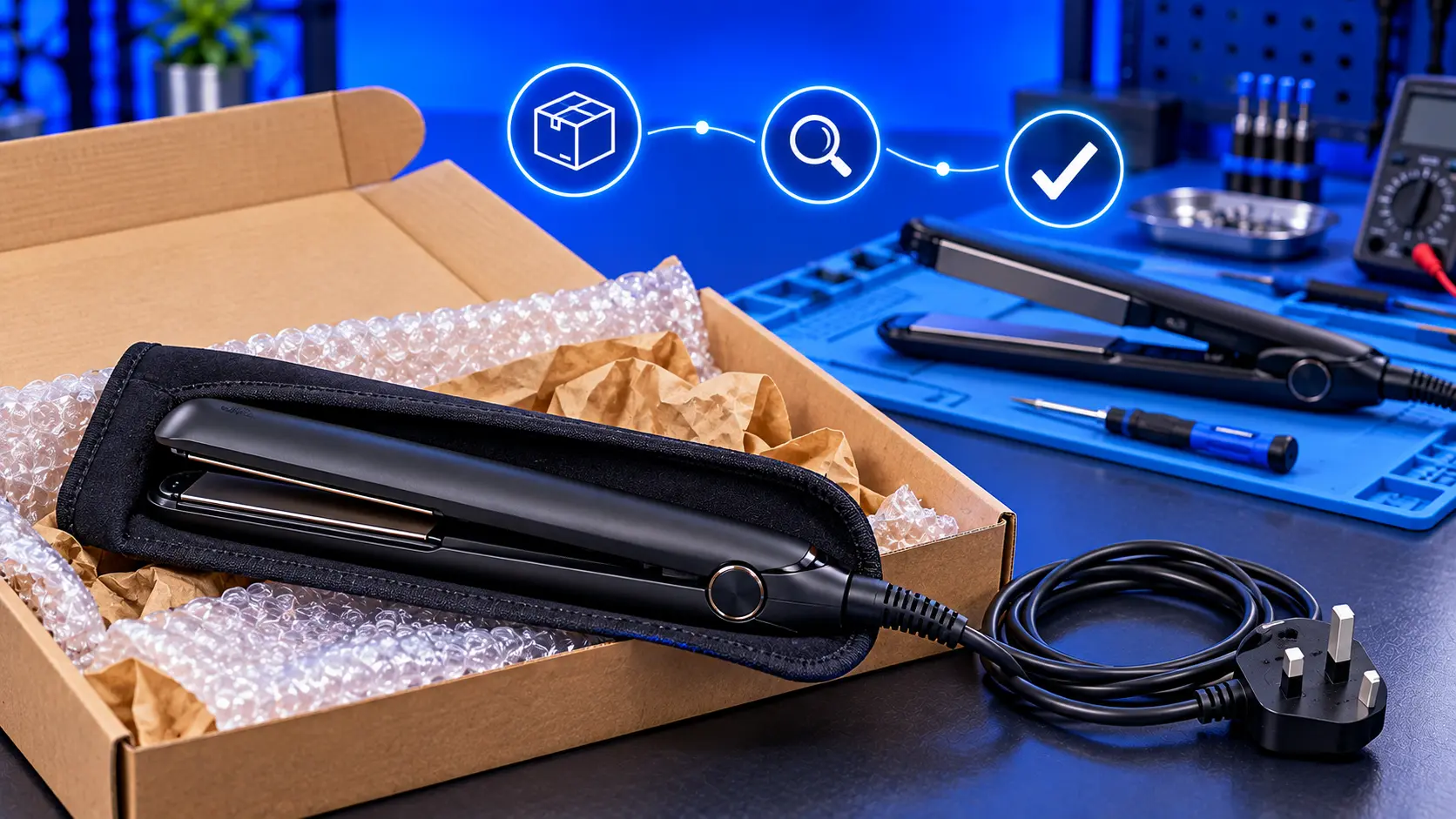
At the very least: check the plug fuse yourself first (that one's free and safe), and if that's not it, see the GHD repairs I offer here — I'll send simple instructions for posting your straighteners in, fit the correct part, safety-test them, and return them with a 12-month warranty. Done properly, with a 12-month warranty.
The Repair Works is an independent UK repair service, run by me, Paul — 25 years of hands-on repair experience, working by post for customers across the whole country. Not affiliated with or endorsed by GHD.