It's an odd one to notice: one plate of your GHDs warms up nicely, but the other stays completely cold — so your hair only straightens on one side, or takes twice as long. It's a distinctive fault, and unlike a total no-heat problem, it usually points to one specific cause. The good news is it's repairable, and it's a straightforward repair.
I've been repairing electronics for over 25 years, so here's what's behind a single cold plate and how it's put right.
What causes one cold plate: a failed heater element
Each of your GHD plates has its own heater element — the component that actually generates the heat. When one plate works and the other doesn't, it's almost always because the heater element on the cold side has failed.
This is different from the more common "won't heat at all" fault, where both plates stay cold (that's usually a thermal fuse — I've covered it in my guide to GHDs that won't heat up). When it's just one plate, the shared components like the fuse are clearly still doing their job — power's getting through, one side heats fine — so the problem is isolated to the element on the dead side.
Heater elements can fail with age and use, or occasionally alongside a related component like the temperature sensor built into that plate. Either way, the symptom is the same: one hot plate, one cold.
How to be sure it's this fault
You're very likely looking at a failed heater element if:
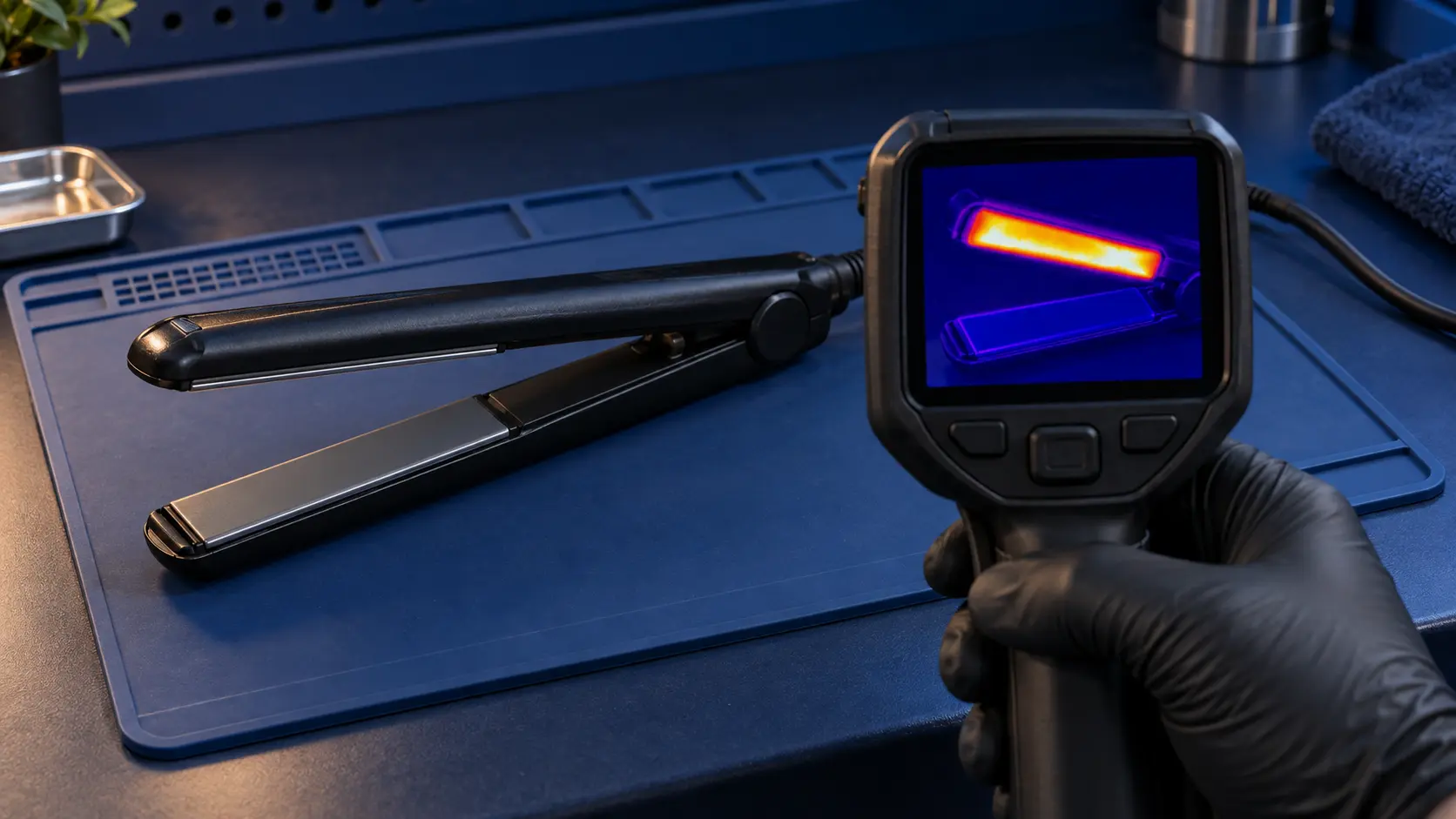
One plate gets hot and the other stays cold — the defining sign.
Your hair only straightens properly on one side, or takes far longer than it used to.
The straighteners otherwise power on, light up and beep completely normally.
If both plates stay cold, that's a different (and even more common) fault — see the won't heat at all guide. And if the heat comes and goes depending on how you hold the cable, that's a cable fault, not an element.
What the repair involves
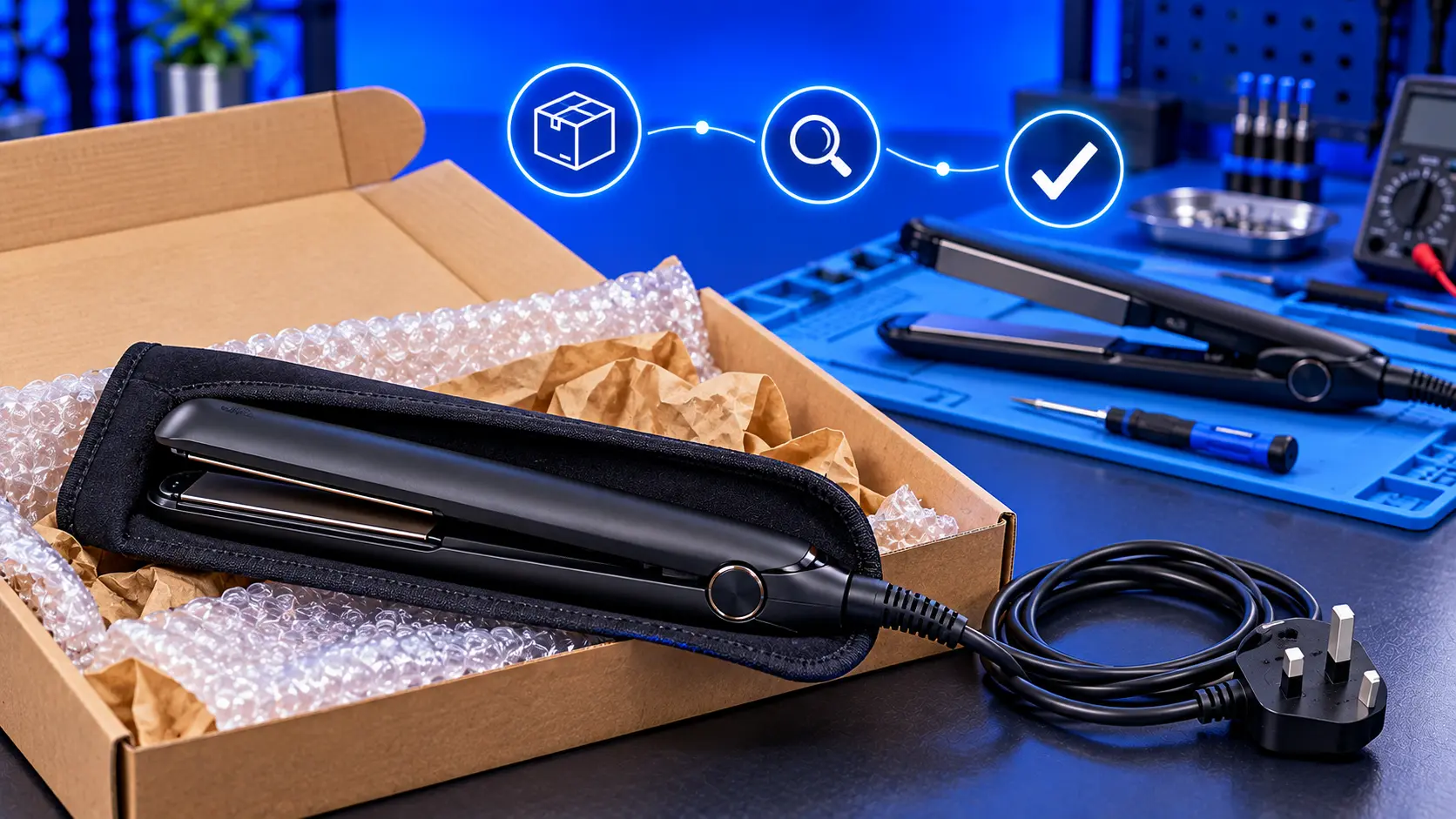
Replacing a heater element is a more involved job than, say, a cable or a fuse. The element sits deep inside the plate assembly, so the straighteners have to be carefully stripped down, the failed element (and its sensor, if needed) replaced, and everything rebuilt and re-seated correctly. It's precise work — but it's very much a standard, repairable fault, and far cheaper than replacing the whole pair.
The right element also depends on your model — the standard, wide-plate (SS) and mini (MS) versions all differ, as do the newer Gold and Max straighteners. That's one reason it helps to know which model you have, so the correct part goes in first time.
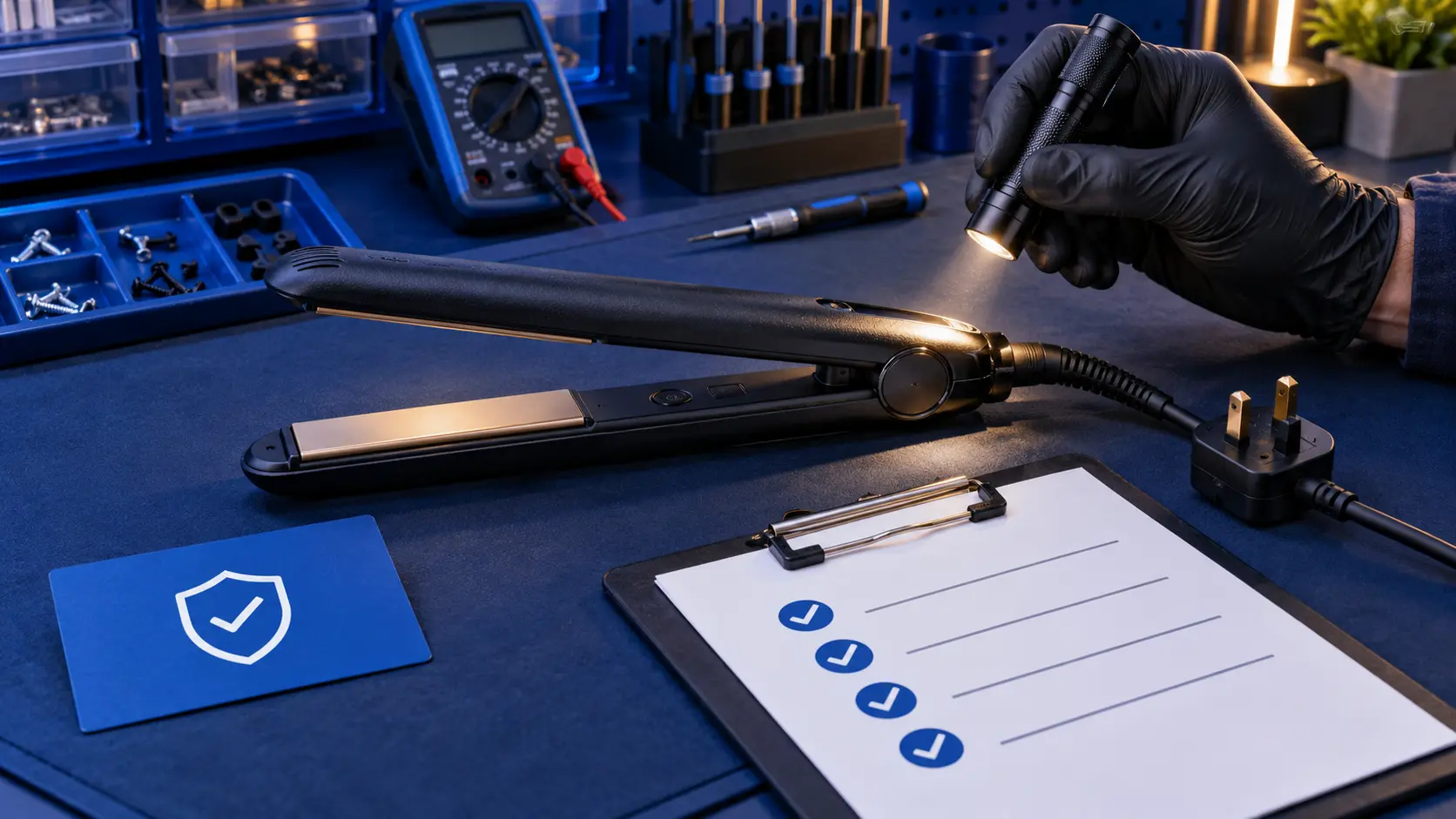
When it comes back to you, both plates will heat evenly again, and — as with every repair — the straighteners are heat-tested to confirm both plates reach the correct temperature, and PAT safety-tested before they're returned.
What it costs, and the warranty
A single-cold-plate repair is covered by my complete GHD straightener service: a flat £29 all-in for standard models (£39 for Gold, Max and Platinum+), including the part, labour, return postage and the safety test — no hidden charges.
Every repair is backed by my no-fix-no-fee promise — if I can't fix it, you don't pay for the repair — and a 12-month warranty against the same fault returning. So there's no risk in sending them in to find out.
Don't write them off over one cold plate
It's easy to assume a straightener with a dead plate is done for, but it rarely is — it's usually just one element that's given up, on an otherwise perfectly good pair. Repairing it costs a fraction of a replacement and keeps a good set of GHDs in use.
If one of your plates has stopped heating, you can book a GHD straightener repair here — I'll send simple instructions for posting them in and have them back to you heating evenly on both sides. Not sure which fault yours is? You can see all the GHD repairs I offer and pick the closest, or send them in and I'll diagnose it for you.
The Repair Works is an independent UK repair service, run by me, Paul — 25 years of hands-on repair experience, working by post for customers across the whole country. Not affiliated with or endorsed by GHD.