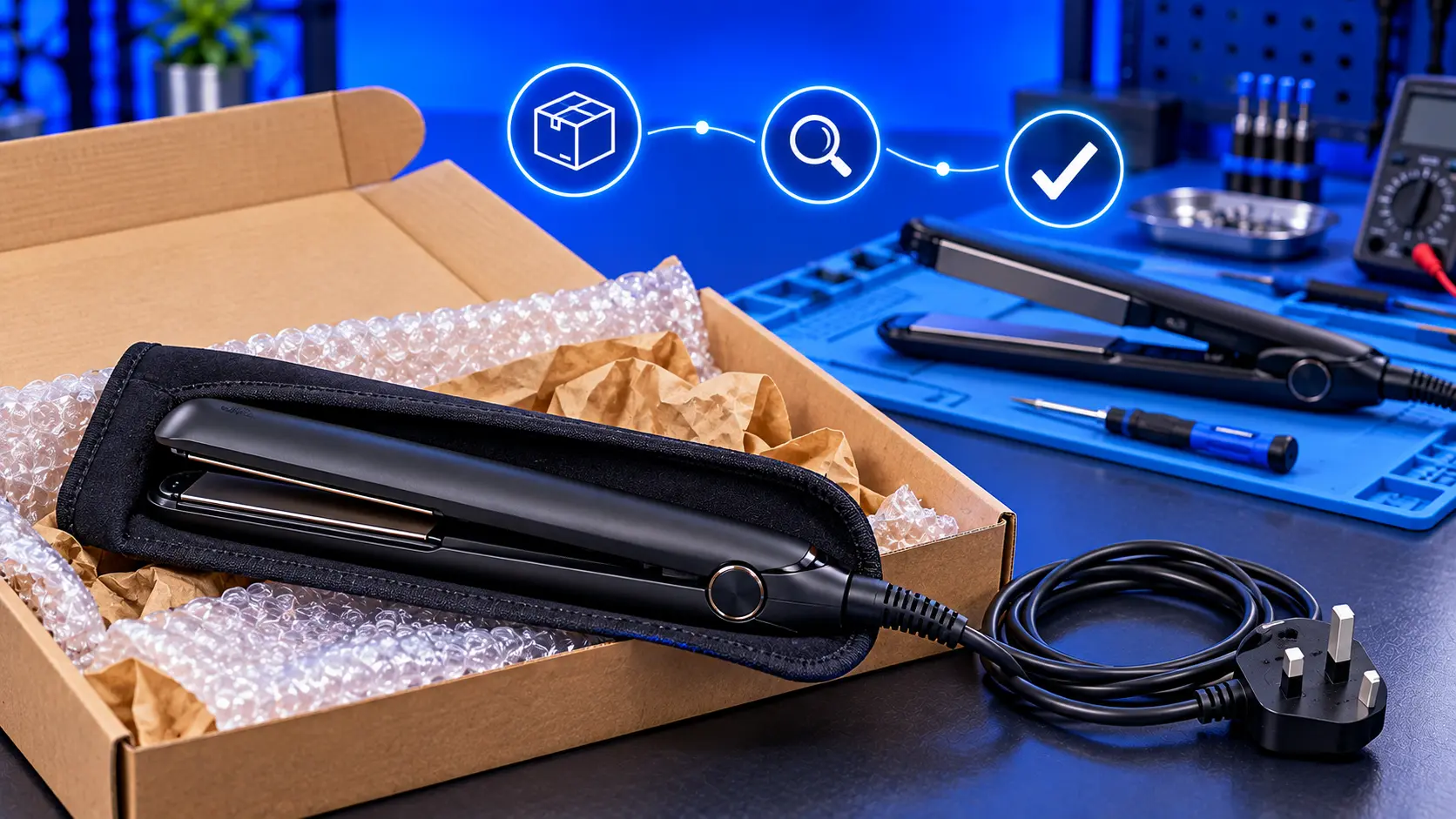
There's a difference between a GHD that powers on but won't heat, and one that's completely dead — no lights, no beep, no sign of life at all. If yours is the second kind, this is the page for you. A totally dead straightener has its own set of likely causes, most of them straightforward and inexpensive to fix.
I've been repairing electronics for over 25 years, and a "won't turn on at all" fault is a common one. Here's what's usually behind it, the quick things to check yourself first, and how it's put right.
"Won't turn on" vs "won't heat" — which have you got?
This matters, because they're different faults:
Won't turn on / completely dead — no lights, no beep, nothing happens when you switch on. This page. Usually a power-supply problem: the plug fuse, the cable, or the internal thermal fuse.
Powers on but won't heat — lights come on, you hear the beep, but the plates stay cold. That's a different fault (usually the internal thermal fuse or heater element) and I've covered it in my guide to GHDs that won't heat up.
If your straighteners show no signs of life at all, read on.
Check these two things first (they're free)
Before assuming a fault, rule out the two simplest causes — both cost nothing:
Try a different plug socket. It sounds obvious, but a dead socket or a tripped switch is worth ruling out first. Plug something else into the socket to confirm it's live.
Check the plug fuse. UK plugs contain a small fuse that can blow — often at the same time as a fault inside the straighteners, but sometimes on its own. If you're comfortable doing so, swap the fuse in the plug for a new one of the correct rating (a standard 3A or 5A fuse as marked). If that brings the straighteners back to life, brilliant — that was the whole problem.
If neither of those helps, the fault is inside the cable or the straighteners themselves.
The most common causes of a dead GHD
A broken cable
The single most common cause of a completely dead straightener is the mains cable failing — usually where it enters the iron, from years of flexing and being wrapped up. If the internal wires break completely (rather than intermittently), the straighteners get no power at all and appear dead.
A tell-tale sign it's the cable: if the straighteners ever flicker to life when you move or bend the cable, that's a cable fault for certain — see my guide to GHD cable faults. But a fully broken cable can leave them completely dead with no flicker at all. It's a simple, inexpensive repair.
A blown internal thermal fuse
GHDs have an internal thermal fuse — a safety component that cuts power if the iron overheats. When it fails, it can leave the straighteners completely dead. It's an inexpensive part, but replacing it safely means using the correct temperature-rated fuse, which is where DIY attempts often go wrong on a mains device running at over 180°C.
A circuit-board fault
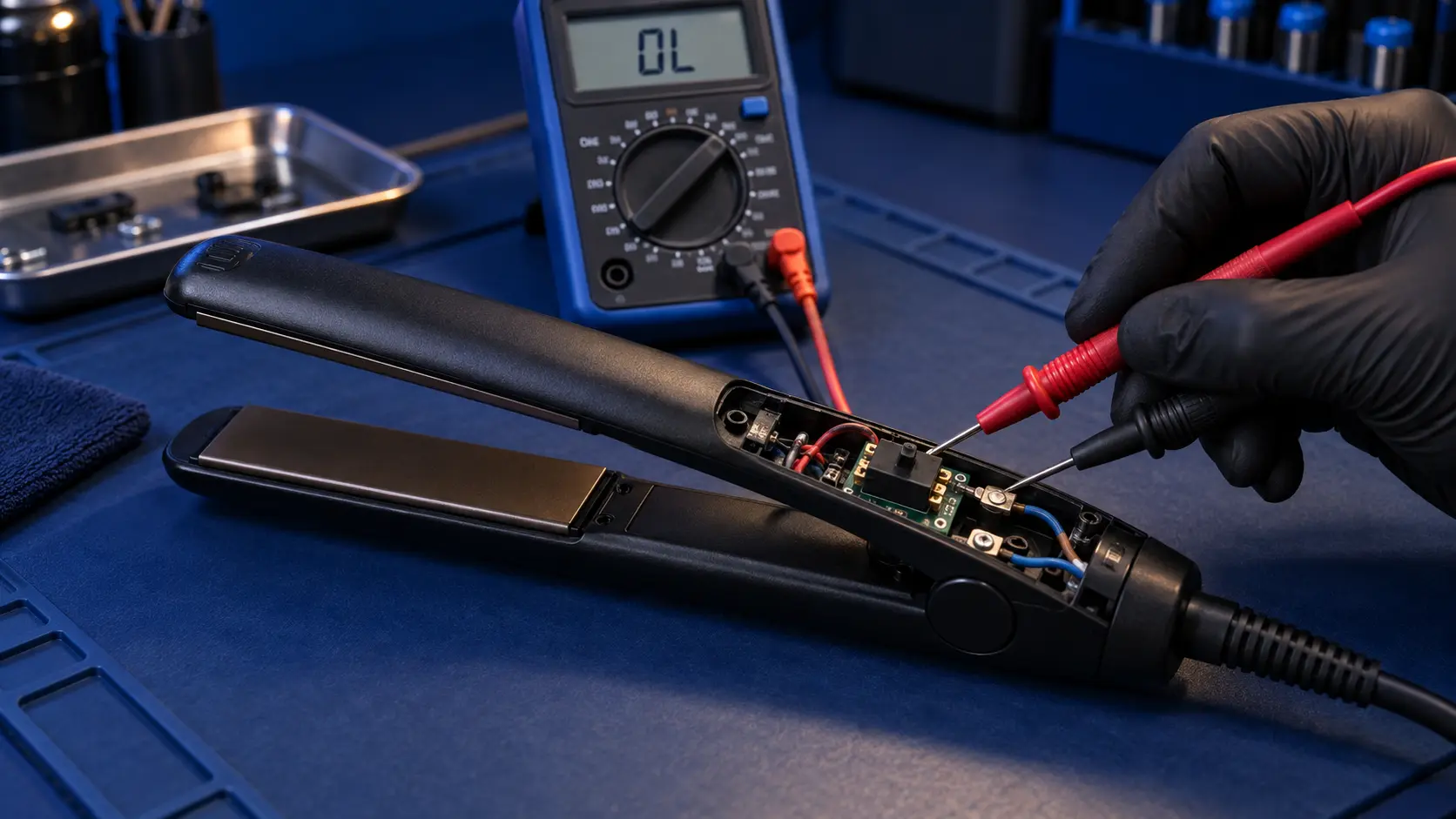
Less commonly, a fault on the internal circuit board (for example the R8/R11 resistors on Mk4 and Mk5 models, or a power surge from a failing cable) can stop the straighteners powering up. These are repairable, but need proper testing to diagnose — and if the underlying cause (like a bad cable) isn't addressed, the fault can return.
Please don't ignore a dead straightener's cause
One important safety note: if your GHDs went dead suddenly — especially with a bang, a spark, a burning smell, or the plug fuse blowing — don't just keep swapping plug fuses and trying again. A repeatedly blowing fuse is a sign of a genuine electrical fault (often a shorting cable), and forcing power through it is a real risk on a mains device. Stop, and get it properly checked.
How the repair works
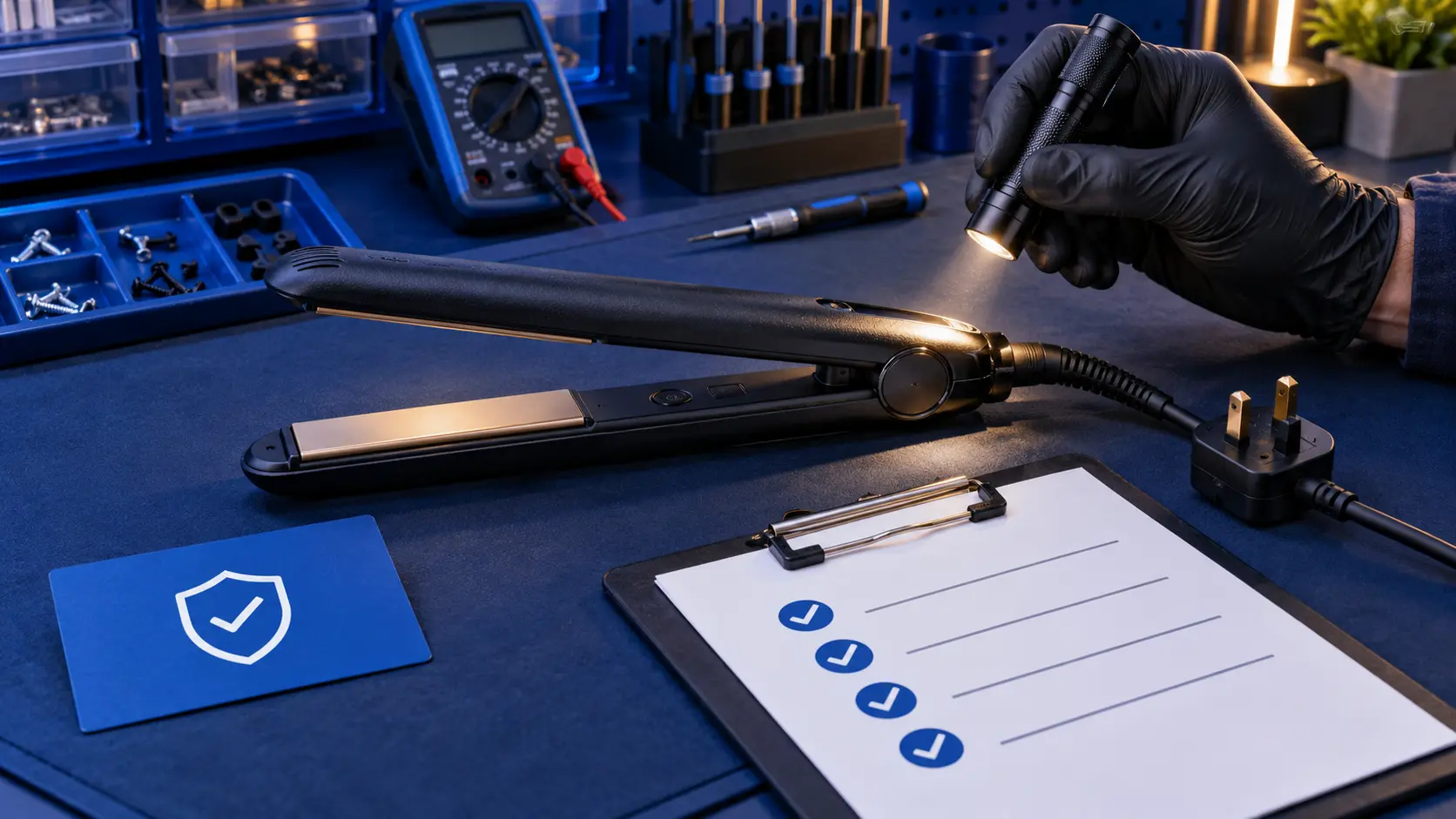
When a dead GHD comes in, I test where the power is being lost — plug through cable through internal fuse through board — find the actual break, and fix it, rather than guessing at one part. On Mk4/Mk5 models I also replace the R8/R11 resistors as a preventative so the same fault is less likely to come back. Everything is then tested and PAT safety-tested before it comes back to you.
It's a flat £29 all-in for standard models (£39 for Gold, Max and Platinum+) — parts, labour, return postage and safety test included — backed by my no-fix-no-fee promise and a 12-month warranty. If I can't bring it back to life, you don't pay for the repair.
Is a dead GHD worth fixing?
Almost always, yes — a completely dead straightener is usually just a broken cable or a blown fuse, not a write-off, and a £29 repair beats £100-plus for a new pair. The main exception is the round-button Eclipse and Platinum (S8T261) models, whose sealed internals can't be repaired (though a dead one caused by the cable can sometimes still take a replacement cable).
If your GHDs won't turn on and the socket and plug fuse check out, you can book a power and cable repair here — I'll send simple instructions for posting them in, or see all the GHD repairs I offer if you're not sure which fault yours is.
The Repair Works is an independent UK repair service, run by me, Paul — 25 years of hands-on repair experience, working by post for customers across the whole country. Not affiliated with or endorsed by GHD.