A burning smell from your straighteners is alarming, and rightly so — but it doesn't always mean the same thing. Sometimes it's completely harmless and expected; sometimes it's a genuine electrical fault that means you should stop using them straight away. The trick is knowing which is which, and this page will help you tell them apart quickly.
I've been repairing electronics for over 25 years. Here's what a burning smell usually means, the one situation where it's normal, and — importantly — the situations where you need to stop and get them checked.
The one time a burning smell is normal
If your GHDs are brand new, or nearly new, a faint burning or "hot metal" smell during the first few uses is usually completely normal. New straighteners have a little manufacturing residue and protective coating on the plates and heating elements, and the first few times they get up to temperature, that residue simply burns off. The smell should fade after a handful of uses and disappear entirely. Nothing is wrong.
The same can occasionally happen if hair product, oils or styling residue have built up and baked onto the plates — a burning smell then is the residue cooking, not a fault. (Giving cooled plates a gentle wipe can help — I've covered plate care separately.)
So: new straighteners, faint smell, first few uses, fading each time = almost certainly fine.
Everything below is about the other kind of burning smell — and that one you shouldn't ignore.
When a burning smell means stop immediately
If your straighteners are not new, or the smell is strong, getting worse, or smells electrical (like hot plastic or singed wiring) rather than just "hot metal" — treat it as a fault and act on it:
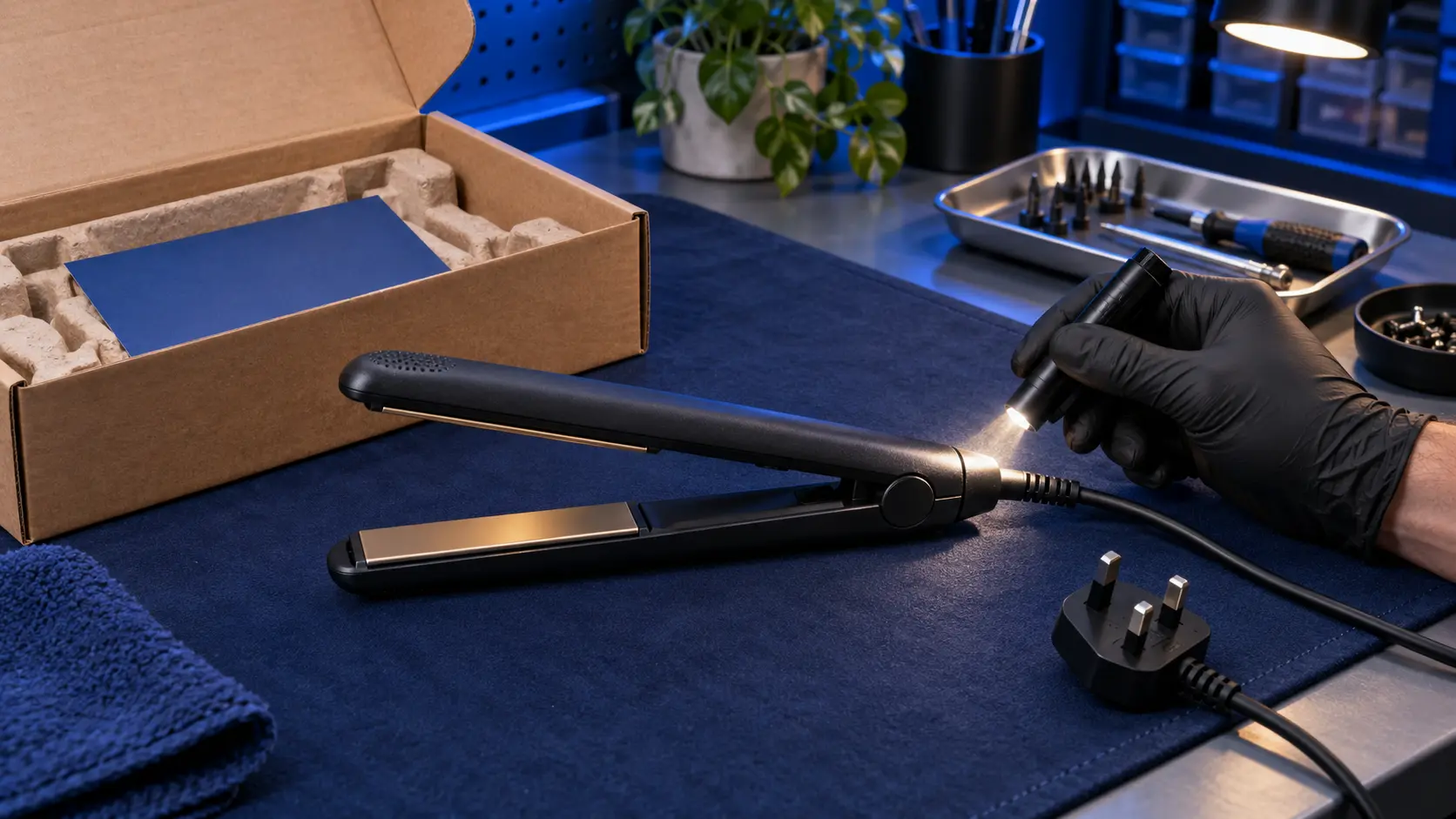
Switch them off at the socket, unplug them, and don't use them again until they've been checked.
I'm not saying that to be over-cautious. A burning smell from an older straightener usually means a component is overheating or an electrical connection is failing and heating up where it shouldn't — and on a mains device that already runs at over 180°C, that's a real burn and fire risk. Continuing to use it can turn an inexpensive repair into a dangerous situation. Unplugging costs you nothing; carrying on could cost you a great deal.
What causes a genuine burning smell
When it's a real fault, a burning smell almost always comes down to something overheating in the electrical path:
A failing cable or connection (overheating)
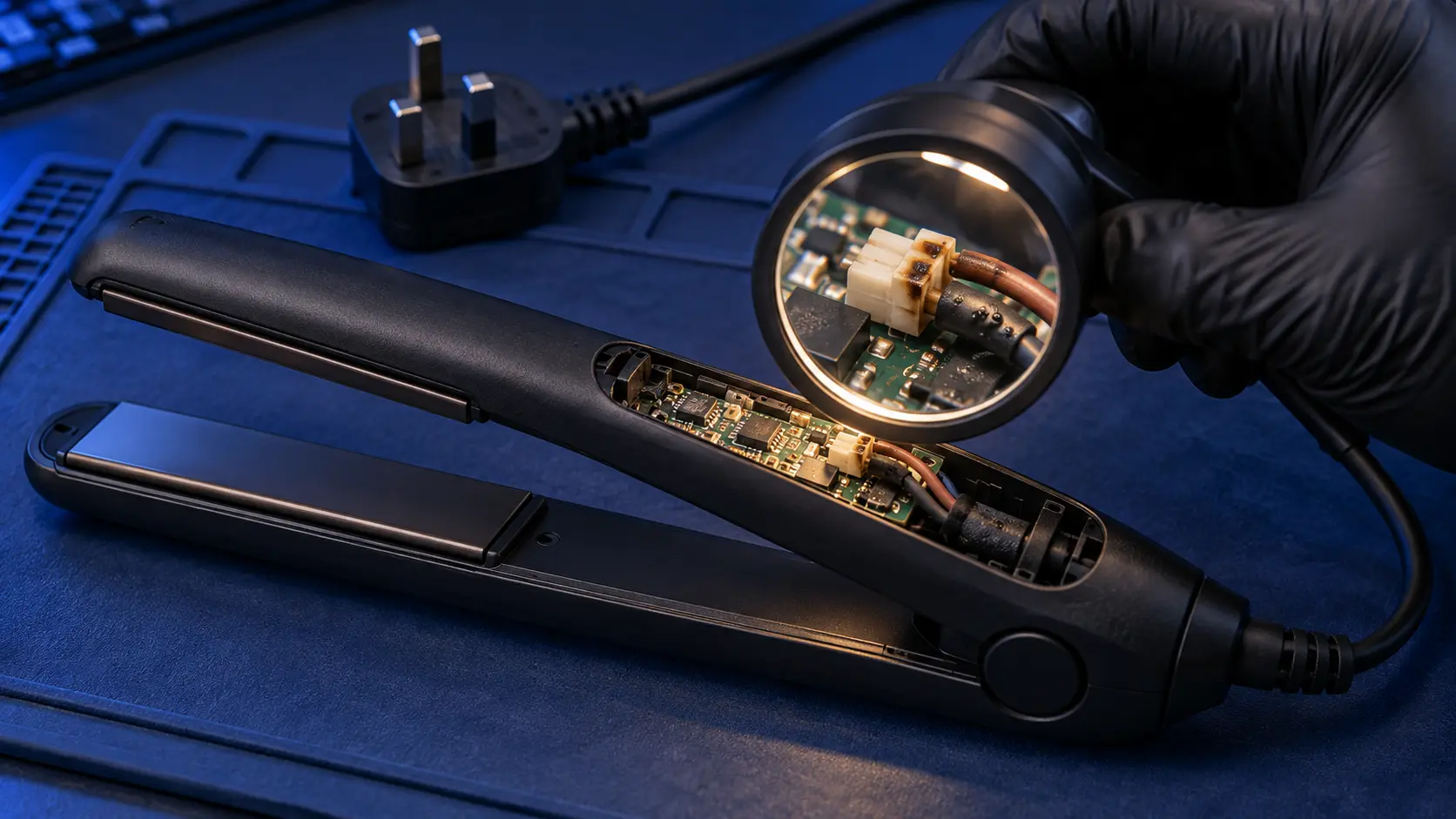
The most common cause is a mains cable or internal connection that's breaking down and heating up. As wires fray or a joint works loose, electrical resistance rises at that point, and resistance generates heat — enough to scorch the surrounding plastic and produce a burning smell. This often goes hand in hand with a buzzing or crackling noise or the straighteners cutting in and out, because it's the same failing connection arcing and overheating. It's repairable, and usually inexpensive — but only if it's caught before it does more damage.
An overheating component on the circuit board
A failing component on the control board — a resistor, a connector, or the switch — can overheat and give off a burning smell as it degrades. This needs proper testing to locate, and it's exactly the kind of fault where continued use makes things worse.
A failing heater element
Occasionally a heater element itself can begin to fail in a way that produces localised overheating and a burning smell. Again, repairable — but a clear signal to stop and get them looked at.
If you also see sparking or smoke
A burning smell combined with visible sparking or smoke is the most serious version of this fault. If that's happening, unplug the straighteners immediately and do not power them on again under any circumstances until they've been inspected. I've written separately about GHDs that spark — but the headline is the same: stop now.
How the repair works
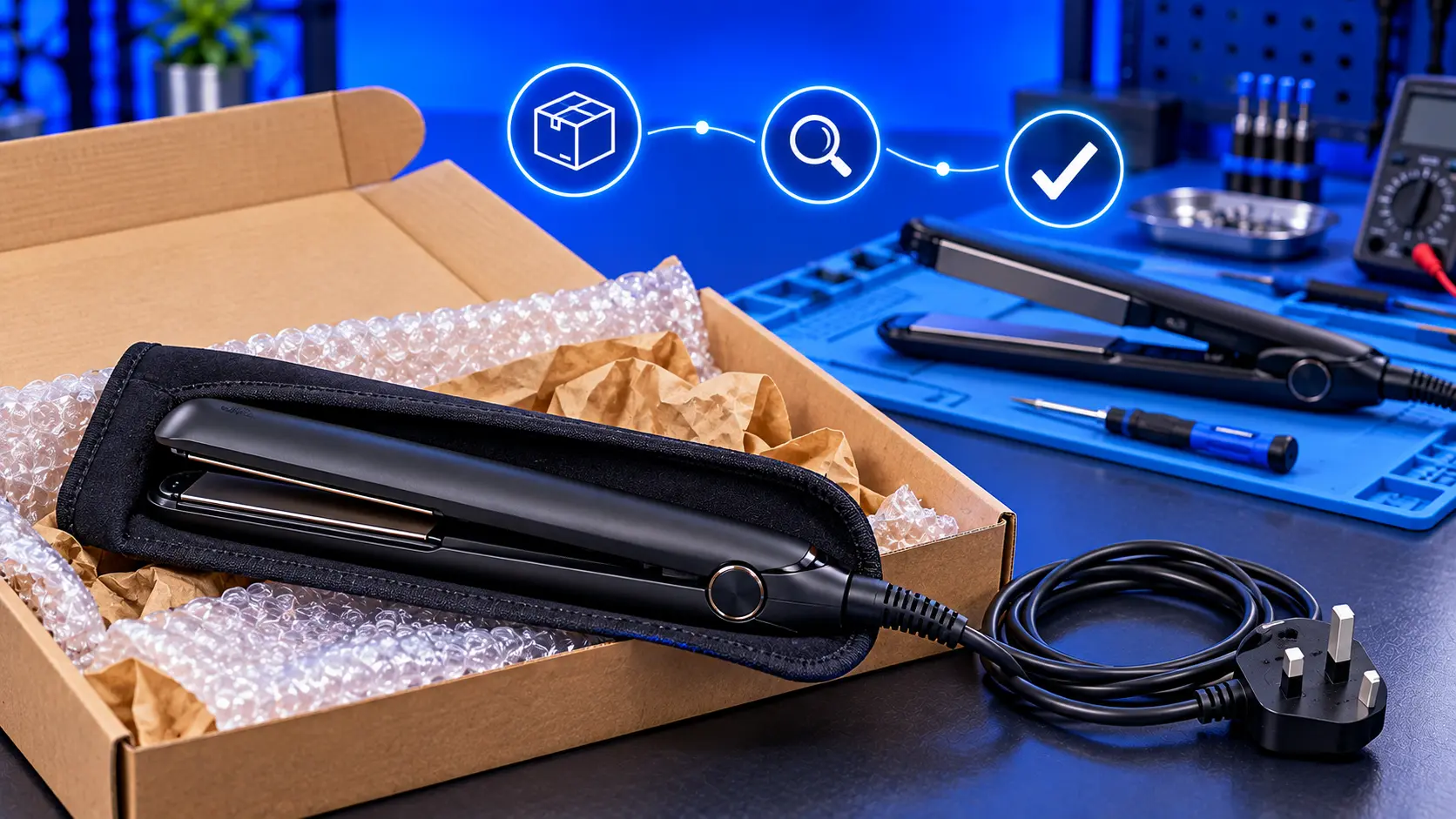
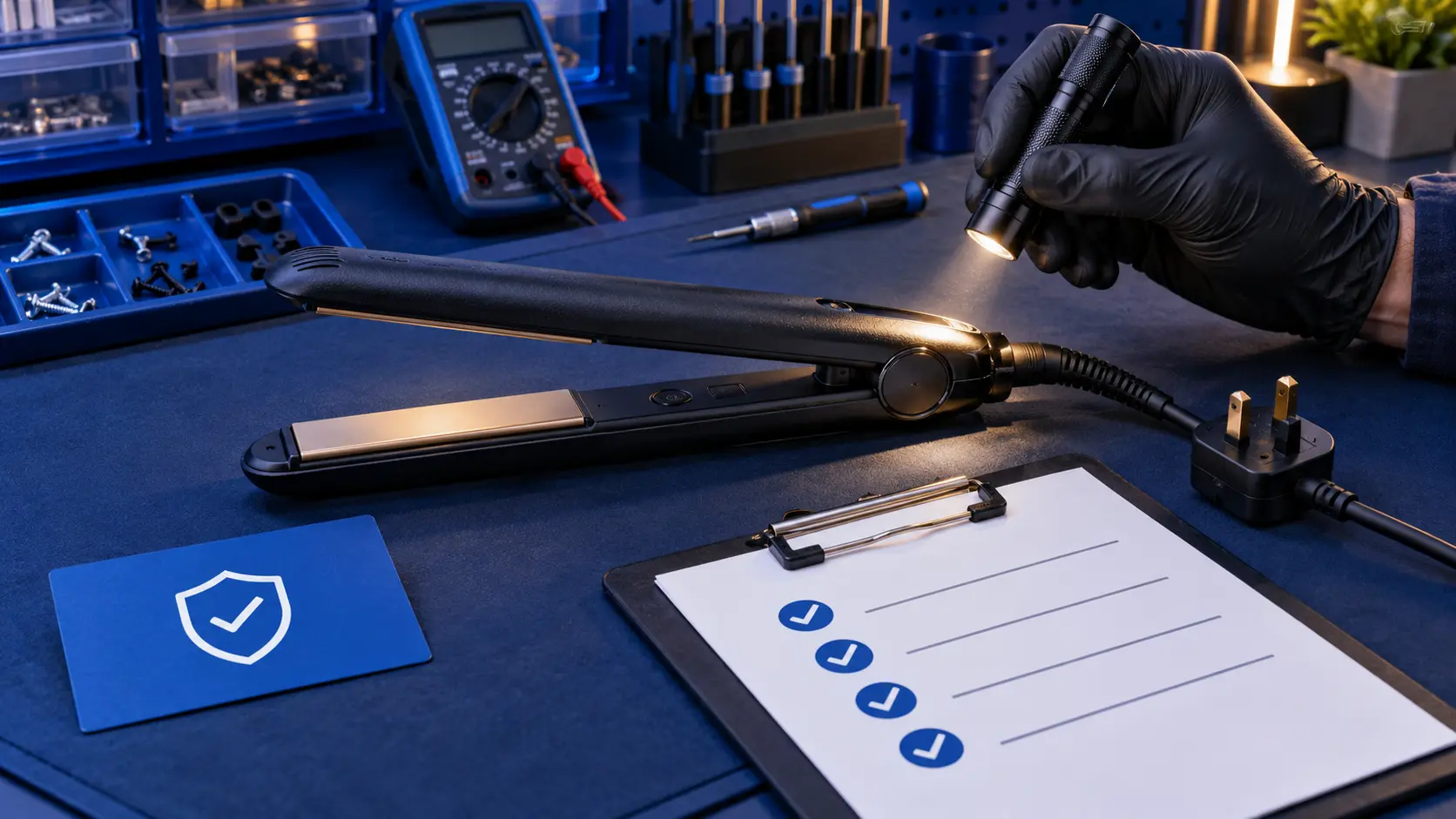
When straighteners come in with a genuine burning-smell fault, I find the source of the overheating — testing the cable, connections, switch, board and elements — and repair the actual cause safely, replacing any component that's been damaged by the heat. Because this is fundamentally an electrical-safety fault, the PAT safety test every repair ends with matters especially here: it confirms the straighteners are electrically safe before they come back to you, not just working. Everything is heat-tested too.
It's a flat £29 all-in for standard models (£39 for Gold, Max and Platinum+) — parts, labour, return postage and safety test included — backed by my no-fix-no-fee promise and a 12-month warranty.
The bottom line
If your GHDs are brand new and the faint smell is fading with each use, you can relax — that's just the coating burning off. But if they're not new, or the smell is strong, worsening, or electrical, please don't take the risk: switch off, unplug, and get them checked. A burning smell is the one GHD symptom I'd never advise anyone to "keep using and see how it goes."
If yours has a genuine burning-smell fault, book a power and cable repair here once they've cooled and you've unplugged them — I'll send simple instructions for posting them in and get them back to you working safely. Not sure which fault yours is? See all the GHD repairs I offer, or send them in and I'll diagnose it for you.
The Repair Works is an independent UK repair service, run by me, Paul — 25 years of hands-on repair experience, working by post for customers across the whole country. Not affiliated with or endorsed by GHD.