If your GHDs have started making a buzzing, humming or crackling noise, I want to be straight with you from the outset: this is one fault you shouldn't ignore or "keep an eye on". An electrical noise from a mains-powered device that runs at over 180°C usually means something is arcing inside — and that's a genuine safety issue, not just an annoyance. The reassuring part is that it's almost always repairable, and often an inexpensive fix. But the first thing to do is stop using them.
I've been repairing electronics for over 25 years, so here's what a buzzing GHD usually means, why it matters, and how it's put right safely.
First — unplug them and stop using them
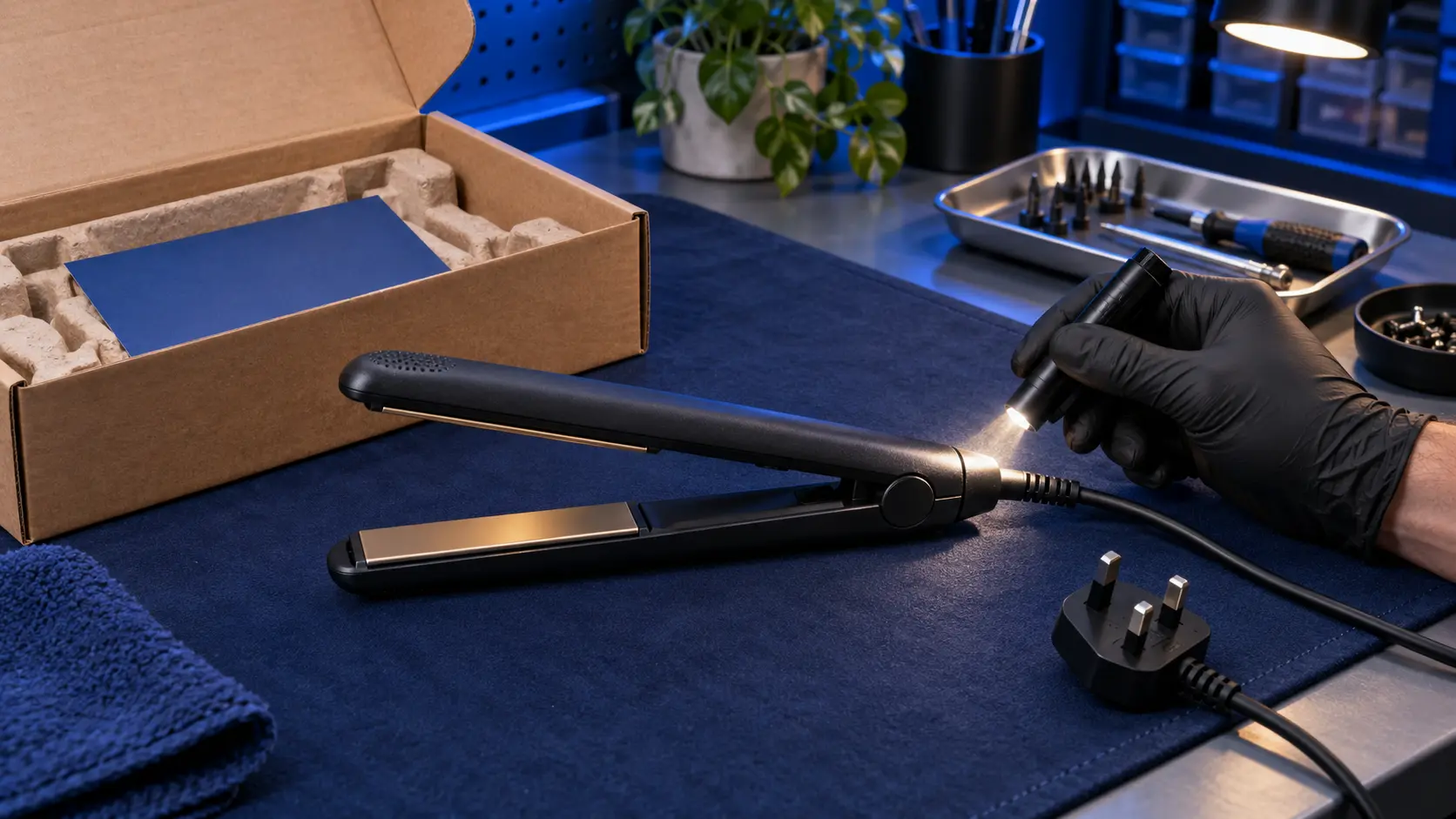
Before anything else: if your straighteners are buzzing, humming or crackling while plugged in, switch them off at the socket and unplug them. I don't say that to be dramatic — I say it because an electrical buzz typically means electricity is jumping a gap it shouldn't (arcing), and continued use risks the fault worsening, overheating, or in the worst case causing a burn or fire risk. These are devices that get extremely hot and draw mains power; a known electrical fault isn't one to nurse along. Getting them checked is far cheaper than the alternative.
What causes a GHD to buzz
An electrical buzzing or humming almost always comes down to a poor or breaking electrical connection somewhere in the straighteners' power path. The usual culprits are:
A failing mains cable (the most common cause)
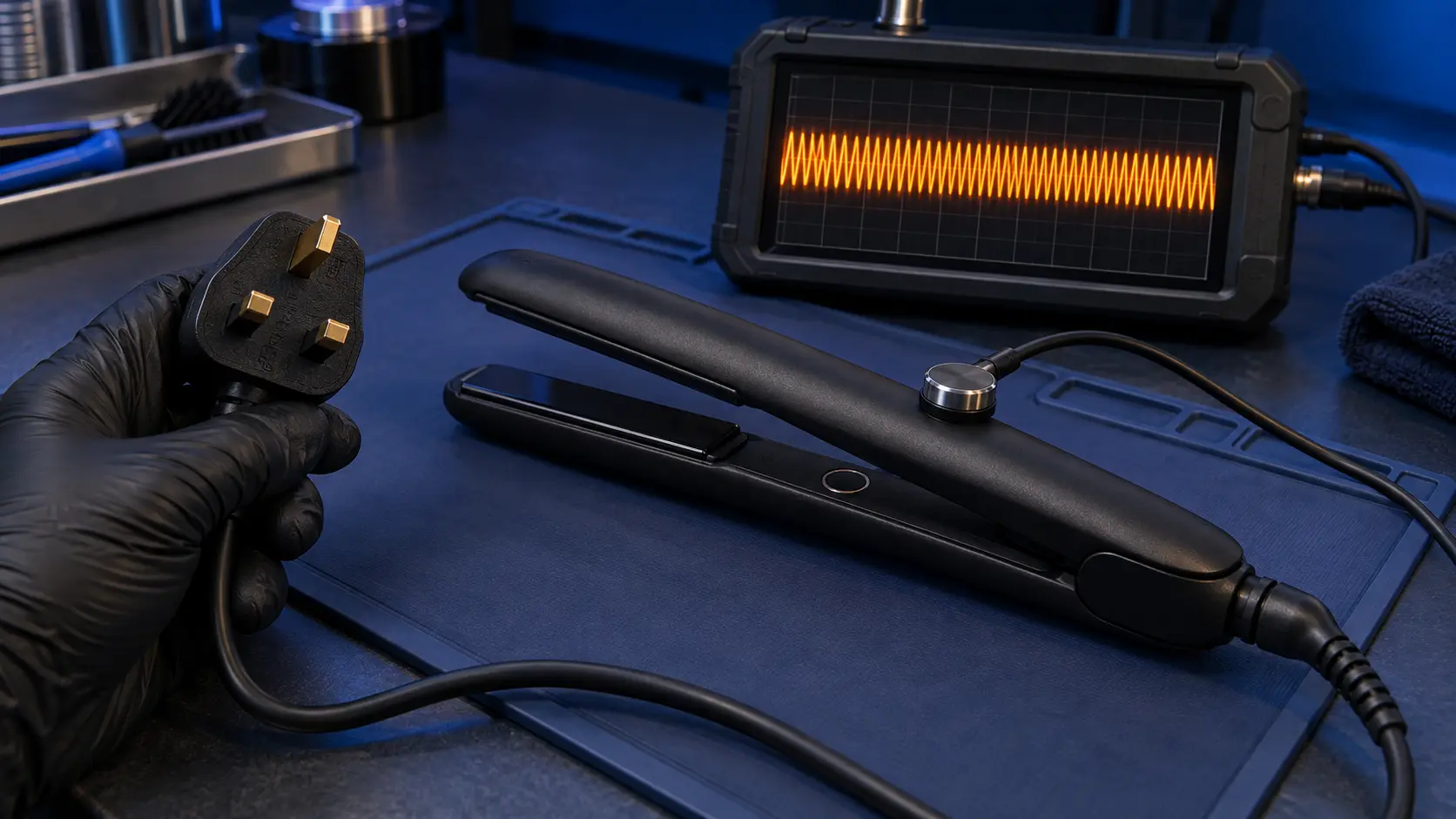
By far the most common source of buzzing is the mains cable failing where it enters the iron. As the internal wires break down over time — from years of flexing and being wrapped up — the connection becomes poor and electricity can start to arc across the damaged strands. That arcing is what you hear as a buzz or crackle. It's the same underlying fault as a GHD that "cuts out or only works when you hold the cable at an angle", which I've covered in my guide to GHD cable faults — but once it's audibly buzzing, the cable has deteriorated to the point where it really shouldn't be used. It's a straightforward, inexpensive repair.
A loose or arcing internal connection
Inside the straighteners, the cable and heating elements connect through small joints and terminals. If one of those connections works loose, corrodes, or develops a failing solder joint, electricity can arc across the gap — producing a buzz or hum, often along with intermittent heat. Re-making the connection properly resolves it.
A failing switch or component
Less commonly, a worn on/off switch or a failing component on the circuit board can produce an electrical noise as it struggles to conduct cleanly. These need testing to pin down, but they're part of the same picture — electricity meeting resistance where it shouldn't.
Buzzing vs a mechanical rattle — not the same thing
One quick distinction. A faint mechanical rattle — a loose plate, a bit of play in the hinge — is a different, non-electrical issue, and while it's worth fixing, it isn't the urgent safety concern that an electrical buzz is. The fault this page is about is the electrical kind: a buzz, hum or crackle that happens when the straighteners are powered on, often changing as they heat up or as you move the cable. If in doubt, treat it as electrical and stop using them until it's checked — better safe than sorry with mains power.
If there's also a burning smell or visible sparking
If, alongside the buzzing, you notice a burning smell or see sparking, that's a more advanced version of the same problem and even more of a reason to stop immediately. I've written separately about GHDs that smell of burning — if that's you, please read it and don't power the straighteners on again until they've been looked at.
How the repair works
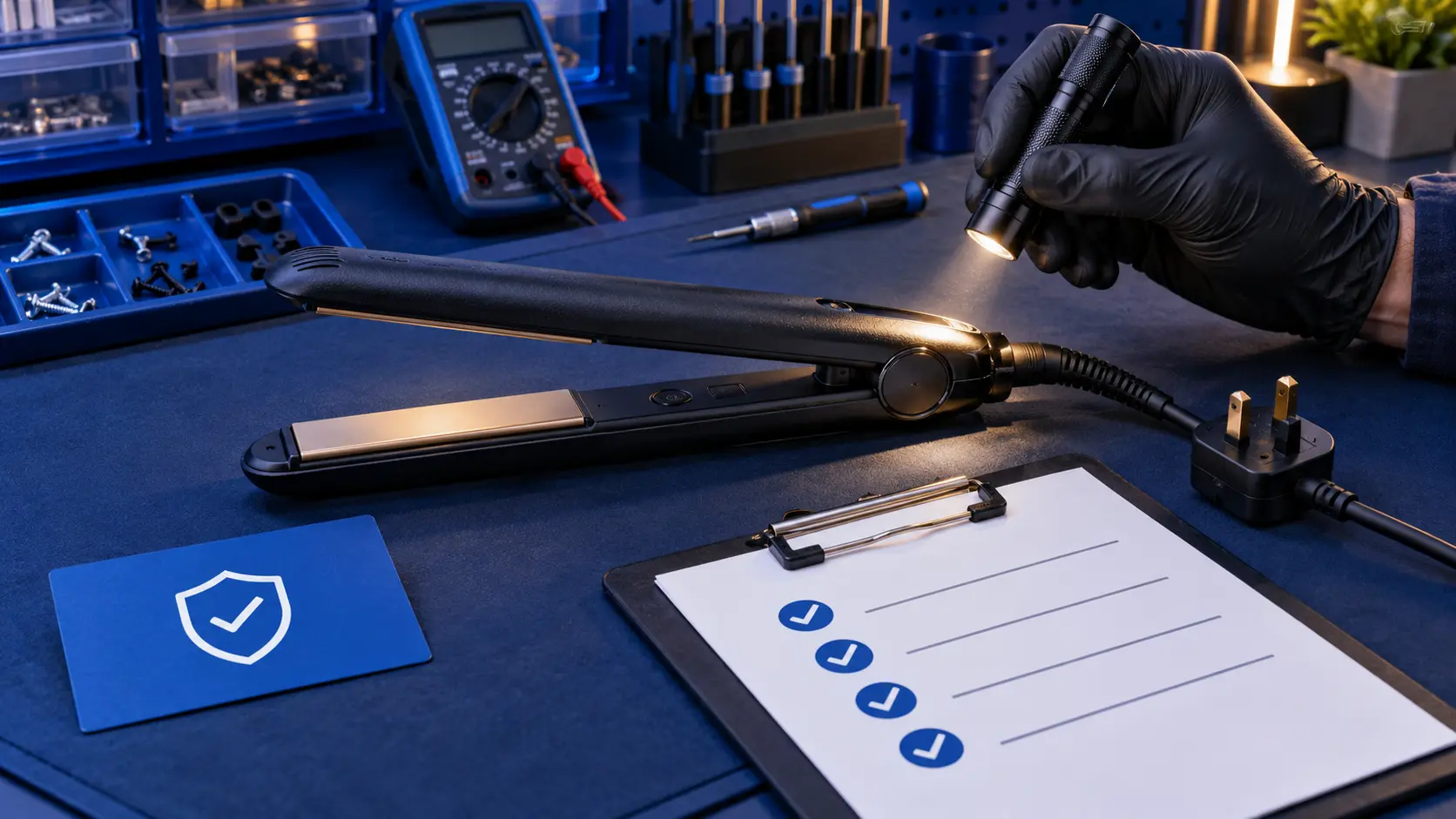
When a buzzing GHD comes in, I test the whole power path — cable, connections, switch and board — to find exactly where the electricity is arcing, and fix the actual cause safely. Because this is an electrical-safety fault, the PAT safety test at the end of every repair matters especially here: it confirms the straighteners are electrically sound before they come back to you, not just working. Everything is heat-tested too.
It's a flat £29 all-in for standard models (£39 for Gold, Max and Platinum+) — parts, labour, return postage and safety test included — backed by my no-fix-no-fee promise and a 12-month warranty.
Is it worth repairing?
Yes — and more than that, it's worth repairing promptly. A buzzing GHD is usually a failing cable or a poor connection on an otherwise perfectly good pair, so a £29 repair restores them safely for a fraction of a replacement. But unlike some faults you can put off, this is one to deal with sooner rather than later, precisely because it's a safety issue. The main exception, as always, is the sealed round-button Eclipse and Platinum (S8T261) models — though if the buzz is coming from the cable, even those can often take a replacement cable.
If your GHDs are buzzing, humming or crackling, unplug them and book a power and cable repair here — I'll send simple instructions for posting them in and get them back to you working safely. Not sure which fault yours is? See all the GHD repairs I offer, or send them in and I'll diagnose it for you.
The Repair Works is an independent UK repair service, run by me, Paul — 25 years of hands-on repair experience, working by post for customers across the whole country. Not affiliated with or endorsed by GHD.