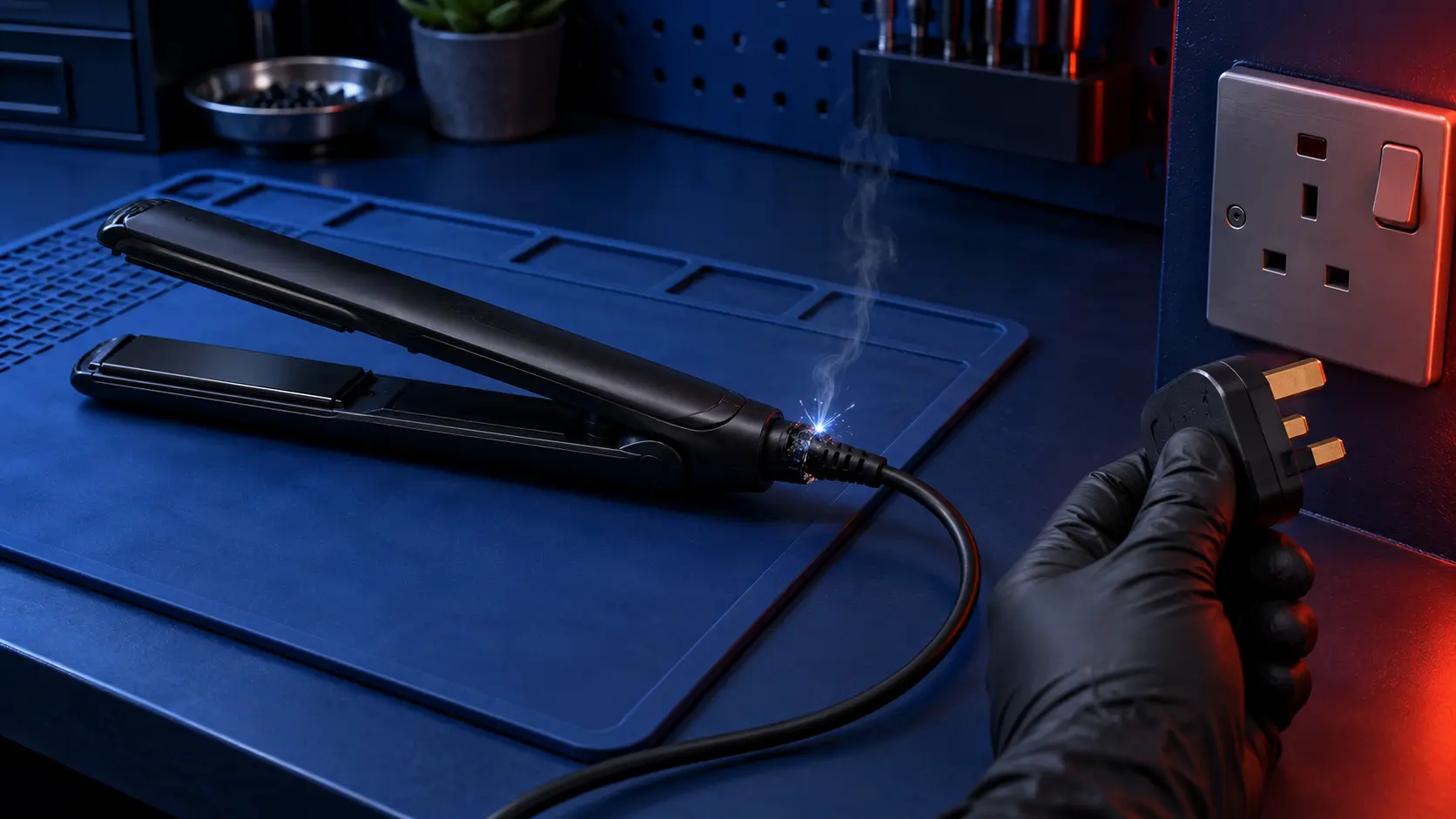
Let me be completely direct, because this is the one GHD fault where there's no room for "let's see how it goes": if your straighteners are sparking or smoking, switch them off at the socket and unplug them immediately, and do not use them again. A spark or smoke from a mains-powered device that runs at over 180°C is a serious electrical fault and a genuine fire and burn risk. The good news is that it's very often repairable — but only once it's been stopped and properly checked. Please read the safety steps first, then the causes.
I've been repairing electronics for over 25 years, and I'd never advise anyone to carry on using a straightener that's sparking. Here's what to do and what's behind it.
What to do right now
Switch off at the wall socket and unplug the straighteners. Don't just switch off the straighteners themselves — kill the power at the socket.
Don't touch the sparking area or try to pull anything apart while they're warm or plugged in.
Let them cool completely before moving or packing them.
Don't power them on again "just to check" — a device that has sparked once can spark again, and each time risks it getting worse.
That's it — the priority is simply to make them safe. Once they're unplugged and cool, there's no rush; a proper repair will sort the cause.
What causes a GHD to spark or smoke
Sparking and smoke both come from the same root: electricity arcing across a gap or a connection that's broken down, or a component overheating badly. The usual causes, from most to least common:
A failing mains cable — often right at the plug or where it enters the iron
The most frequent cause of visible sparking is the mains cable breaking down, either at the plug or where the flex enters the straighteners. As the internal wires fray and separate, electricity can arc across the broken strands — and arcing is literally a small, controlled (until it isn't) electrical spark. You may see it flash at the plug, or hear a buzzing or crackling noise alongside it, or notice it after the straighteners have been cutting in and out. It's the advanced stage of a cable fault, and it's repairable — but it has reached the point where the straighteners are genuinely unsafe to use.
A shorting internal connection
Inside the straighteners, if a connection has broken loose or corroded to the point where live parts are arcing, that can produce sparking and, if it overheats surrounding plastic, smoke. This needs the straighteners opening up and the fault made safe properly.
An overheating or failed component
A component on the circuit board that has failed catastrophically — overheating until it scorches or smokes — is a less common but serious cause. If you've seen actual smoke (as opposed to a brief spark), this is more likely, and it's the clearest possible signal to stop and get them checked.
Spark vs smoke — does it matter?
Both mean stop, but it's worth noting the difference for context. A brief spark (often at the plug) is frequently a failing cable arcing, and is usually a straightforward, safe repair once the cable's replaced. Smoke, or a burning smell with it, suggests something has actually overheated and possibly been damaged — still very often repairable, but a stronger sign that a component has failed. Either way, the action is the same: unplug, cool, and get them looked at. If there's also a burning smell, my guide to GHDs that smell of burning covers that side of it.
Please don't try to bodge this one
I'm all for people ruling out simple things themselves — checking a plug fuse, warming up a cold straightener — but sparking is not a DIY situation. Poking around inside a device that arcs mains electricity, or wrapping tape around a sparking cable to "get a few more uses", is genuinely dangerous. This is exactly the kind of fault to hand to someone who can make it safe properly. It's also, honestly, usually one of the cheaper repairs once it's in the right hands.
How the repair works
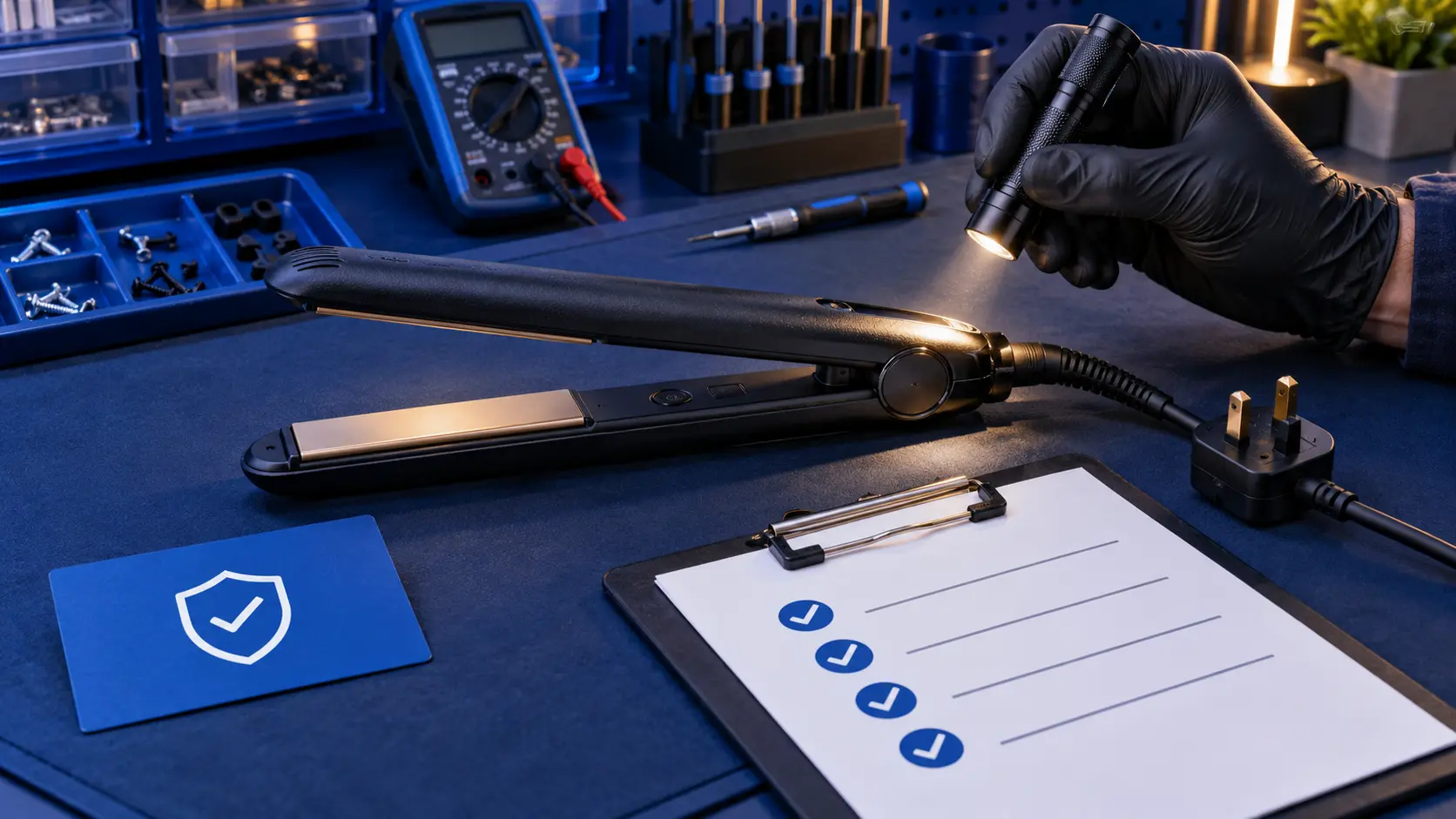
When a sparking or smoking GHD comes in, I find exactly where the electricity is arcing or the overheating is happening — testing the cable, plug, connections, switch and board — and repair the cause safely, replacing anything the fault has damaged. Because this is an electrical-safety fault above all, the PAT safety test at the end confirms the straighteners are electrically sound before they come back to you. Everything is heat-tested too.
It's a flat £29 all-in for standard models (£39 for Gold, Max and Platinum+) — parts, labour, return postage and safety test included — backed by my no-fix-no-fee promise and a 12-month warranty.
The bottom line
Sparking or smoking is the one GHD symptom where the advice is simple and non-negotiable: unplug now, don't use them again, and get them checked. It's usually a failing cable or connection on an otherwise good pair — very often an inexpensive fix — but it's reached the stage where safety has to come first. (The sealed round-button Eclipse and Platinum (S8T261) models can't be repaired internally, but a sparking cable on one can often still be replaced.)
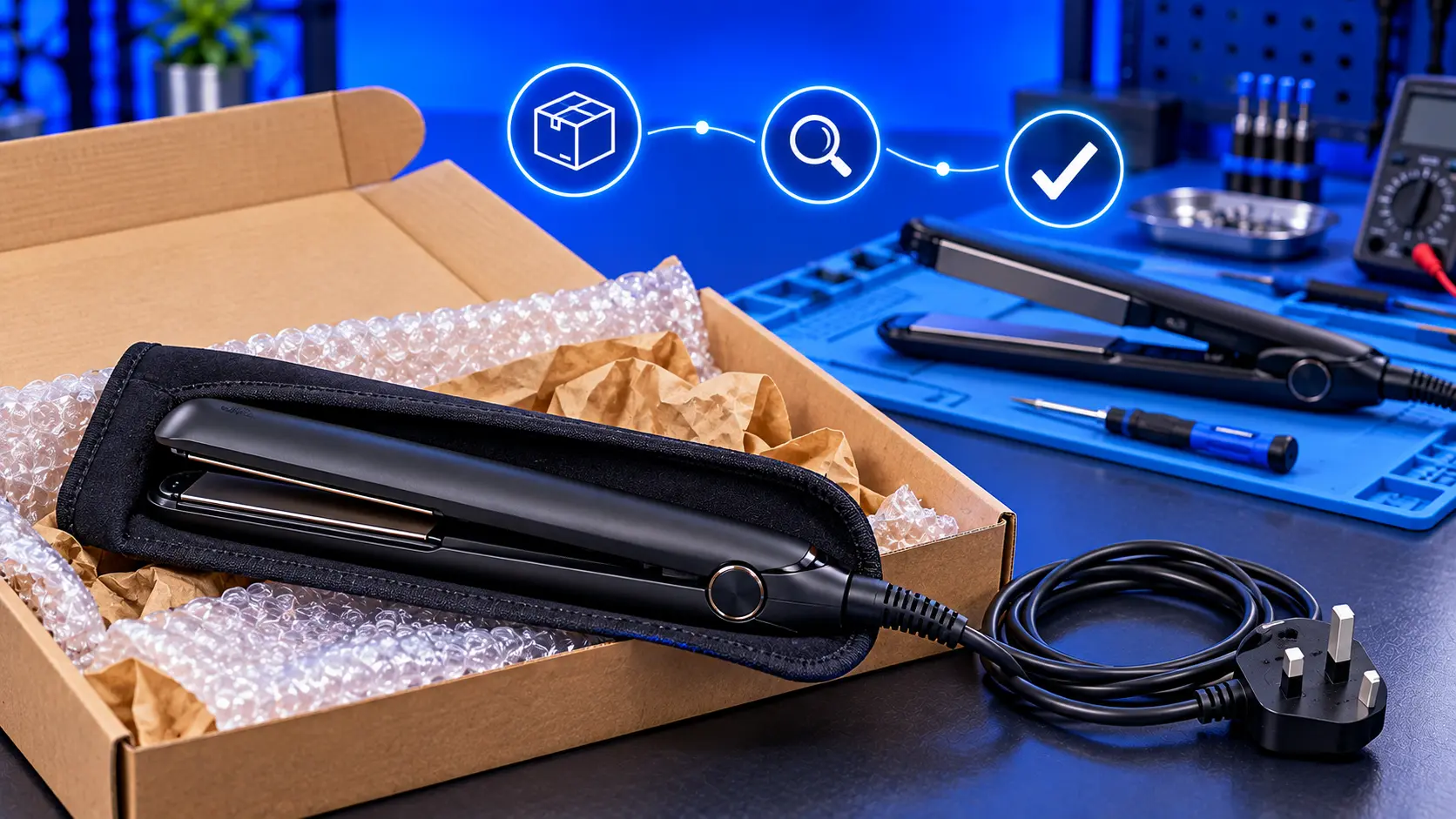
Once your straighteners are unplugged and cool, you can book a power and cable repair here — I'll send simple instructions for posting them in safely and get them back to you working as they should. Not sure which fault yours is? See all the GHD repairs I offer, or send them in and I'll diagnose it for you.
The Repair Works is an independent UK repair service, run by me, Paul — 25 years of hands-on repair experience, working by post for customers across the whole country. Not affiliated with or endorsed by GHD.