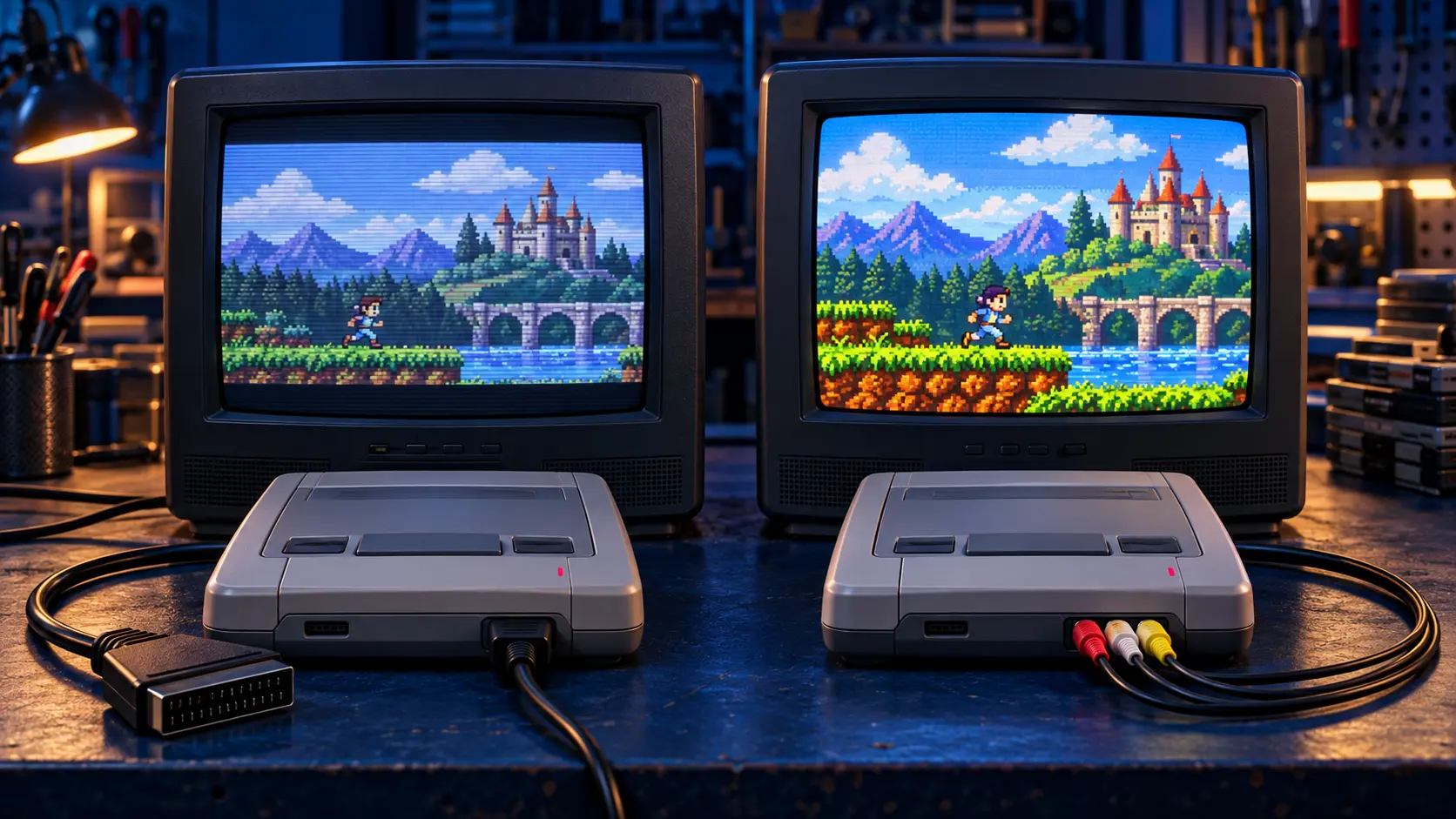
A blurry SNES picture is usually down to the cable. Most SNES consoles are connected with composite video, which gives a soft picture, and switching to a proper RGB SCART cable makes it much sharper. If the picture is still soft or noisy over RGB, your console may have a later 1CHIP board, and that's what the RGB picture fix is for.
Get the right cable first. It's the cheapest step, and for many consoles it's the only one you need.
Composite vs RGB: what's the difference?
The SNES can send its picture to a TV in more than one way, and the difference is big on a modern screen.
- Composite is the single yellow plug. It squeezes all the picture information into one signal, which gives a soft picture with colours that can bleed into each other.
- RGB carries the red, green and blue colour signals separately. That keeps them clean, so the picture is much sharper.
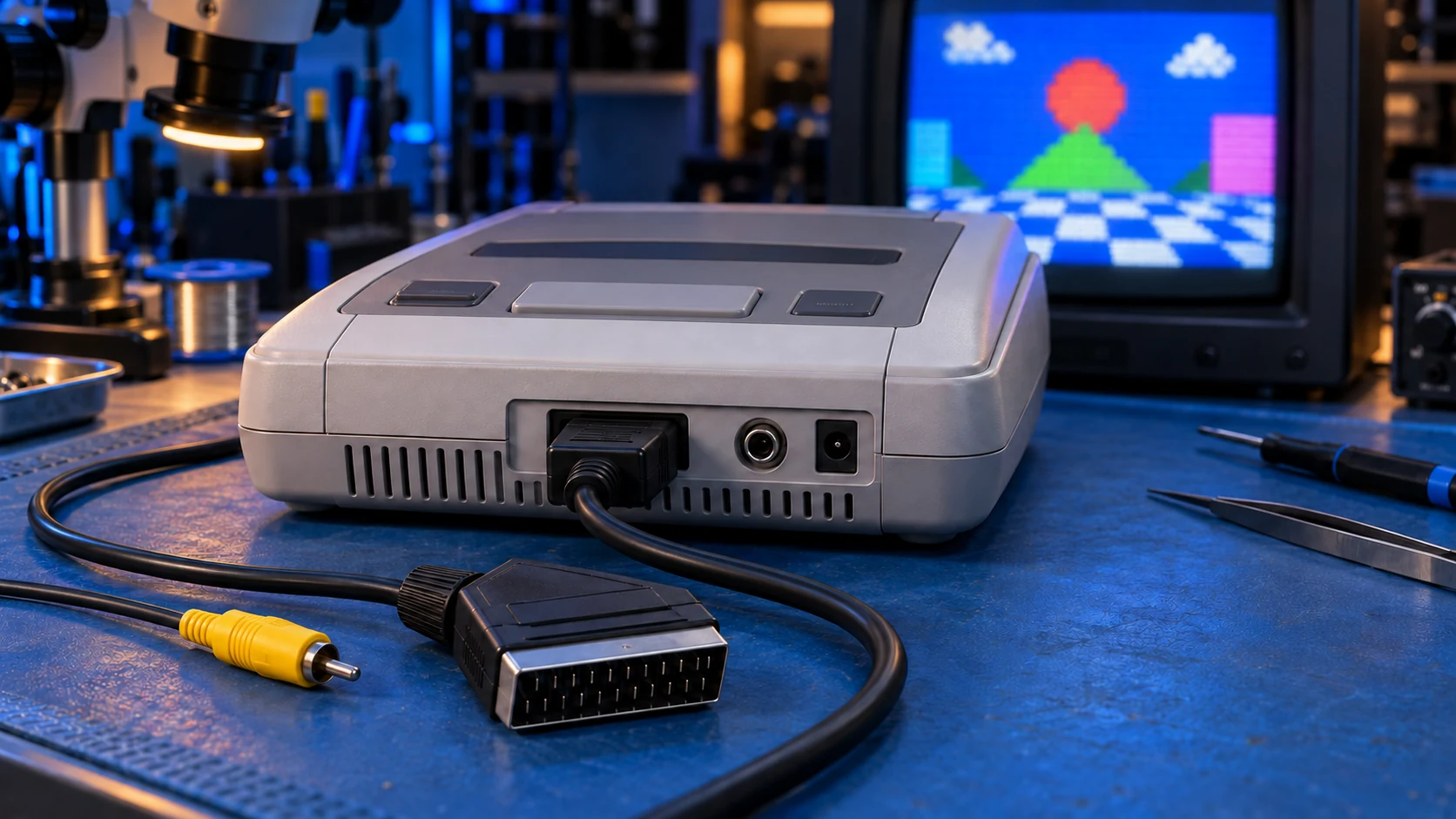
In the UK, RGB traditionally goes through a SCART socket, the large 21-pin connector found on older TVs. Many new TVs no longer have one.
Step 1: get the right cable
Many SNES consoles give a good RGB picture with just the right RGB SCART cable, so check this before you book anything.
- Check what you're using now. If your cable ends in a yellow plug, or a yellow plug into a SCART adapter, you're on composite.
- Not every SCART lead is RGB. A cable with a SCART plug on the end can still carry only composite. Look for one sold specifically as an RGB SCART cable for the SNES.
- Set the TV to the SCART input and, if your TV has the option, set that input to RGB.
- No SCART on your TV? You'll need another way to connect it. My guide to connecting a retro console to a modern TV covers the options.
If the picture is sharp and clean after that, you're done, and there's nothing to repair.
Step 2: still soft or noisy? It may be a 1CHIP board
Later SNES boards are known as 1CHIP boards. On these boards, the RGB picture can come out soft or noisy even with a good cable. You might notice:
- a picture that looks slightly smeared, even over RGB;
- faint noise or shimmer in areas of flat colour;
- edges that aren't as crisp as you'd expect from RGB.
The fix is a filter mod on the board, which cleans the RGB signal up. That's the SNES RGB picture fix, a fixed price of £45. It's a board-side fix, so it's worth doing only once you've confirmed the cable isn't the problem. If you're not sure which board your console has, get in touch before you book.
When it's not the picture quality
A soft picture is one thing. A picture that's dim, wavy or unstable can be different. On old consoles, electrolytic capacitors dry out over decades, and that can show up as picture or sound problems. A SNES recap, which replaces the capacitors with new ones of the right values, is £55. It's not a cure for every fault, so please describe the symptoms when you book.
If there's no picture at all, or the console won't power up, start with what to check when a SNES won't turn on, and see the SNES repair assessment.
A note on collector value
Rare or boxed consoles lose collector value when modded. If yours is a boxed or unusual console, try a good RGB SCART cable first and think about whether the board-side fix is worth it for you. For an everyday console you play, it usually is. You can see every SNES option on the retro console repairs page.
You pay the postage to send your SNES in, and the insured, tracked return is included. The RGB picture fix comes with a 12-month warranty, and it's no fix, no fee: if I can't fix it, I refund what you paid, less return postage.
Frequently asked questions
Will an RGB SCART cable fix my blurry SNES picture?
In many cases, yes. Many SNES consoles give a good RGB picture with just the right RGB SCART cable, so try that before any board work.
What is a 1CHIP SNES?
It's the name for later SNES boards. They can give a soft or noisy RGB picture, which a filter mod cleans up.
Does the RGB picture fix reduce the value of my console?
Rare or boxed consoles lose collector value when modded. For a console you play every day, the sharper picture is often worth it, but it's your call.