You watched a video, bought a stick module for a few quid, and it didn't go the way the video did. Now the controller is in pieces, something is torn or lifted, and it's worse than the drift you started with.
This happens a lot. It's a common way for a DIY repair to go wrong, and the honest news is that almost all of it is fixable — usually for the same £19 the original job would have cost, sometimes a bit more.
Here's what typically goes wrong and what can be done about it.
Lifted pads
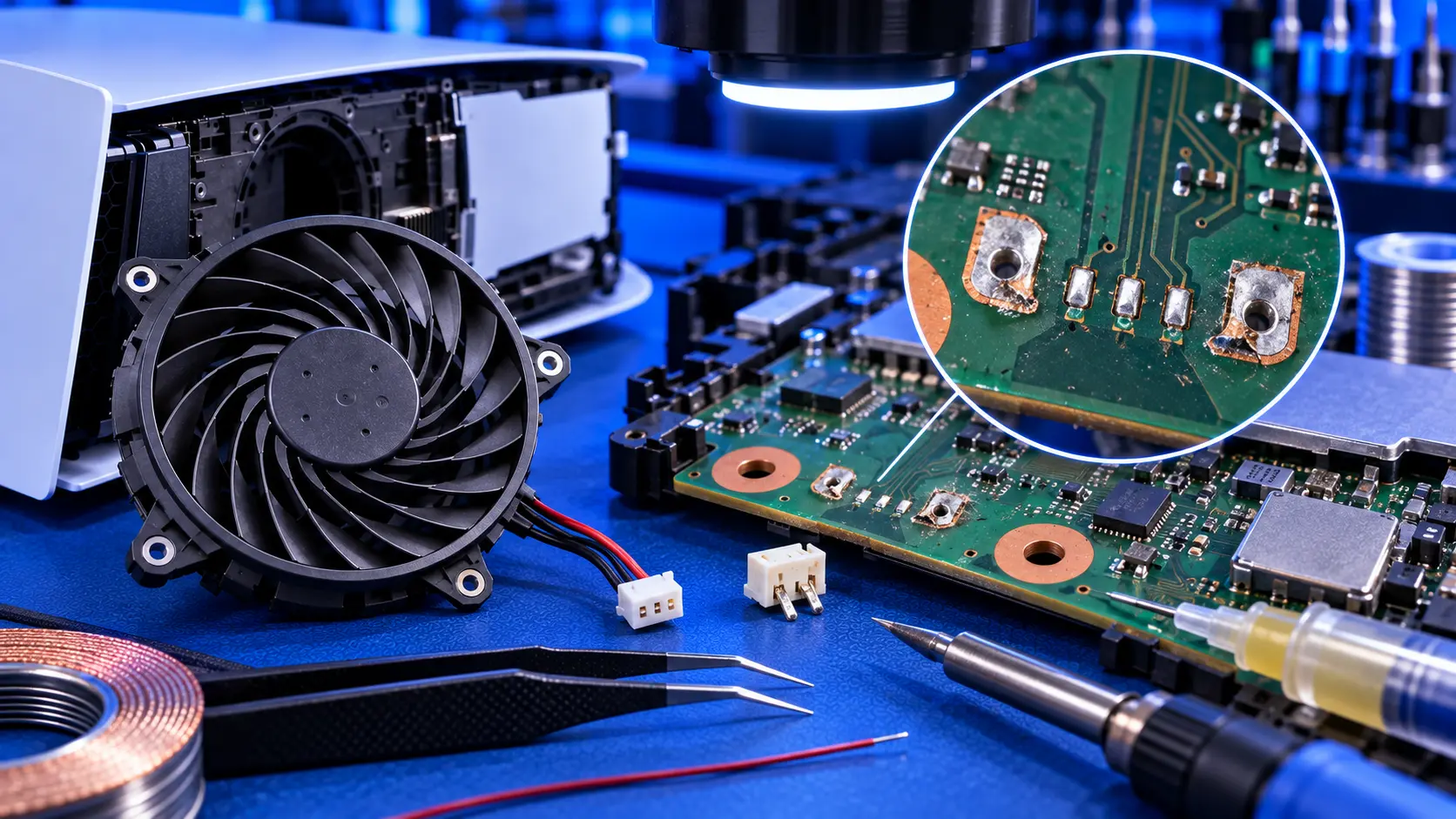
It's a very common one. The stick module has twelve solder joints going through a four-layer board, and the copper pads they sit on are bonded to the board with adhesive that gives up under sustained heat.
Too hot an iron, too long on one joint, or levering the module while a joint is still solid, and a pad comes away with it. Sometimes you can see it — a small copper ring stuck to the old part.
Fixable: almost always. The trace is still in the board, it's just lost its landing point. It means scraping back to clean copper and running a fine jumper wire to a new tie point. Fiddly, not dramatic.
Torn ribbon cables
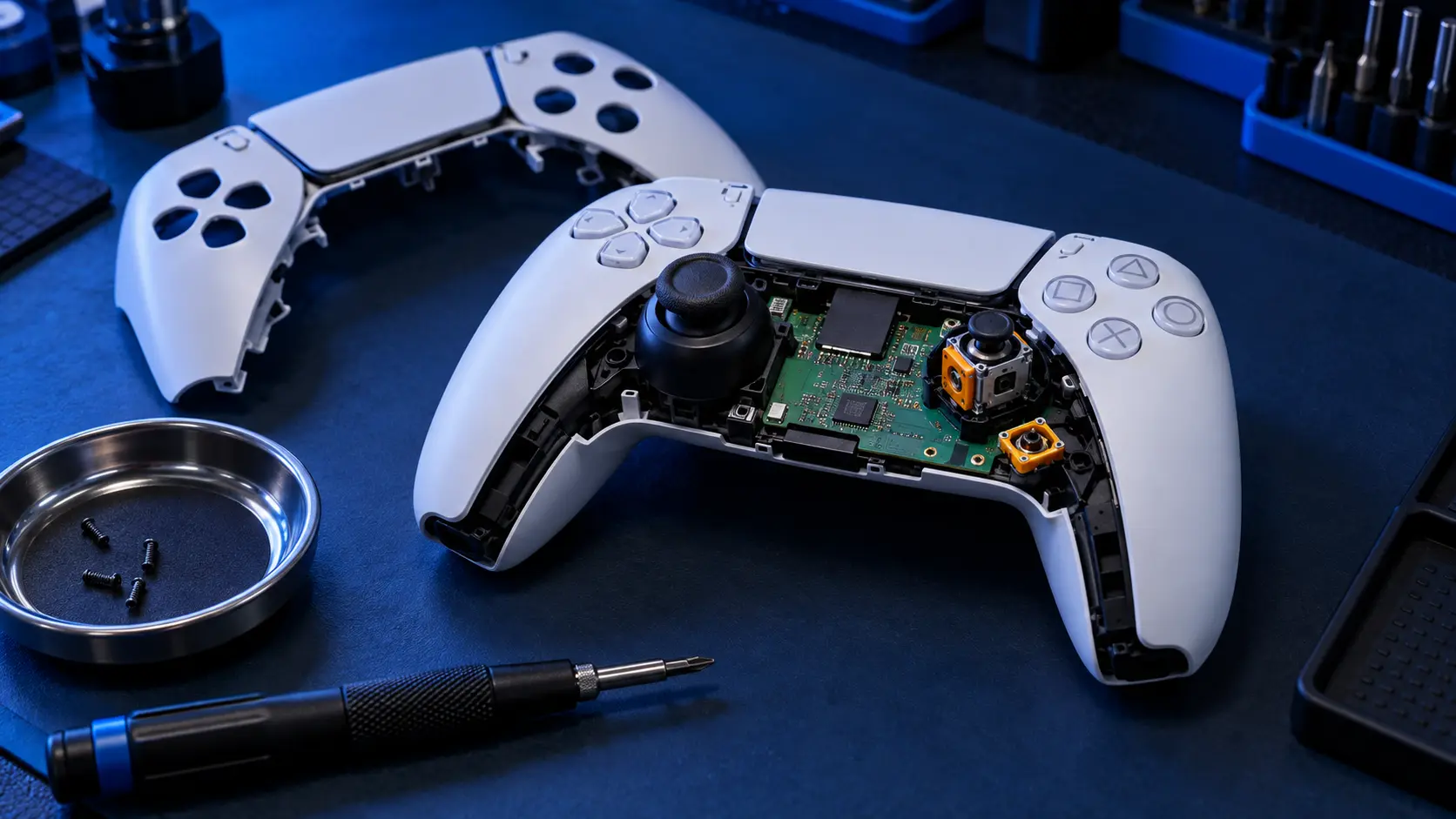
There are flat flexible cables inside a DualSense, and they're thinner than they look. The usual damage is pulling the top half of the shell away before releasing a connector, or lifting a connector's locking flap the wrong way and tearing the cable as it comes out.
Fixable: yes, though it depends which one and how far the tear goes. A cable torn at the end can sometimes be re-terminated; one torn mid-run gets replaced. A snapped connector flap on the board is the more annoying version, and that's a connector replacement.
Stripped screws
The DualSense uses small cross-head screws in soft plastic bosses, and a screwdriver that's slightly the wrong size rounds them out on the second turn.
Fixable: yes, almost always in practice. A rubber band for grip, a screw extractor, or drilling the head off and replacing the screw. Never a reason to bin a controller.
Broken shell clips
The two halves clip together as well as screw together, and the clips snap if you prise in the wrong place or at the wrong angle.
Fixable: depends how many. One or two and the shell still closes properly. Several and it stops sitting flush, at which point it's a shell replacement — which is a part cost rather than skilled work.
A module that won't seat
You got the old one out, the new one won't go in flush, and forcing it bends the pins.
Usually the through-holes still have solder in them. They need clearing properly — desoldering braid or a solder sucker, on every hole — before the new part will sit. Forcing it risks pushing solder further into the board, which is a worse problem.
Fixable: yes, assuming the holes haven't been damaged. Bent pins on the module itself just means a new module; they're cheap.
Cooked traces
The one that occasionally isn't fixable. If an iron has sat on the board long enough to darken or blister it, the damage may go beyond one joint.
Sometimes fixable. It depends how far it spreads. This is the case where I might tell you the pad isn't worth saving — and if so you don't pay for the repair.
What it costs and what happens
A DIY repair gone wrong is usually the same £19 or £24 as the original job, because most of the time the extra work is minutes rather than hours. If there's more to it than that, I'll tell you before I do anything — I won't quietly turn a £19 job into a bigger bill.
If it genuinely can't be saved, the no-fix-no-fee promise applies: you don't pay for the repair and I refund what you paid, less £4.99 return postage.
Send it in pieces if you need to
Put the loose parts in a small bag, put the bag in with the controller, and say in the booking what you tried and what went wrong. It saves me working backwards from the evidence and it means I can tell you sooner whether it's worth doing.
I'd much rather fix someone's failed attempt than have them throw a controller away over a torn cable. If you'd rather it didn't happen again, the Hall effect and TMR upgrades replace the part that wears.
Book the repair, or if you're not sure what you've done to it, get in touch first.