This is the page where I tell you no, and explain why properly rather than leaving you to work it out after you've paid postage.
Two different problems get asked about in the same breath here, and they have different answers. One of them is often not a fault at all. The other one is the single thing about Cloud Nine irons that genuinely can't be repaired.
First: some plate movement is meant to be there
Before you assume something has broken, check whether it has.
Straightener plates are designed with a degree of float. They're not rigidly bolted into position, because a plate that can move slightly makes even contact along a section of hair, where a fixed one wouldn't. Press the arms together and you should feel the plates settle against each other rather than clash.
That's normal, and on a well-made iron it's deliberate. People notice it for the first time years into owning one and assume something has worked loose.
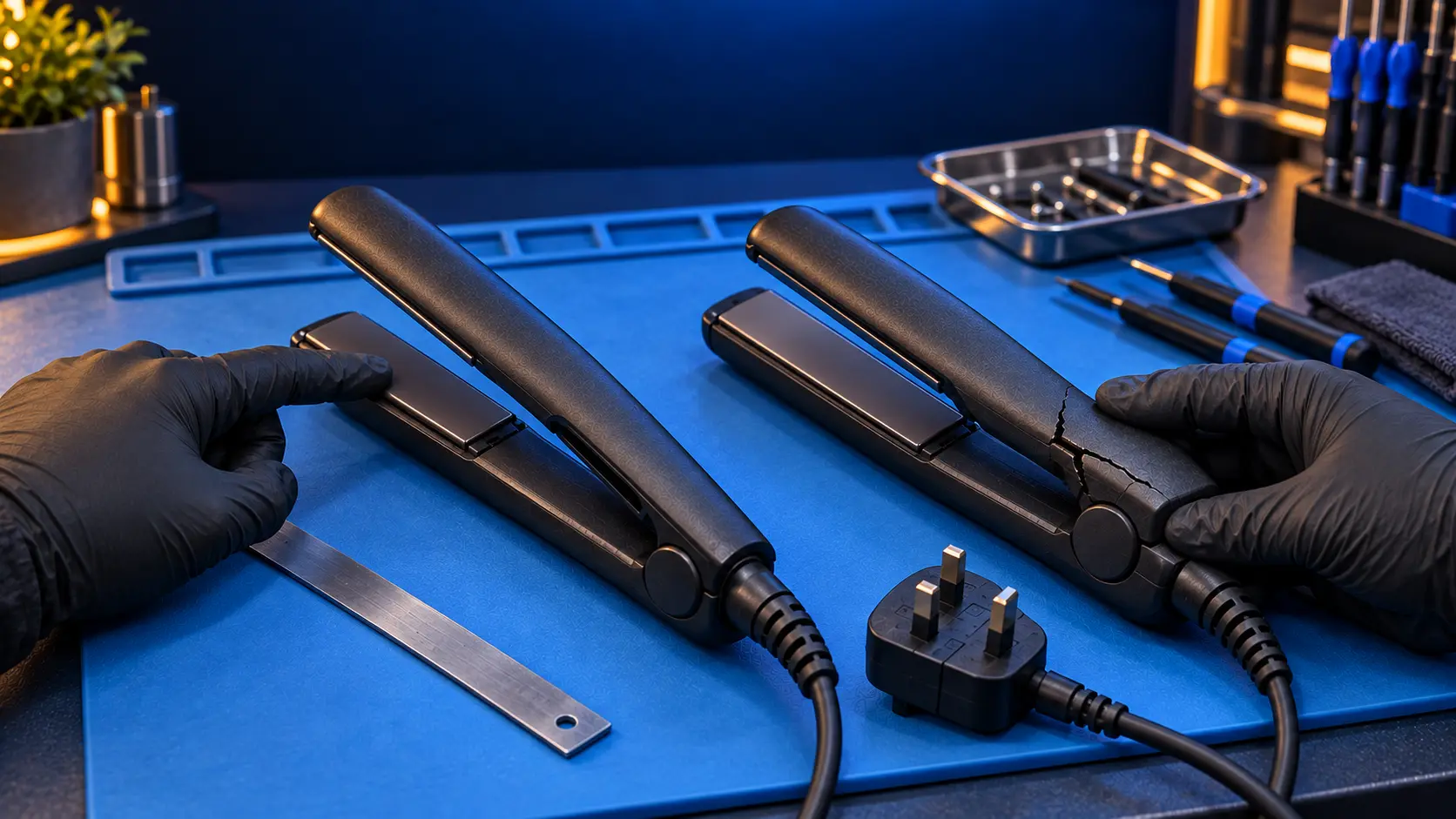
What isn't normal: a plate that rattles audibly when you shake the iron, a plate that has visibly lifted at one end, a plate you can rock independently of its mounting, or plates that no longer meet flat along their length. That's a plate that has come adrift from where it should be, rather than one doing its job.
If a plate has genuinely shifted
Sometimes a plate that's moved can be reseated. It depends entirely on what's given way — the mounting, the fixings, or the surrounding structure — and I can't tell you from a description which of those it is.
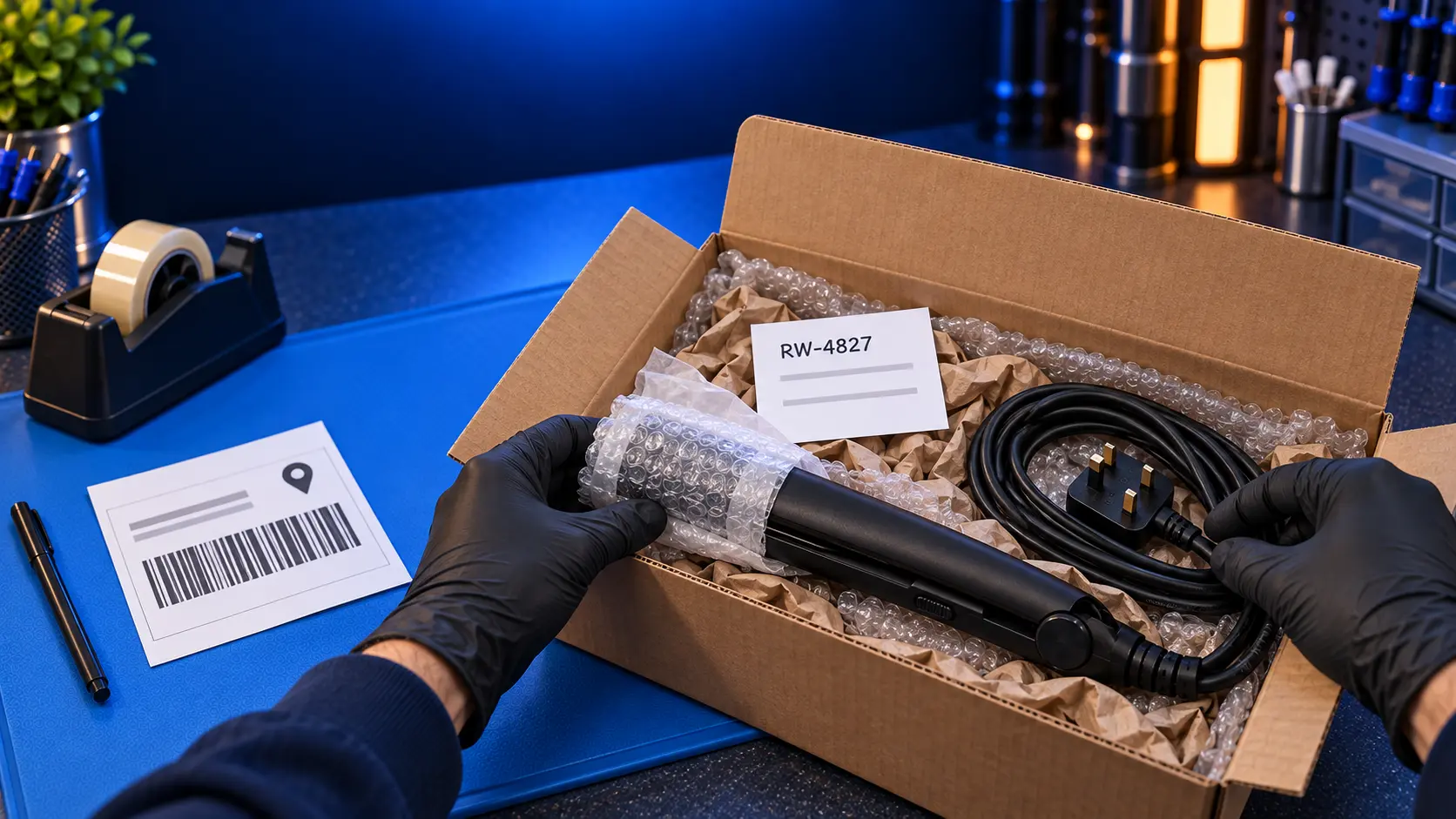
So I'll say it the honest way: send it in if it's genuinely loose and I'll look at it, but I'm not going to promise a fix on this one before I've seen it. If I can reseat it properly and safely, I will, at the usual £39. If I can't, there's no repair fee — I refund what you paid less £4.99 return postage.
That's a less confident answer than you'll get elsewhere. It's also an accurate one.
The snapped arm or broken hinge
Now the part with no good news in it.
If the arm has cracked or snapped, or the hinge has broken, the iron cannot be repaired — not by me and, as far as I can establish, not by anybody in the UK.
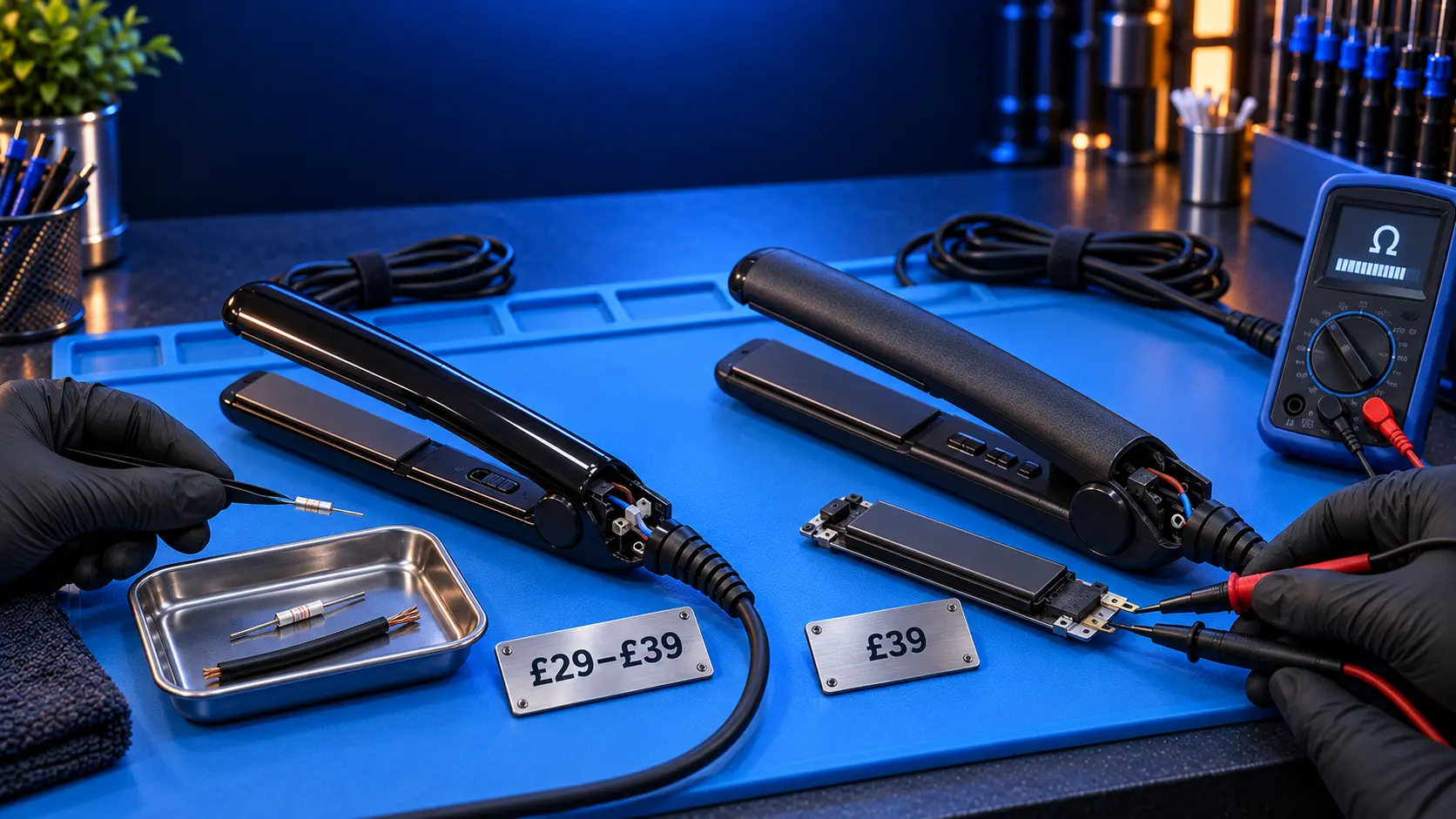
The reason is straightforward and it isn't about skill. There is no supply of load-bearing spares for these irons. Cables, heaters, thermal fuses, switches — those are all available, which is why the electrical faults are so reliably fixable. Arms, hinges and the structural parts that hold the whole thing together are not sold, to anyone, at any price.
That leaves exactly one route: taking the part off another Cloud Nine iron. And that means holding a stock of broken irons to strip for parts.
I've deliberately chosen not to do that. Buying in broken irons means stock, cash tied up in it, and grading every unit that arrives — complexity a one-man bench doesn't need. It was a considered decision rather than an oversight, and this is the consequence I accepted when I made it: no donor parts, so no arm and hinge repairs.
The specialist who handles more Cloud Nine work than anybody else in the country publicly declines this work too, for the same reason. When the two independents who do the most of this both say no, that's the market telling you something rather than two people being unhelpful.
If the casing is cracked, stop using it
One safety point, because it's the bit people skip.
A crack in the body of a mains appliance isn't just cosmetic. The hinge area is where wiring passes between the two halves of the iron, and structural damage there can chafe or expose conductors you can't see. If your iron is cracked near the hinge, or anything inside is visible through the damage, stop using it. Don't finish the week with it.
If it's also started cutting out, buzzing or crackling, that's not a coincidence — it's the same damage showing up electrically, and that combination is one to act on rather than monitor.
What to do instead
Check your warranty first. Cloud Nine's cover is longer than people assume if the iron was registered after purchase, and physical damage may or may not be covered depending on how it happened — but it's a free phone call and it's worth making before you write the iron off.
Don't pay for a repair that isn't one. If anyone quotes you for an arm or hinge repair, ask them directly where the part is coming from. There's no legitimate answer to that question involving new parts.
Keep it as a donor if you buy another one. A Cloud Nine with a snapped arm but healthy heaters and a good cable is worth hanging on to if you're likely to need a spare later.
What would change this
I'd rather leave the door open honestly than pretend it's permanently shut.
If enough people ask for arm and hinge work, the maths on holding donor stock changes, and this becomes something I can offer. If that happens, this page gets rewritten rather than quietly staying wrong. Until then, the answer is no, and I'd rather you had it here for free than after postage both ways.
Which models this applies to
All of them. The parts position is the same across the Original, Wide, Slim, Pro and Contouring irons, and it's no better on the Touch, Micro and Cordless, which I don't take on at all. If you're not sure which you've got, here's how to tell.
Common questions
Could it be glued?
No. The arm is under spring pressure every time the iron is used, it runs hot, and it's what you grip. An adhesive repair on a structural part of a hot mains appliance is not something I'd put my name to, and it would fail.
Can you take the parts off my old iron and put them in this one?
If you have a second Cloud Nine with a good arm and hinge, that's a different conversation — get in touch and tell me what you've got. It depends on whether the two are the same generation.
My plates feel loose but everything works. Is it dangerous?
Not in itself, provided the casing is sound and there's no crack near the hinge. If it's just movement and the iron heats normally and doesn't smell, buzz or crackle, it's a performance issue rather than a safety one.
Is it worth buying a broken one for parts?
For a structural part, you'd need the same generation, and there's a real chance of ending up with two broken irons. For heaters and cables, those are available new, so there's no need.
My straightners won't close flat any more. Same problem?
Possibly a plate that's shifted rather than a broken arm, which is the version worth sending in. Look closely at the hinge for cracking before you decide.
Does a snapped arm mean the electrics are dead too?
Usually not. That's often the frustrating bit — a perfectly healthy iron electrically, in a body that can't be fixed.
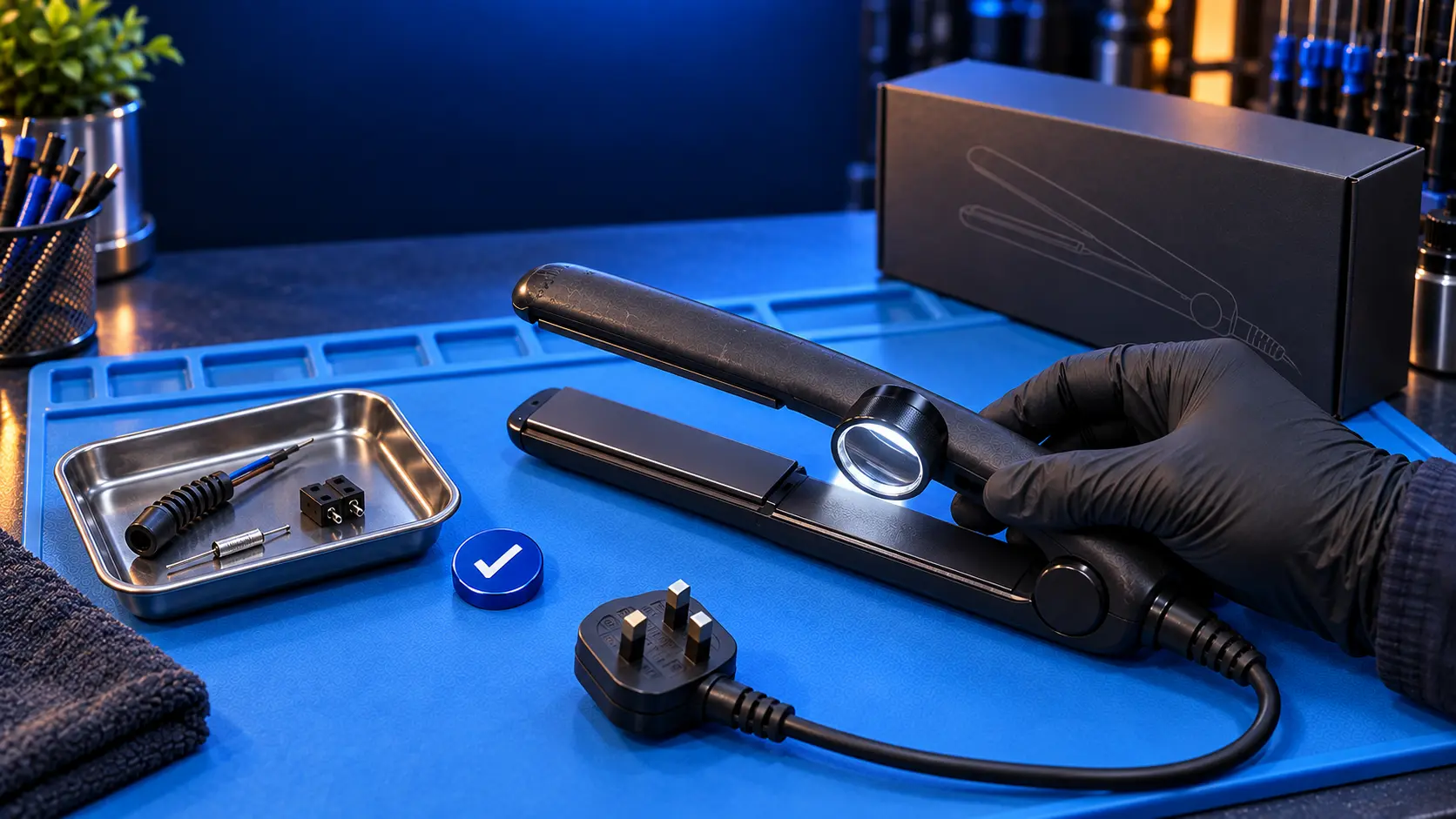
Before you conclude anything, have a proper look at the hinge in good light and give the iron a gentle shake. Designed plate float feels like a slight settle when you press the arms together. A genuine fault rattles, or the plates no longer meet flat, or you can see a crack. Those are different things, and telling them apart costs you nothing.
If the plates have genuinely shifted but the body is sound, send it in and I'll take a look — £39 if I can put it right, and a full refund less £4.99 return postage if I can't. Every repair is done by me personally, on my own bench, start to finish. But if the arm has snapped or the hinge has gone, please don't post it to me or to anyone else. The part doesn't exist, and no amount of goodwill invents one.
The Repair Works is an independent UK repair service, run by me, Paul — 25 years of hands-on repair experience, working by post for customers across the whole country. Not affiliated with or endorsed by Cloud Nine.