This is the one article in this series where I'm going to lead with an instruction rather than an explanation.
If your Cloud Nine straighteners crackle, fizz or spit, stop using them and unplug them at the wall. Not at the end of doing your hair. Now.
I write most of these pages to talk people out of panicking. This one is the exception, and it's worth understanding why.
What that sound is
A crackling or fizzing noise from a mains appliance is almost always arcing — electricity jumping a gap it shouldn't have to jump, because a connection that used to be solid has come apart.
Arcing isn't a noise a fault makes on the way to failing gently. It's a noise that generates heat exactly where you don't want it: at a joint, inside a plastic handle, in an appliance you hold against your head. The heat carbonises the surrounding material, which makes the connection worse, which makes the arcing worse. It is one of the few genuinely self-accelerating faults in a small appliance.
That's the honest reason this isn't a wait-and-see fault. Most of what I repair can be lived with for a few weeks if you're busy. This can't.
Different sounds mean different things
Not every noise is an emergency. Be clear about which one yours is making.
Crackling, fizzing or spitting — an irregular, sharp sound, often coming and going as you move the iron or the cable. That's arcing. Stop.
A new buzz or hum that wasn't there before, particularly one that changes as you move the cable. Treat it the same way. A loose connection can buzz before it starts to crackle.
A faint, steady hum that it's always made, unchanged since new and not related to movement, is less likely to be a fault. If it's been doing it for three years at the same volume, that's the character of the iron rather than a failure.
The pattern matters more than the volume. New, changing or movement-related is a fault. Old, steady and unchanged usually isn't.
The signs that go with it
If any of these are present alongside the noise, stop using the iron immediately and don't switch it on again:
A smell of burning, hot plastic or ozone
The plug feeling warm or hot to the touch
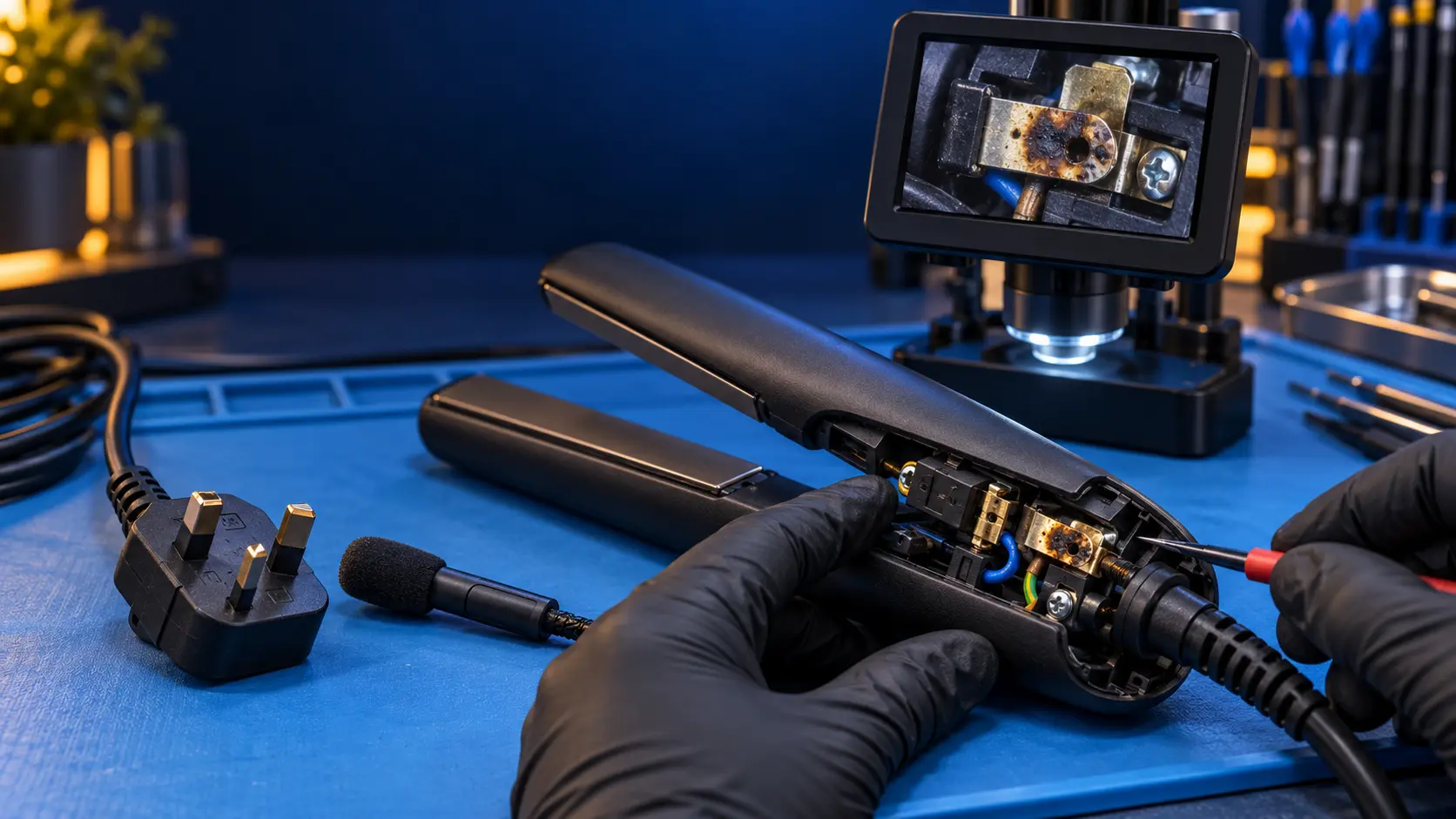
Any browning, scorching or discolouration around the plug pins or where the cable enters the handle
The iron tripping a breaker or RCD
The last one deserves its own line. An appliance that trips your RCD is telling you there's a leakage path to earth. That is not a nuisance trip to be worked around by using a different socket. It's the protective device doing precisely the job it was installed to do.
Where it's arcing
Three usual places, and the first two will be familiar if you've read anything else about Cloud Nine faults.
The connector inside the handle. The cable terminates at a connector inside, and that joint is the most common failure point on these irons. As it degrades it goes intermittent first, then starts arcing across the widening gap. If the iron had been cutting out when you moved it before the noise started, this is very likely where it's coming from.
The plug or the cable. Less common than the internal connector, but a damaged conductor inside the cable sheath will arc in exactly the same way, and a poorly made plug connection can too.
The switch contacts. Contacts that have degraded with heat and residue can arc as they make and break.
All three are repairable. That's the useful part of this: the fault is urgent, but it isn't usually terminal.
What not to do
Don't keep using it until it gets worse. It will, and the failure mode at the end of that road isn't "it stops working".
Don't flex the cable while it's plugged in to find out where the noise is coming from. I know it's tempting, and you'll see it suggested elsewhere. Deliberately moving a cable with a break in it while it's live is the worst possible moment to be holding it.
Don't open it up. There's no published teardown guide for any Cloud Nine model, and what's behind the casing is a mains heating circuit, not a battery compartment.
Don't put it back in the drawer and forget about it. If you're not going to get it repaired, cut the plug off and dispose of it properly. That sounds dramatic for a hair straightener. It's what I'd do with any arcing mains appliance in my own house.
Which models I can repair
The Original, Wide, Slim, Pro and Contouring irons. Arcing faults on these are standard work — usually the connector, sometimes the cable, occasionally the switch.
I don't take on the Touch, Micro or Cordless. If yours is one of those and it's arcing, please don't keep using it while you work out what to do — that advice stands whoever ends up fixing it.
What it costs
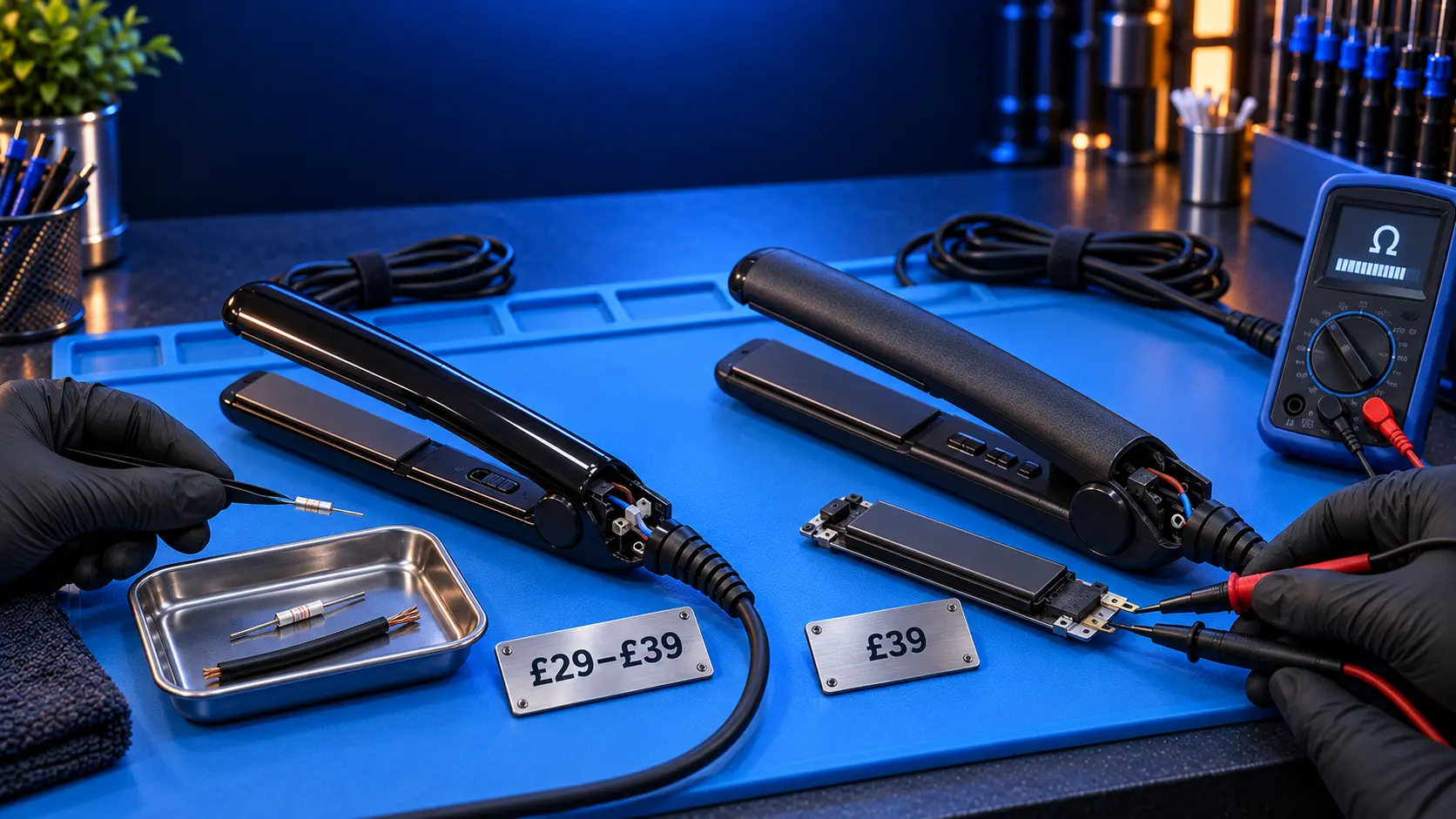
£39, all in. Parts, labour, return postage, a PAT safety test and a twelve-month warranty on the work.
The safety test is the part that matters most on this particular fault. Cloud Nine irons are double-insulated, so the meaningful test isn't an earth check — it's insulation resistance, which is what tells you whether a repaired appliance is genuinely safe rather than just working again. An iron that has been arcing internally is exactly the case where "it works now" and "it's safe now" are two different claims. Nothing leaves here having only satisfied the first.
If I can't repair it safely, I won't send it back working-but-marginal. There's no repair fee in that case: I refund what you paid, less £4.99 return postage, or dispose of it responsibly if you'd rather it didn't come back.
Common questions
It only crackles occasionally. Is that still serious?
Yes. Intermittent arcing is early arcing, not mild arcing. It's the best time to deal with it, not a reason to wait.
Could it just be my hair or product on the plates?
Product residue on hot plates can hiss or sizzle, and that's a different, harmless sound tied to what you're straightening rather than to the iron. Electrical arcing happens whether or not there's hair anywhere near it. Switch it on, away from your head, with nothing in it. If it still crackles, it's electrical.
It buzzes but doesn't crackle. How urgent is that?
Less urgent, still worth checking — especially if it's new, or changes as you move the cable. A loose connection often buzzes before it arcs.
It was cutting out for weeks and now it crackles. Related?
Almost certainly the same fault, further along. An intermittent connection and an arcing one are the same failure at two different stages. Cutting out is what this looks like earlier.
My straightners tripped the fuse box. Can they be repaired?
Usually, yes — but stop using them until they have been. A trip means current is going somewhere it shouldn't.
How long does a repair take?
The current turnaround is shown when you book. If a part needs ordering, I'll tell you as soon as I've diagnosed it and give you a realistic date.
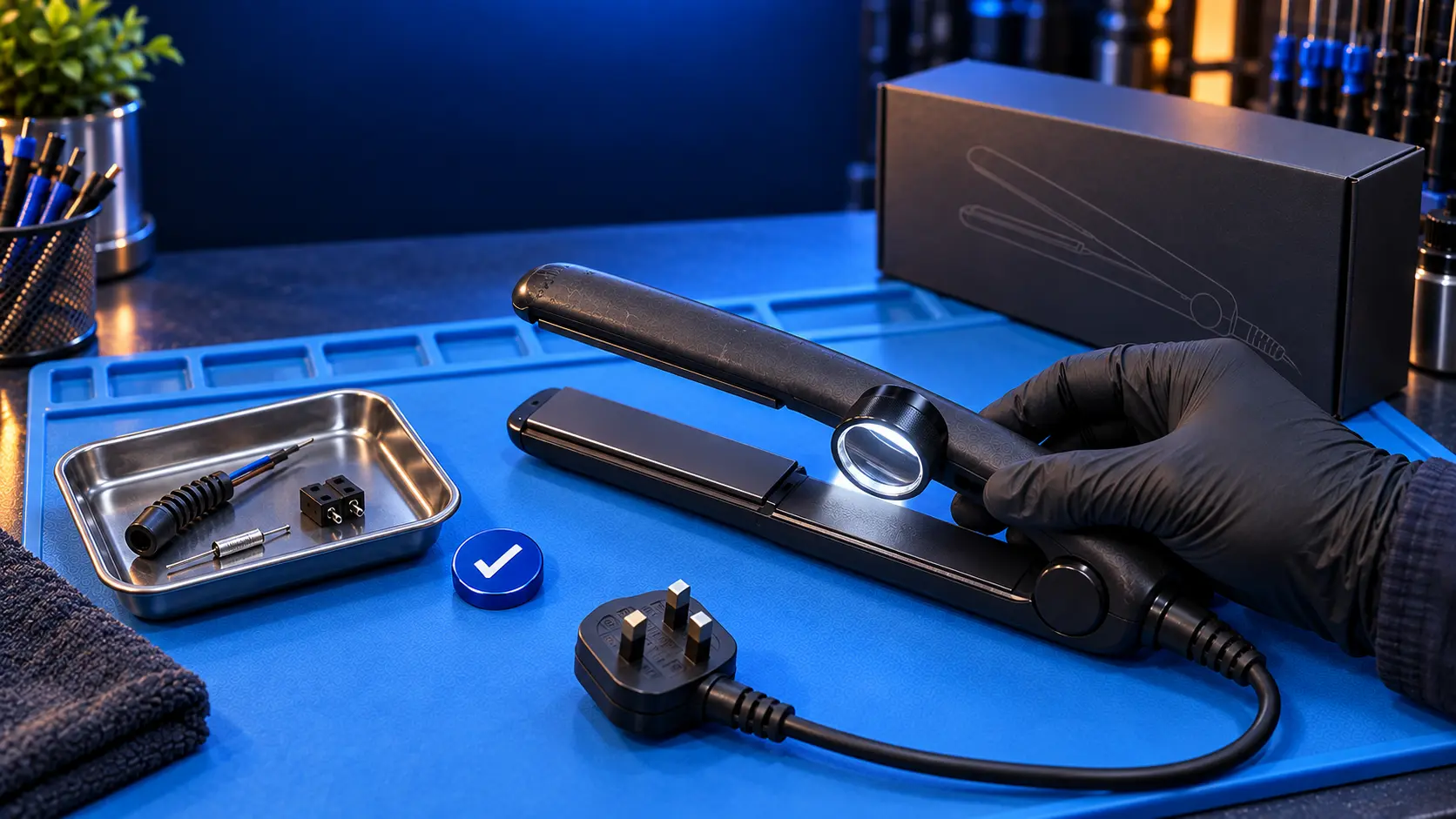
Unplug it at the wall, let it go cold, and have a proper look at the plug and at the point where the cable enters the handle. You're looking for browning, scorch marks, softness or a smell. That takes two minutes, costs nothing, and tells you whether this has already been going on longer than you realised.
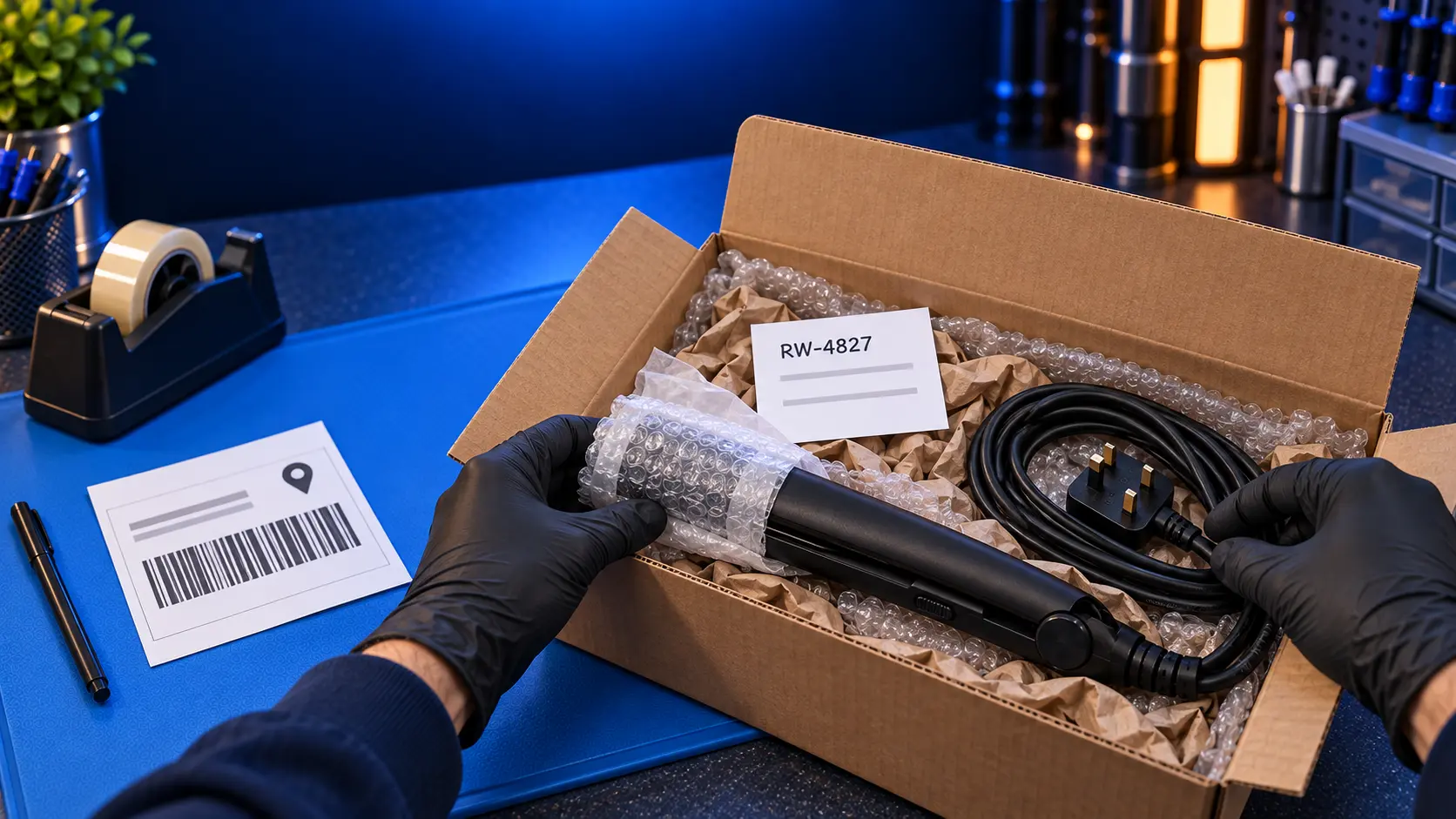
Then send it in and I'll put it right. £39 all in — parts, labour, return postage, insulation-resistance safety testing and a twelve-month warranty — with a full refund less £4.99 return postage if I can't fix it safely. Every repair is done by me personally, on my own bench, start to finish. Of everything I write about, this is the fault I'd least like you to put off, and the one most likely to be a straightforward repair if you don't.
The Repair Works is an independent UK repair service, run by me, Paul — 25 years of hands-on repair experience, working by post for customers across the whole country. Not affiliated with or endorsed by Cloud Nine.