Completely dead. No light, no beep, no warmth — nothing at all when you press the button. It worked last time you used it, and now it doesn't.
It's a common Cloud Nine fault, and it's the one where the obvious answer is usually wrong. Most people assume the cable has finally given up where it comes out of the handle, because that's where cables always fail. On a Cloud Nine, that's typically not it.
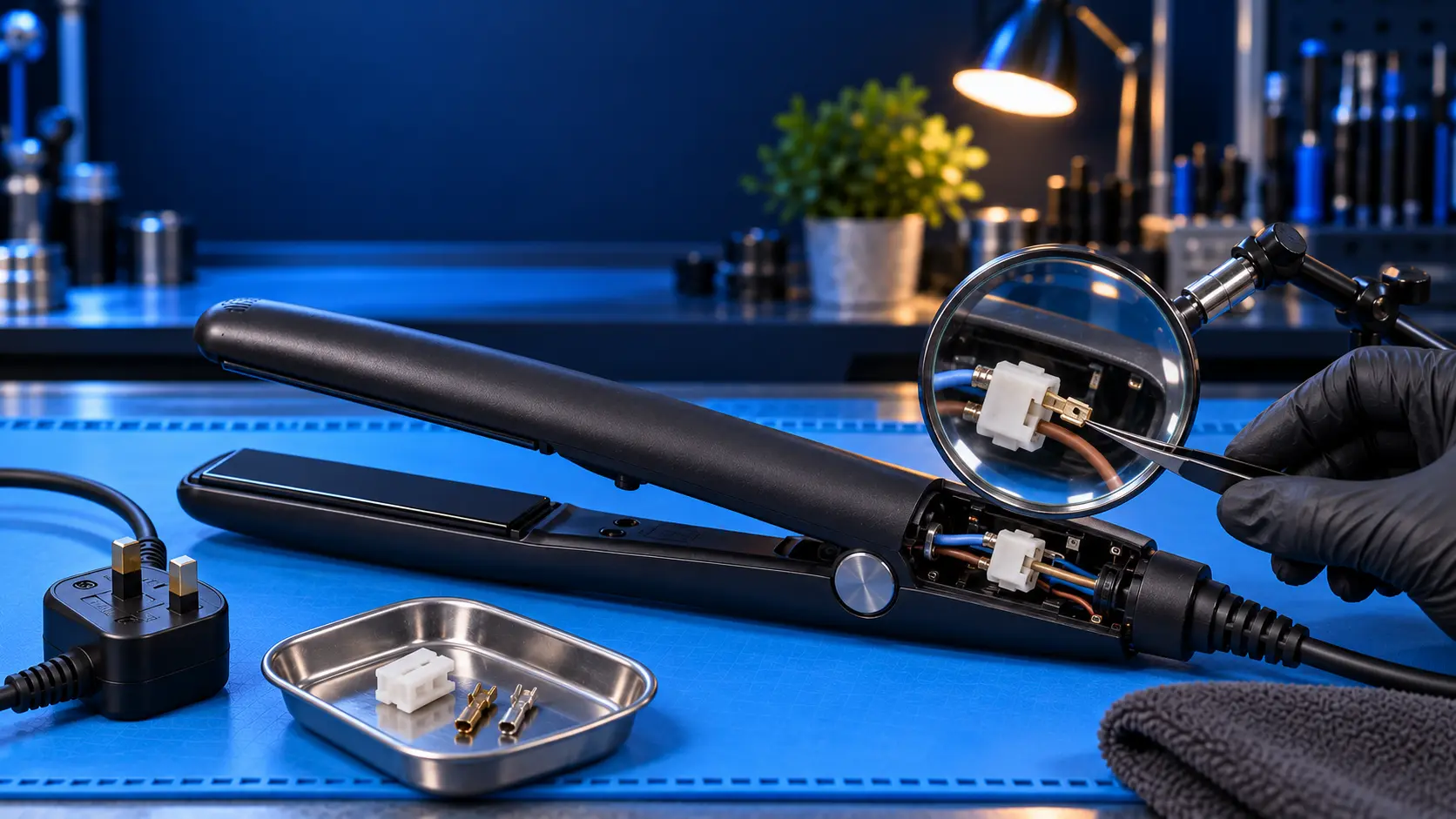
The usual cause is the connector inside the handle — a joint you can't see, on a cable that often looks perfect from the outside.
Dead is not the same as beeping
Worth separating these before you go any further, because they're different faults with different answers.
Dead means nothing happens. No light, no sound, no response. That's a power problem: the electricity isn't getting to the board at all.
Beeping means the iron is alive — it powers up, checks its heating circuit, finds a problem and shuts down. That's a heating fault, not a power fault.
If yours lights up or makes any noise at all, you're in the wrong article. If it's genuinely dead, read on.
Why the connector, and not the cable you can see
This is where Cloud Nine differs from GHD and from Dyson, and it catches people out.
On most mains appliances, the cable fails at the strain relief — the flexible sleeve where it enters the body — because that's the point that bends every single time you use it. Plenty of Cloud 9 cables do fail there, and you can often spot it: splits, a permanent kink, a section that feels soft or lumpy.
But the more common failure is further in. The cable terminates in a connector inside the handle, and it's that connection that gives up: the joint fatigues, the contact degrades, and eventually the circuit opens. From the outside there is nothing whatsoever to see. The cable is intact along its whole length, the plug is fine, and the iron is stone dead.
That matters for a practical reason: a cable that looks perfect doesn't rule out the cable circuit. It's easy to be sure the cable is fine and blame the electronics, when the fault is actually a connector an inch inside the handle.
The symptom that gives it away
Here's the tell, and it's one you'll already have noticed if it applies to you.
If the iron worked intermittently before it died completely — and whether it worked depended on how the cable was lying or which way it was bent — that's the cable circuit, near enough every time.
It's the classic pattern: first it cuts out occasionally, then only certain positions work, then nothing works at all. If that's the history of your iron, you can stop wondering. It's the cable or the connector, and it's repairable.
One thing I'd rather you didn't do: go hunting for that symptom by flexing the cable while it's plugged in. You'll see that advice on plenty of sites. If the cable has a genuine break in it, bending it about under mains voltage is the one moment it's actually dangerous. Notice the pattern if you've already noticed it. Don't go looking for it.
The free thing to check first
The fuse in the plug.
It costs about 50p, takes two minutes, and it's the only cause of "completely dead" you can fix yourself. Open the plug, take the fuse out, and either test it or swap in a known-good one of the same rating.
Two caveats worth knowing. A blown fuse sometimes means the fuse simply aged — but it can also mean something inside drew too much current and the fuse did its job. If a new fuse blows straight away, stop. That's a fault telling you about itself, and it needs opening up rather than another fuse.
Also try a different socket, once. Rules out the socket rather than the iron. If it's dead on two sockets with a good fuse, the fault is in the iron.
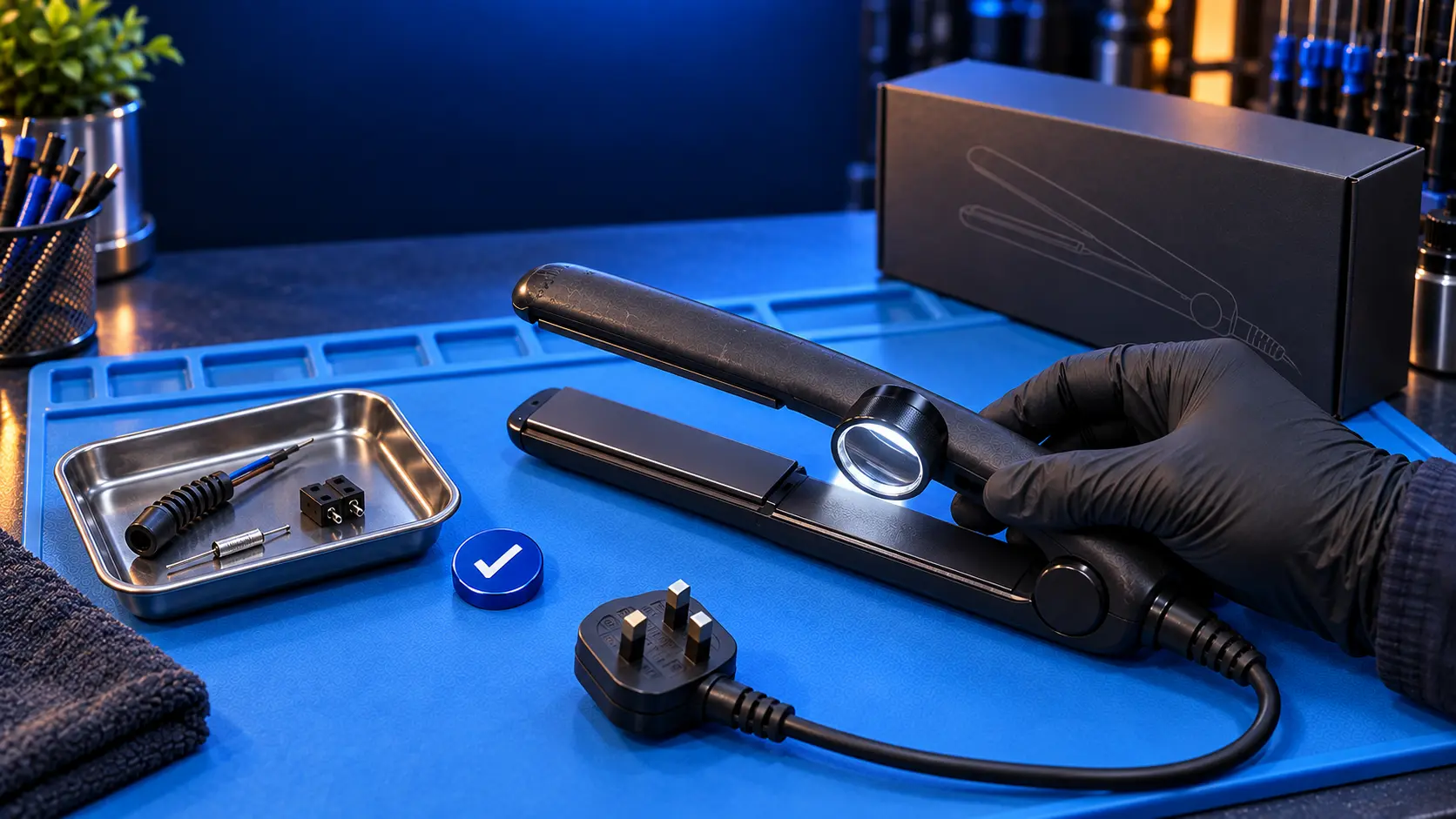
That's genuinely everything you can safely do at home. Beyond the plug fuse you're into a mains appliance that has to come apart, and there's no published teardown guide for any Cloud Nine model — the knowledge simply isn't out there in the way it is for some other brands.
What else can cause it
Less common, but they happen:
The switch. Years of product residue and heat can work into the switch mechanism. Usually a clean rather than a replacement.
The board. Rare. When power reaches the board and nothing happens beyond it, that's a board-level fault, and it's the one case where a Cloud Nine sometimes isn't worth repairing.
A break in the cable itself. Genuinely does happen, just less often than the connector — and it's the same repair either way as far as you're concerned.
Which models I can repair
I take on the Original, Wide, Slim, Pro and Contouring irons. A dead iron in any of those is standard work.
I don't repair the Touch, Micro or Cordless — the parts situation on those won't let me stand behind a twelve-month warranty, and I'd rather say so before you pay postage than after. If you're not certain which one you have, check the models I cover first.
What it costs
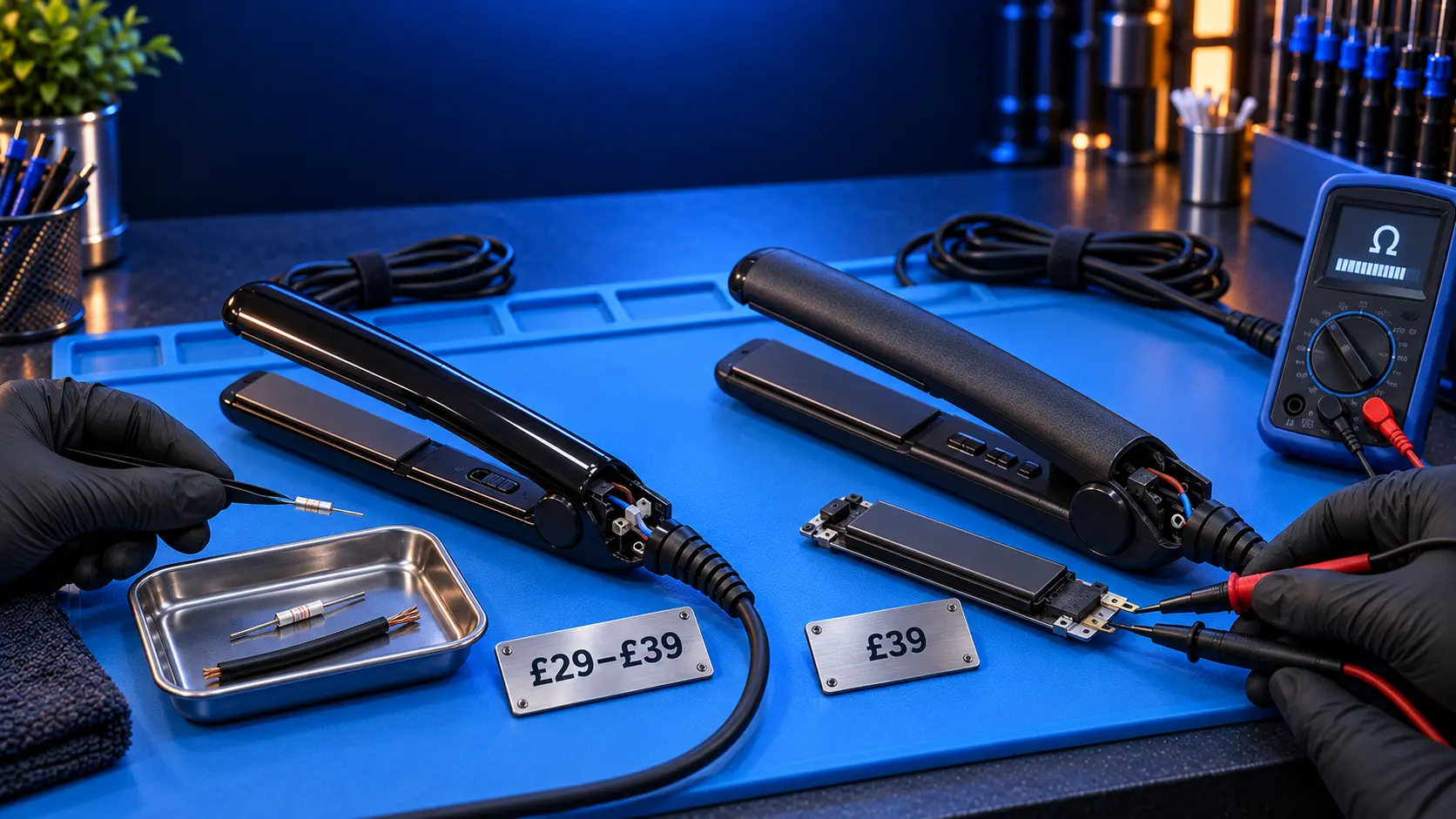
£39, all in, whichever of those faults it turns out to be. Parts, labour, return postage, a PAT safety test and a twelve-month warranty on the work. No diagnosis fee and no second bill after I've opened it.
I price it flat for a reason. From the outside, a failed connector, a broken cable and a dead switch are the same symptom — nothing. Quoting them differently would mean quoting before knowing, and I'd rather charge one honest price than an optimistic one I have to revise.
Cloud Nine's own repair is £99, which includes a replacement if yours can't be fixed. That's a genuine safety net, and it's worth what it's worth. But a dead Cloud Nine is very nearly always repairable, which makes it an expensive way to insure against an outcome that hardly ever comes up.
If I can't fix yours, there's no repair fee — I refund what you paid, less £4.99 return postage to send it back.
Common questions
The cable looks perfect. Can it still be the cable circuit?
Yes, and that's the single most common misdiagnosis on this fault. The failure is usually inside the handle where you can't see it.
Can I just buy a replacement cable and fit it myself?
Cables are available, but fitting one means opening a mains appliance, working with the internal connector, and reassembling it so it's safe. If it's not done properly you've got a live appliance that looks fine. Anything I repair gets PAT safety tested before it's posted back, and that test is the point.
Is it worth repairing, or should I just buy new?
A new Cloud Nine iron is well over a hundred pounds, often closer to two. At £39 a repair is comfortably worth doing on any of them — these are genuinely well-built irons and they last.
My straightners were cutting out for weeks before they died. Is that related?
Almost certainly the same fault. Intermittent operation that depends on cable position is the classic early stage of exactly this failure.
How long does a repair take?
The current turnaround is shown when you book. If a part needs ordering, I'll tell you as soon as I've diagnosed it and give you a realistic date.
Change the plug fuse first. It's 50p, it takes two minutes, and it's the one cause of a dead iron you can sort out at your kitchen table. If a fresh fuse doesn't bring it back — or if it blows again straight away — the fault is inside, and no amount of new fuses will change that.
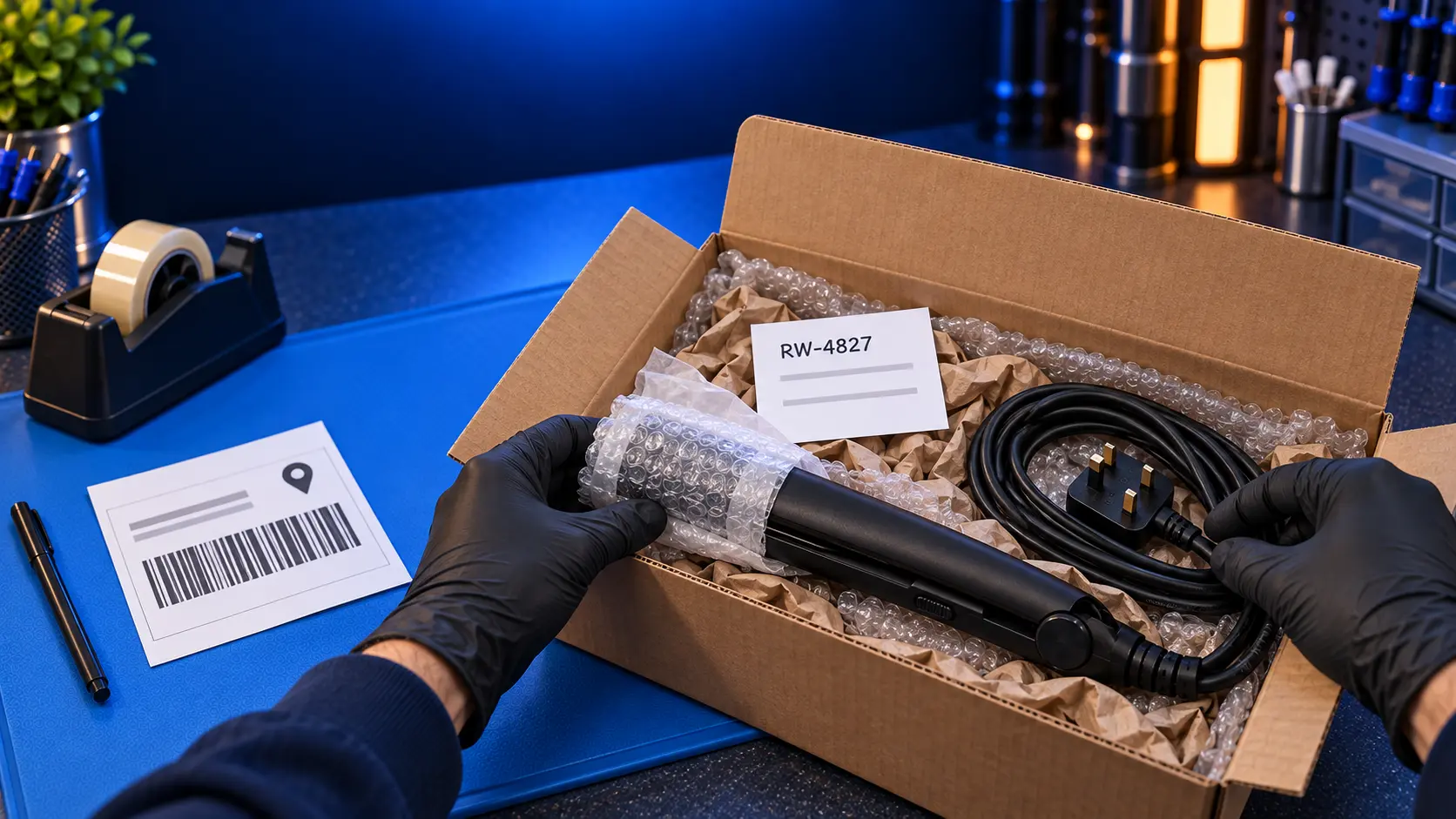
When you get there, send it in and I'll sort it. £39 all in, including parts, return postage, a PAT safety test and a twelve-month warranty, and a full refund less £4.99 return postage if I can't fix it. Every repair is done by me personally, on my own bench, start to finish. A dead Cloud Nine is one of the most reliably fixable faults there is — don't bin an iron worth £150 over a connector.
The Repair Works is an independent UK repair service, run by me, Paul — 25 years of hands-on repair experience, working by post for customers across the whole country. Not affiliated with or endorsed by Cloud Nine.