Short answer: almost always, yes. But "almost" is doing real work in that sentence, and I'd rather set out the exceptions than pretend there aren't any.
I repair these for a living, so treat my opinion accordingly — which is exactly why this page leads with the numbers rather than the sales pitch. Check them yourself.
What a replacement actually costs
Here's what Cloud Nine charge directly, as at September 2026:
The Original Iron — £219, down from £249
The Wide Iron — £219, down from £249
The Slim Iron — £179
The Touch Iron — £149, down from £199
The Original Cordless Iron — £179, down from £219
The Contouring irons — £249, down from £349
Premium finishes run from £269 to £359
Third-party retailers discount below those figures, sometimes substantially, so shop around before taking them as gospel. But the shape is clear: replacing a Cloud Nine iron is a £150 to £250 decision, not a £60 one.
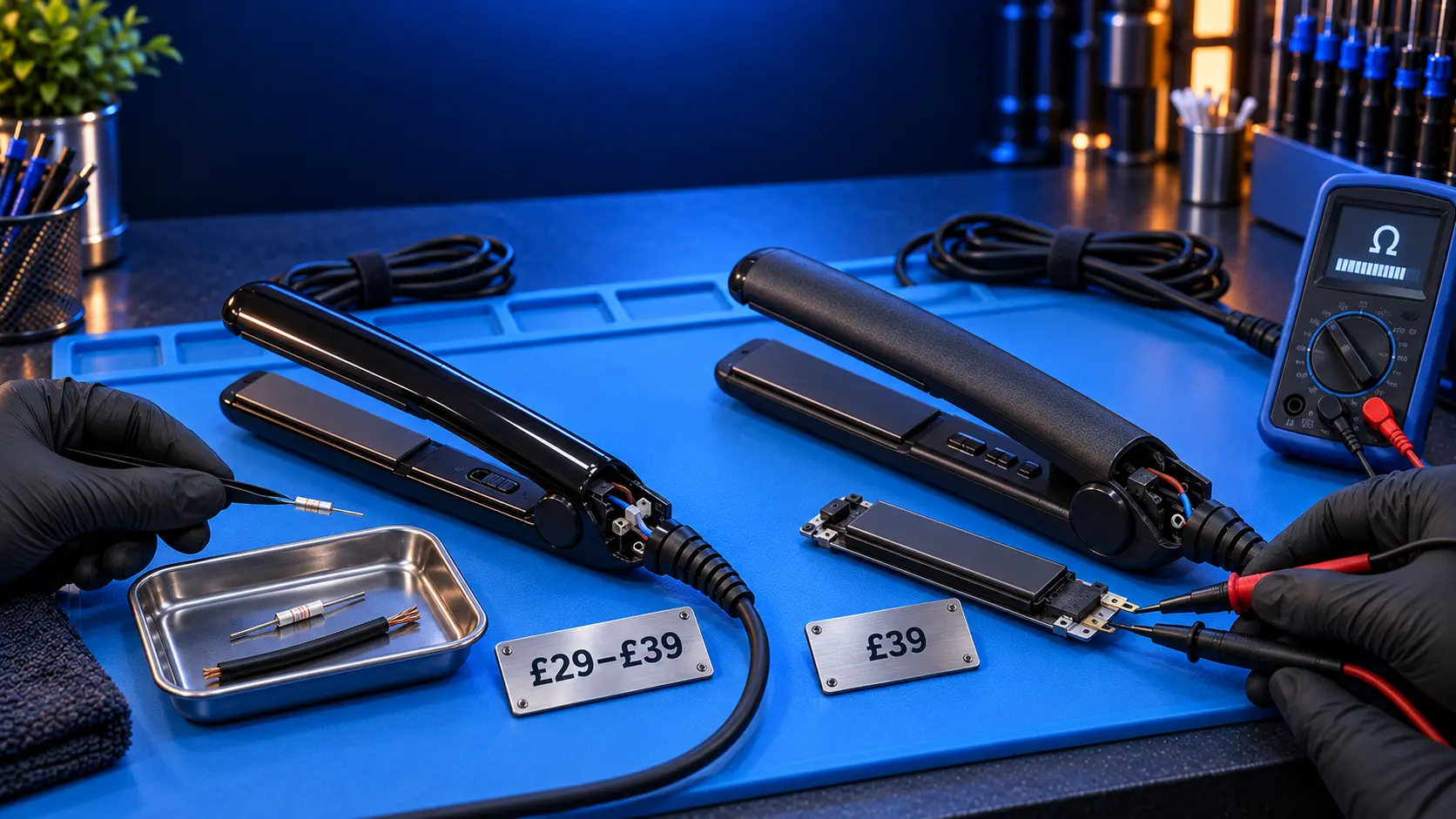
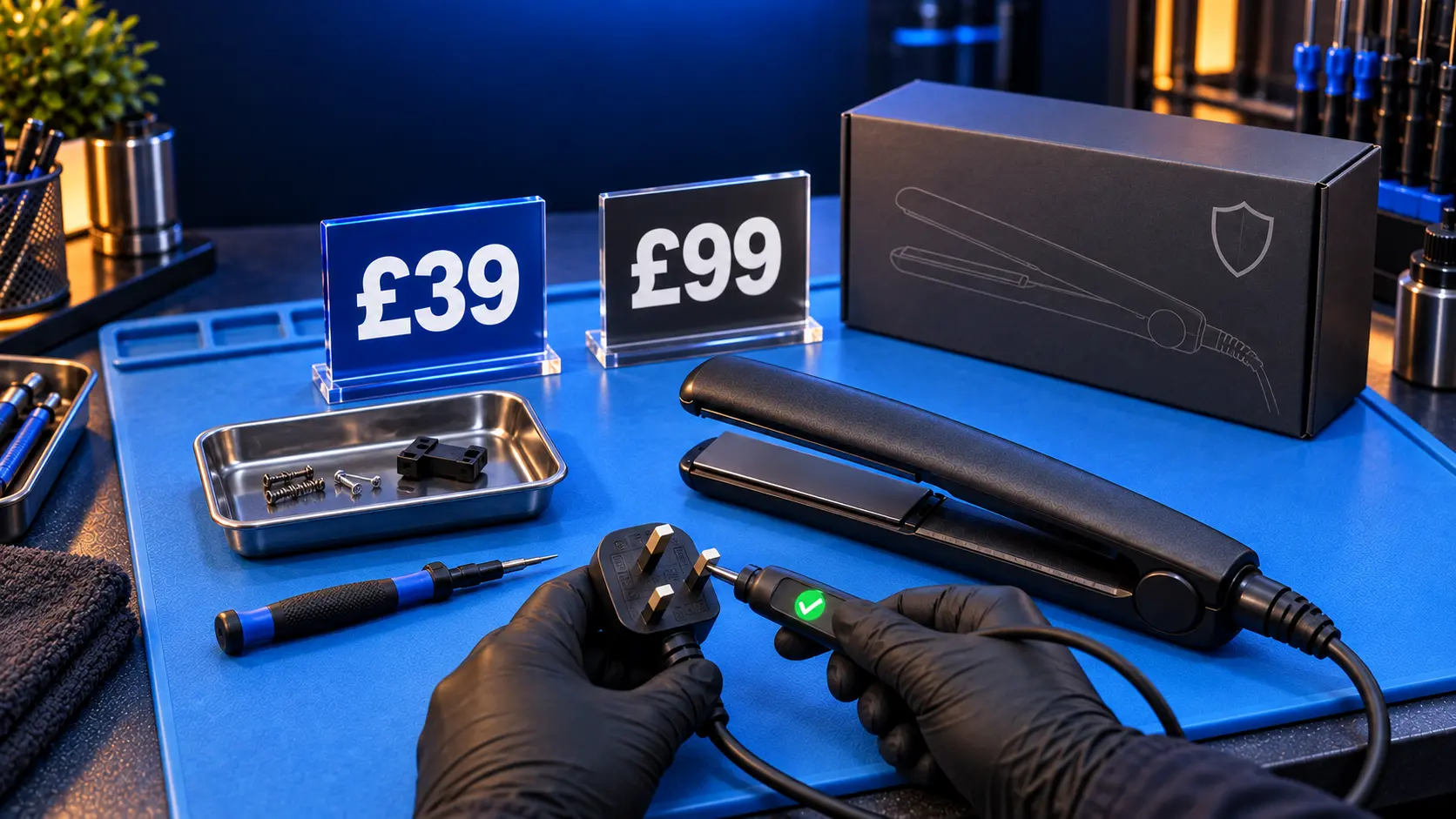
A repair is £39. That's the comparison, and for most people it isn't close.
The second-hand and refurbished floor
Worth knowing, because it's the real alternative to a repair rather than buying new.
Refurbished units with a twelve-month warranty turn up around the £70 mark when they're available. Used irons in unknown condition sell for less, with no warranty and no history — you're buying somebody else's wear, often somebody else's early-stage cable fault.
And a broken Cloud Nine carcass trades at about £20 to the parts market. That's the salvage value of yours if you give up on it, which is worth holding in mind when someone suggests it's only fit for the bin.
So the line where repair stops making sense sits at roughly £70 to £80 — the point where you could buy a working refurbished iron with a warranty instead. At £39 a repair sits comfortably underneath that, with a twelve-month warranty of its own on the work.
When it genuinely isn't worth repairing
Four cases, and I'd tell you the same on the phone.
1. It's still under warranty. Every Cloud Nine gets a one-year guarantee, extending to three if it was registered within 14 days of purchase. If yours is in cover, the repair should cost you nothing and you shouldn't be paying me or anyone else. The registration window catches most people out, so check before you assume.
2. The arm has snapped or the hinge has broken. There are no load-bearing spares for these irons anywhere in the UK, so this isn't a price question — it's an availability one. Nobody can fix it, at any price.
3. The plate coating has worn through. If the plates snag, drag or catch your hair, that's surface wear rather than an electrical fault. An iron with tired plates can be electrically perfect and still not worth keeping, because the thing it's failing at is the actual job.
4. It's a Touch Iron with an expensive fault. Refurbished Touch Irons with a twelve-month warranty sell around £70, which caps what any repair on one is sensibly worth. I don't take these on anyway, and Cloud Nine's own service is £99 — more than a refurbished one costs.
Outside those four, an iron with an electrical fault and a sound body is worth repairing. The faults that actually happen — heaters, thermal fuses, cables, the connector inside the handle, switches — are all repairable with parts that are available.
The mistakes people make in both directions
Assuming old means finished. These irons are genuinely well built. An eight-year-old Cloud Nine with a failed cable is an eight-year-old Cloud Nine with a failed cable, not an iron at the end of its life. The heaters, the board and the mechanics are usually fine.
Assuming a dead iron is dead. "It won't turn on" sounds terminal and is one of the most reliably fixable faults there is — usually a connector inside the handle.
Throwing good money after bad. The reverse mistake. If you've already replaced the cable twice and it's now beeping, and the plates are worn, you're propping up an iron that's telling you something. I'll say so rather than take the booking.
Paying more than the manufacturer. If anyone quotes you above £99, something has gone wrong with the quote — that's Cloud Nine's own price, and the comparison between the two is worth understanding.
The part that isn't about money
Briefly, because I'm not going to lecture you.
A straightener you've had for years is set up for your hair, and you know exactly how it behaves. A new one takes a while to get used to, even from the same brand. That's worth something that doesn't show up in the arithmetic.
And a repaired iron is one that didn't get thrown away. These things are mostly metal, a motorised-free lump of engineering with a heater in each arm, and there's no good reason for one to end up in landfill over a £4 connector.
What you get for £39 with me
Any accepted model, any repairable fault, one flat price. Parts, labour, return postage, a PAT safety test and a twelve-month warranty on the work. No diagnosis fee, no revised quote once it's open.
For context on that last figure: Cloud Nine give six months on their own repairs, and the other UK independents I'm aware of give three.
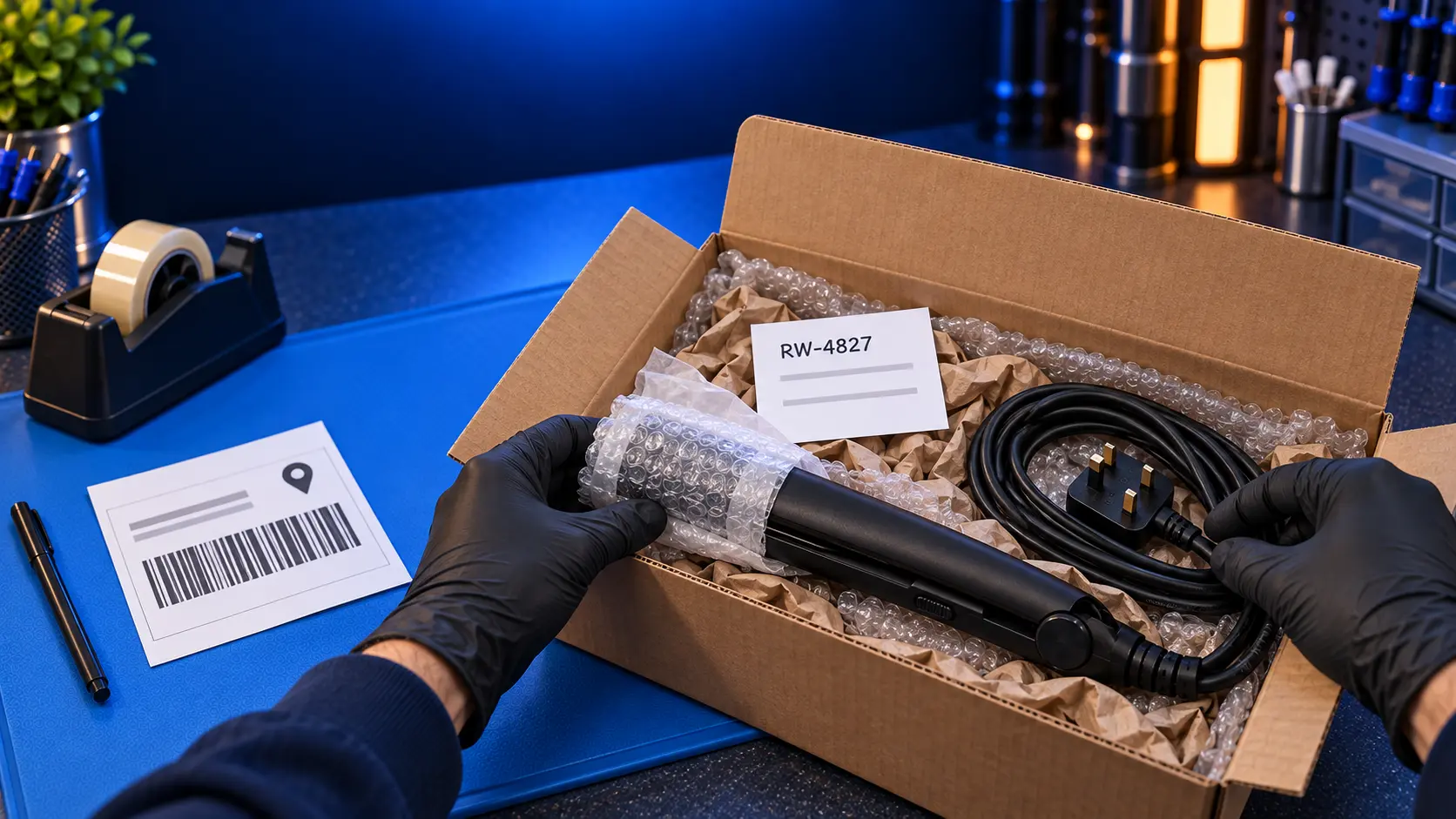
If I can't fix it, there's no repair fee — I refund what you paid, less £4.99 return postage. So the worst case of sending it to me is about a tenner in postage and an answer.
I repair the Original, Wide, Slim, Pro and Contouring irons. I don't take on the Touch, Micro or Cordless.
Common questions
My iron is seven years old. Is it too old to repair?
No. Age on its own isn't a reason. Worn plates, several separate faults, or structural damage are reasons. A single electrical fault on an old iron is normal and fixable.
What if it breaks again after the repair?
The work carries twelve months. If what I repaired fails in that time, it comes back to me.
Would you repair it if it were yours?
On an iron with a sound body and an electrical fault, yes, every time — I'd be spending £39 instead of £219. On one with a snapped arm, no, because I couldn't.
Is it worth repairing to sell on?
Rarely worth the effort, but worth knowing that a working iron is worth many times what a broken one is. If you're replacing it anyway, a repaired one is a sensible thing to pass to somebody rather than bin.
My straightners still work but the plates catch my hair. Fixable?
That's surface wear rather than a fault, and it's one of the few cases where replacing genuinely beats repairing.
How long does a repair take?
The current turnaround is shown when you book. If a part needs ordering, I'll tell you as soon as I've diagnosed it and give you a realistic date.
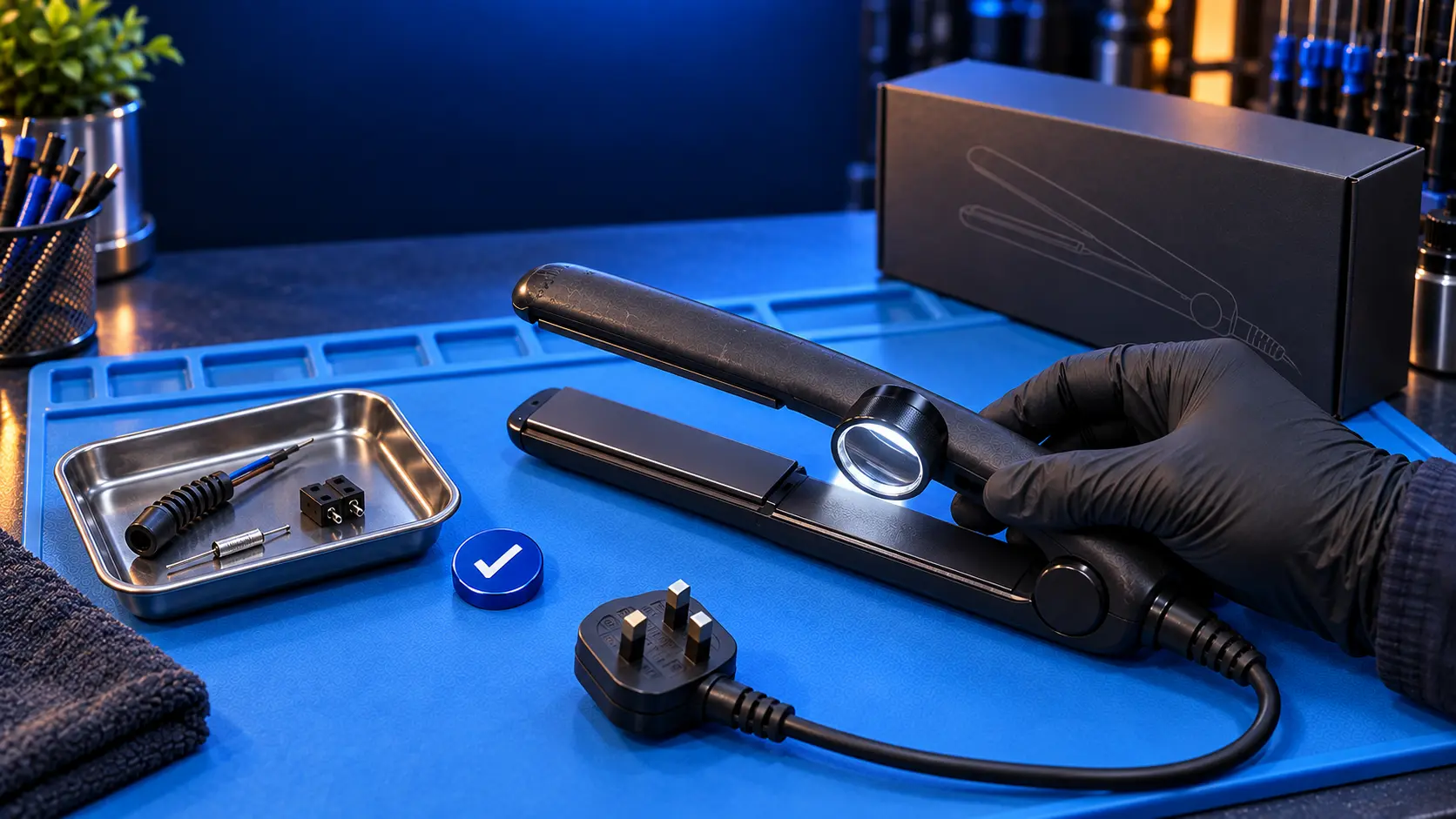
Before you decide anything, do two free checks: find out how old the iron is and whether it was registered within 14 days of purchase, and run a finger along the plates to feel whether the coating is still smooth. The first tells you whether the repair should cost you nothing. The second tells you whether repairing it is worth doing at all. Neither takes more than a minute.
If it's out of warranty and the plates are sound, send it in. £39 all in, twelve months on the work, and a full refund less £4.99 return postage if I can't fix it. Every repair is done by me personally, on my own bench, start to finish. Set against £219 for a new Original, a £39 repair on an iron you already like isn't really a decision — it's arithmetic.
The Repair Works is an independent UK repair service, run by me, Paul — 25 years of hands-on repair experience, working by post for customers across the whole country. Not affiliated with or endorsed by Cloud Nine.