"It won't heat up" covers four completely different faults, and they don't have the same answer, the same cause or the same outlook. Before you can do anything useful you need to know which one you've got, and it takes about thirty seconds to find out.
Plug it in, switch it on, and watch what happens. Then find yourself below.
Which of the four is yours
Nothing at all happens. No light, no display, no sound. That's a power fault, not a heating fault — the electricity isn't reaching the board. That's covered here, and the usual culprit is the cable connector inside the handle.
It beeps, and won't heat. The iron is alive: it's powered up, checked its heating circuit, found something wrong and shut itself down deliberately. Four different faults cause that beep, and the beep itself is a safety cut-out rather than a heat warning.
One plate heats, the other stays cold. A failed heater, fuse or connection on one side only. The good plate is genuinely useful, for a reason worth knowing before you send it anywhere.
It powers up normally, doesn't beep, and neither plate gets hot. That's the one this article is about.
First, rule out the things that aren't faults
Two of these come up often enough to be worth thirty seconds of your time.
The temperature setting. An iron sitting on its lowest setting genuinely will not straighten thick or coarse hair, and it's easy to knock the setting down without noticing. Set it high, give it two full minutes from cold, and try again.
The auto-off. Cloud Nine irons switch themselves off after a period of inactivity, by design. If yours heats normally and then goes cold later while you're doing something else, nothing is broken. That's the iron looking after itself.
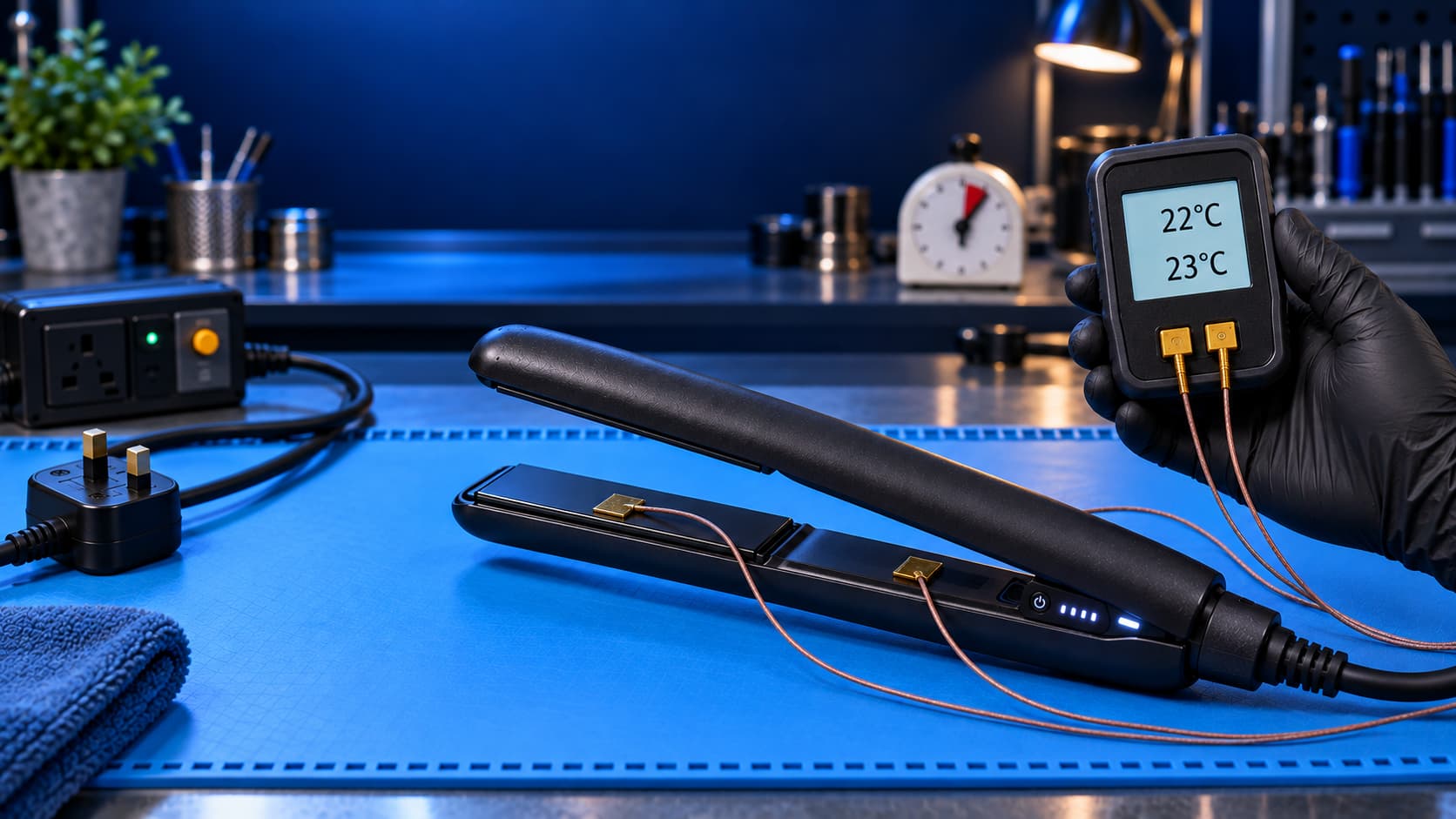
And give it proper time. People often decide an iron isn't heating after twenty seconds. Heat it from cold, leave it alone for two minutes, then hold your hand a few centimetres from the plates — near, not on. A working plate runs around 200°C and radiates heat you can feel from a distance. If both plates are genuinely stone cold after two minutes on a high setting, it's a fault.
What causes both plates to go cold
Each plate has its own heater, its own sensor and, depending on the generation, its own thermal fuse. So both failing at once is less common than one failing, and there are only a handful of explanations.
Both elements have failed, one after the other. This is the most common by a long way, and it's not really a coincidence. One plate fails, the iron still half-works, and people carry on using it for weeks or months. In that time the remaining heater is doing all the work, and it eventually goes the same way. If you've had one cold plate for a while, this is almost certainly what's happened.
A fault upstream of both heaters. The board drives both heating circuits, and the supply reaches them through shared wiring. A failure at that shared point takes out both sides at once, even though the heaters themselves are perfectly healthy.
A board fault. Uncommon, and the one case where a Cloud Nine occasionally isn't worth repairing.
A latched thermal cut-out. Protection that has tripped and stayed tripped.
Why this one's more awkward than a single dead plate
Here's the bit that's worth knowing, and it's the reason I'd rather see these irons earlier.
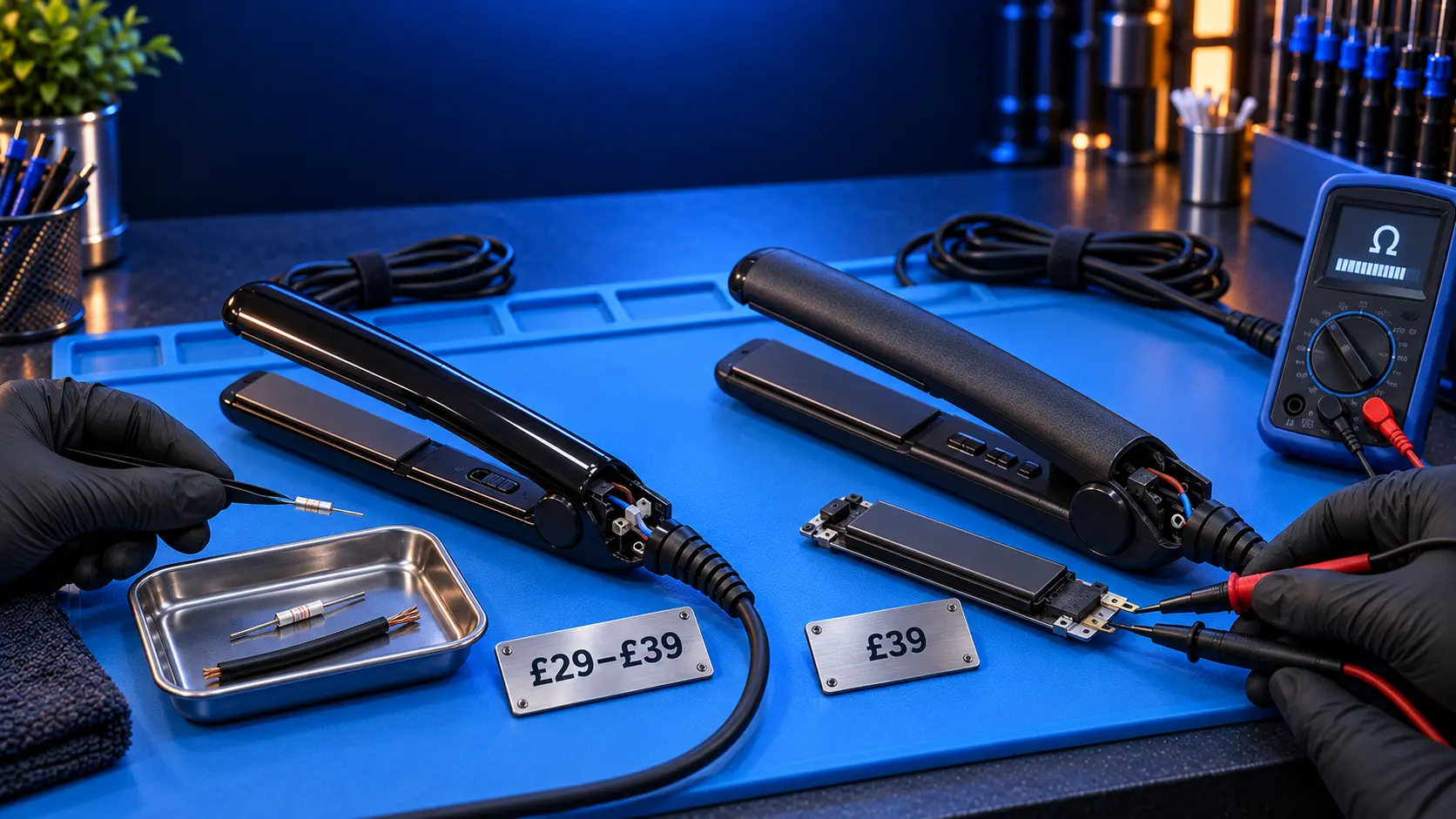
Cloud Nine heaters come in several different resistance values, and nothing on the outside of the iron tells you which one yours takes. Not the model name, not the rating label, not the box it came in. Fit the wrong value and the iron heats — then runs at the wrong temperature and often fails again within months. To you that looks like a repair that didn't hold. It's actually a part that was never correct.
The reliable way to get it right is to measure a known-good heater in that same iron and match it. When one plate still works, that's exactly what I do, and the job is straightforward.
When both have failed, that reference is gone. It becomes a more careful job — identifying the generation, cross-checking, and being certain before ordering rather than assuming.
I'll say the practical version plainly, even though it costs me work: if one of your plates has stopped and the other is still fine, send it now rather than waiting. The repair is the same price either way. It's simply a better repair when I've got a working heater to measure against, and you avoid the weeks of wrecking the surviving one by making it do all the work.
Which models I can repair
The Original, Wide, Slim, Pro and Contouring irons — that's most of what's in circulation, and both plates dead is normal work on any of them.
I don't take on the Touch, Micro or Cordless. The parts position on those won't let me put a twelve-month warranty behind the job, and I'd rather say so before you pay postage.
What it costs
£39, all in, whatever it turns out to be. Parts, labour, return postage, a PAT safety test and a twelve-month warranty on the work. No diagnosis fee, no second bill after I've opened it.
Both heaters replaced costs the same as one, because it's one flat price and I'd rather not have the conversation where the price goes up after you've committed.
Cloud Nine charge £99 for their own out-of-warranty repair, which includes a replacement iron if yours can't be fixed. That's a real guarantee and I can't match it. But the honest maths is that most irons can be fixed, so most people paying £99 are buying insurance against a rare outcome.
If I can't fix yours, there's no repair fee: I refund what you paid, less £4.99 return postage to send it back.
Common questions
It heats a bit, but nowhere near as hot as it used to. Same thing?
Different, and worth telling me. Warm-but-underpowered points at a sensor reading incorrectly, or one heater gone while the other compensates, rather than both being dead.
Is it worth fixing if both heaters have gone?
Yes. A new Cloud Nine is well over a hundred pounds and often nearer two. Two heaters and a proper test at £39 is comfortably the better decision on an iron that's otherwise sound.
Could it be the cable even though it powers on?
If the display and lights work normally, power is reaching the board, so the cable circuit is doing its job. Cable faults show up as a dead iron, not a cold one.
I kept using it with one cold plate. Have I damaged it?
You've probably shortened the life of the good heater, and you've lost the reference that makes the repair straightforward. Neither changes the price or stops it being fixable.
My straightners get warm but the display says 200. Is the display wrong?
Possibly — that's what a sensor fault looks like. The board reports what the sensor tells it, and if the sensor is drifting, the number on the display and the actual plate temperature stop matching.
How long does a repair take?
The current turnaround is shown when you book. If a part needs ordering, I'll tell you as soon as I've diagnosed it and give you a realistic date.
Before anything else: turn it up, heat it from cold, and give it two full minutes. Between the temperature setting and the auto-off, a fair share of "it won't heat" turns out to be an iron doing exactly what it was told. It costs nothing to rule out, and you'll know within two minutes whether you've got a fault or a setting.
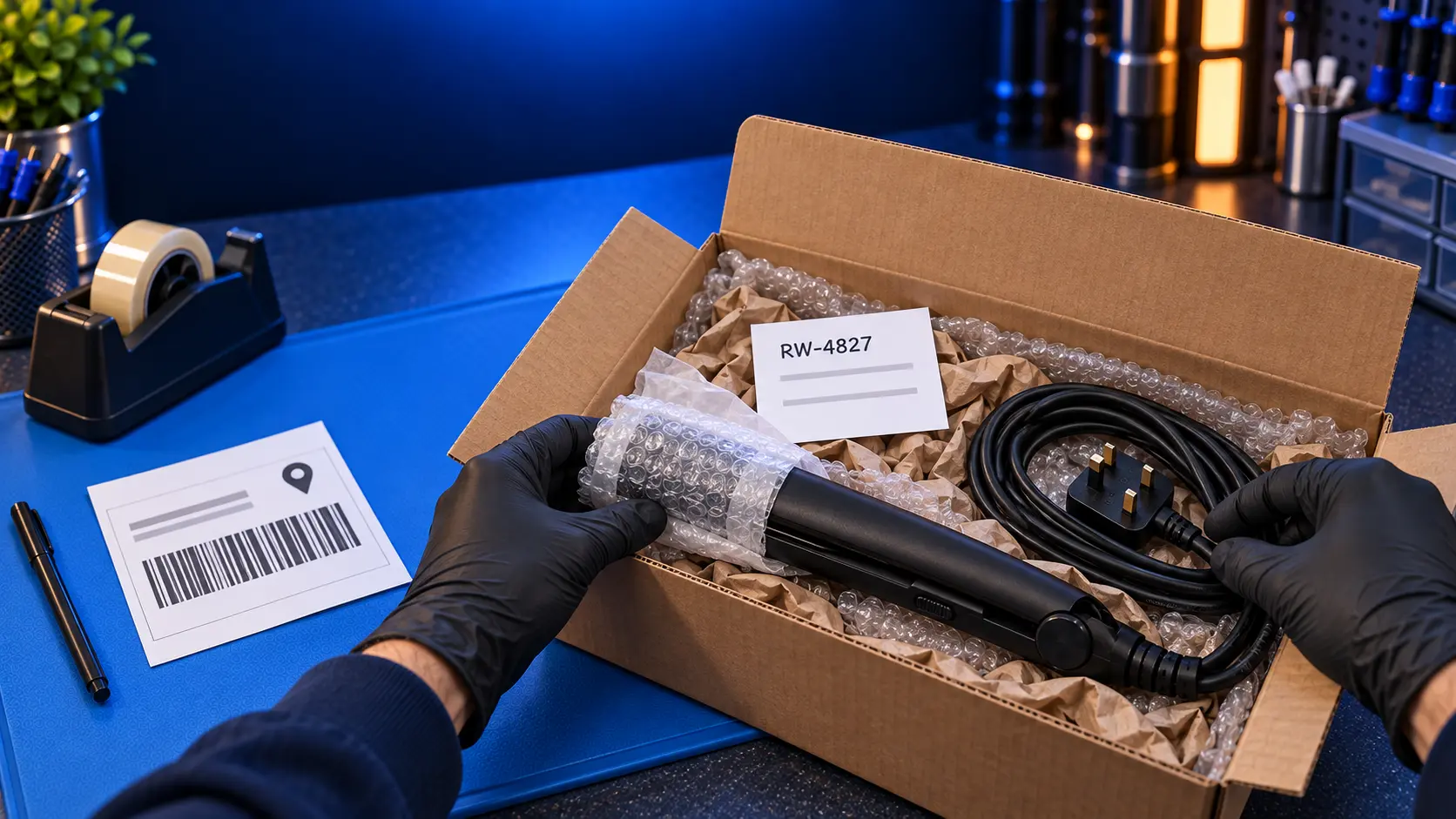
If both plates are genuinely cold, send it in and I'll sort it. £39 all in — parts, labour, return postage, a PAT safety test and a twelve-month warranty — with a full refund less £4.99 return postage if I can't fix it. Every repair is done by me personally, on my own bench, start to finish. And if you're reading this with one plate still working, don't wait for the second one to go: it's the same price today and it's a better repair.
The Repair Works is an independent UK repair service, run by me, Paul — 25 years of hands-on repair experience, working by post for customers across the whole country. Not affiliated with or endorsed by Cloud Nine.