One plate gets hot. The other stays cold. The iron switches on normally, the display looks right, and it doesn't beep or complain — it just doesn't work properly.
Usually you notice it before you understand it. Your hair takes three or four passes instead of one, the results are uneven, and you find yourself going over the same section again wondering what's changed.
Here's what's going on, and why this particular fault is better news than it feels like.
Each plate is its own circuit
A Cloud Nine iron doesn't have one heating system. It has two, one per plate, each with its own heater element and its own temperature sensor. On some generations each side has its own thermal fuse as well.
That's why one side can fail completely while the other carries on as though nothing has happened. The board is still seeing a healthy circuit on the good side, so the iron powers up and behaves normally. It has no way of telling you the other side has stopped.
It also explains why this fault doesn't usually beep. A beep means the board has lost a heating circuit it expects to find. One dead plate on some models simply reads as an iron running slightly oddly — enough to work, not enough to work properly.
Confirming it's really one plate
Before anything else, make sure that's what you're dealing with.
Heat it from cold, leave it a full two minutes, and check the temperature setting is actually where you think it is — an iron on its lowest setting performs badly on thick hair and can look like a fault when it isn't.
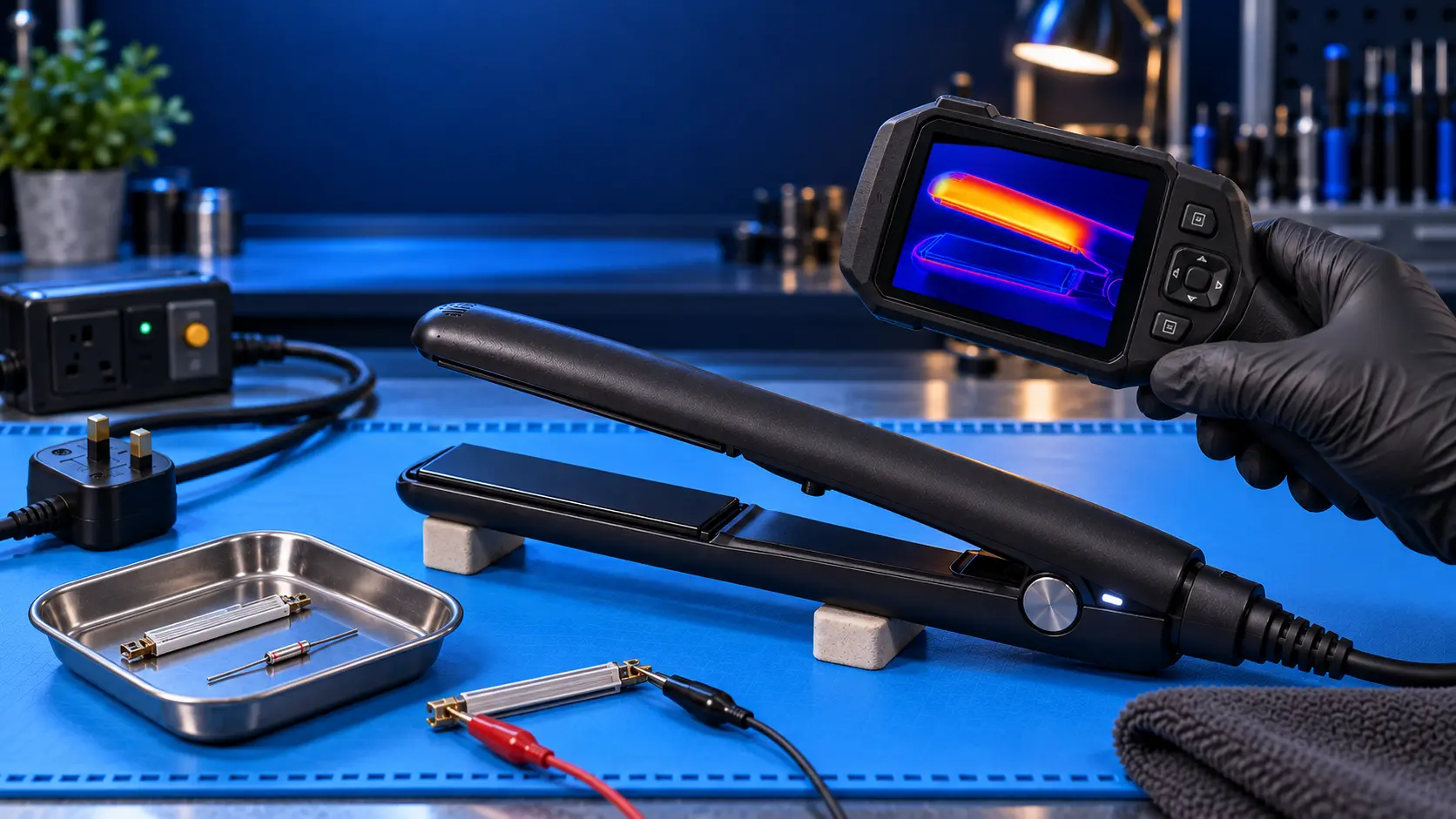
Then hold your hand a few centimetres from each plate in turn. Don't touch them. A working Cloud Nine plate runs at around 200°C and will burn you instantly. A working plate radiates obvious heat from a couple of centimetres away; a dead one radiates nothing at all. The difference is unmistakable — you won't be in any doubt.
If both plates are stone cold, or the iron beeps instead of heating, that's a different fault with a different answer.
The three causes
1. The heater element on that side has failed. Elements go open circuit with age and use, and once one has, that plate is simply not going to heat again. The most common cause by a distance.
2. The thermal fuse on that side has blown. A protective fuse sits in the heater circuit to sacrifice itself if things go wrong. When it does its job, the result looks identical from the outside: one dead plate.
3. A connection to that heater has failed. Less common, but the wiring to a heater can fatigue or a joint can degrade, with the same outcome.
All three produce exactly the same symptom, and here's the honest part: on some Cloud Nine generations, the first two are electrically indistinguishable until the heater assembly is open.
Why the generation matters
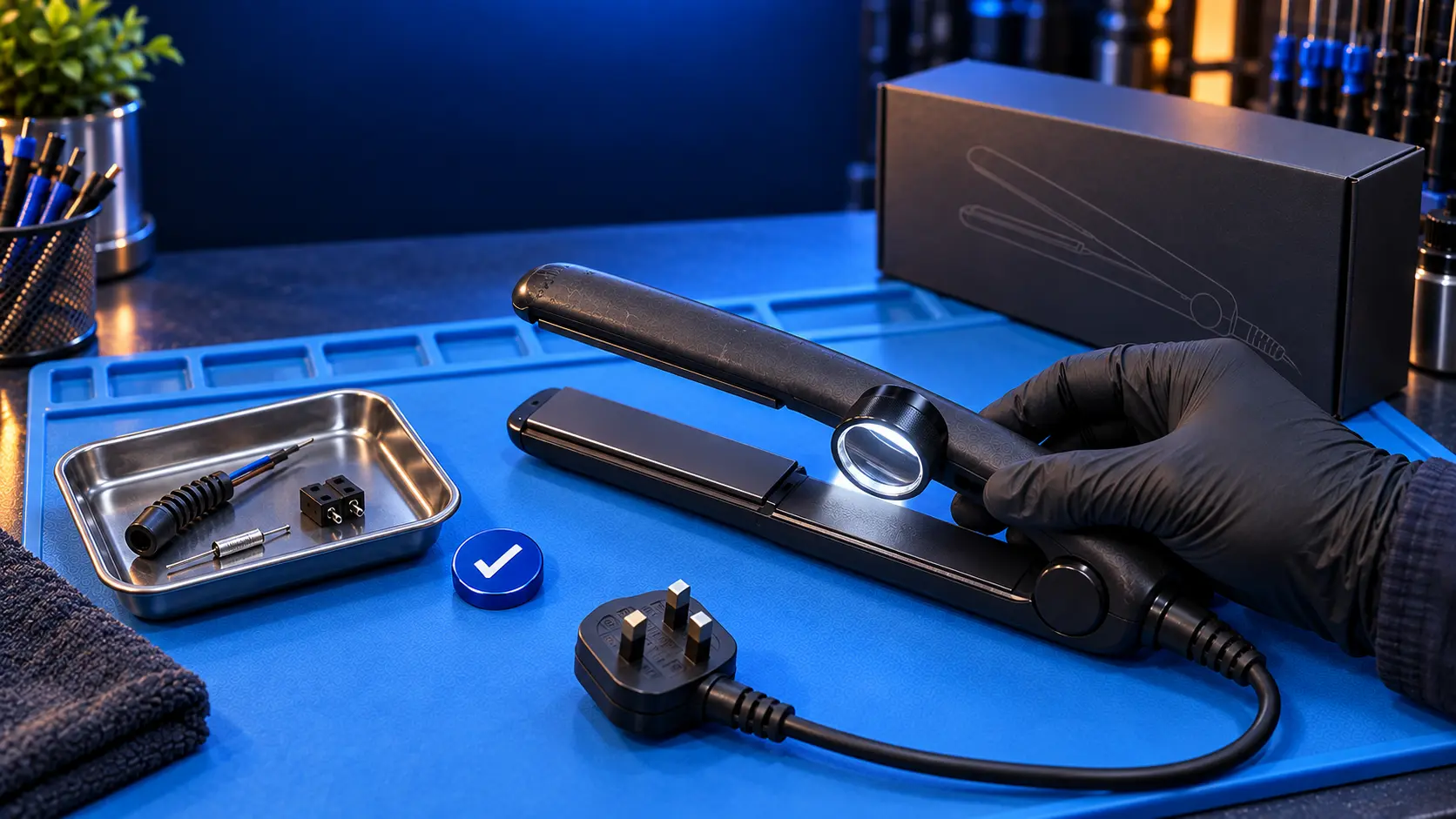
On the earlier irons, the thermal fuse is wired in series with the heater element. Electrically that means they behave as one thing — a blown fuse and a dead element give the same reading at the connector. There's no clever test that separates them. You open the assembly and look.
On the later Original and Wide generations, the fuse is wired separately to the board, where it's a testable point in its own right, and where it turns out to be a modestly priced part.
Neither is a problem to repair. But it does mean nobody can tell you over the phone whether yours needs a fuse or a heater, and anyone who does is guessing. It's also the reason I quote Cloud Nine work at one flat price rather than itemising: I don't know which part it needs until it's open, and pretending otherwise would just mean revising the price later.
Why one dead plate is the good version of this fault
This is the bit worth knowing, and it's the reason I'd always rather see one dead plate than two.
Cloud Nine heaters come in several different resistance values, and nothing on the outside of the iron tells you which one yours takes. Not the model name, not the box, not the rating label. Fit a heater of the wrong value and the iron will heat — but it'll run at the wrong temperature and it'll often fail again within months. To the customer that looks like a repair that didn't hold. It's actually a part that was never right.
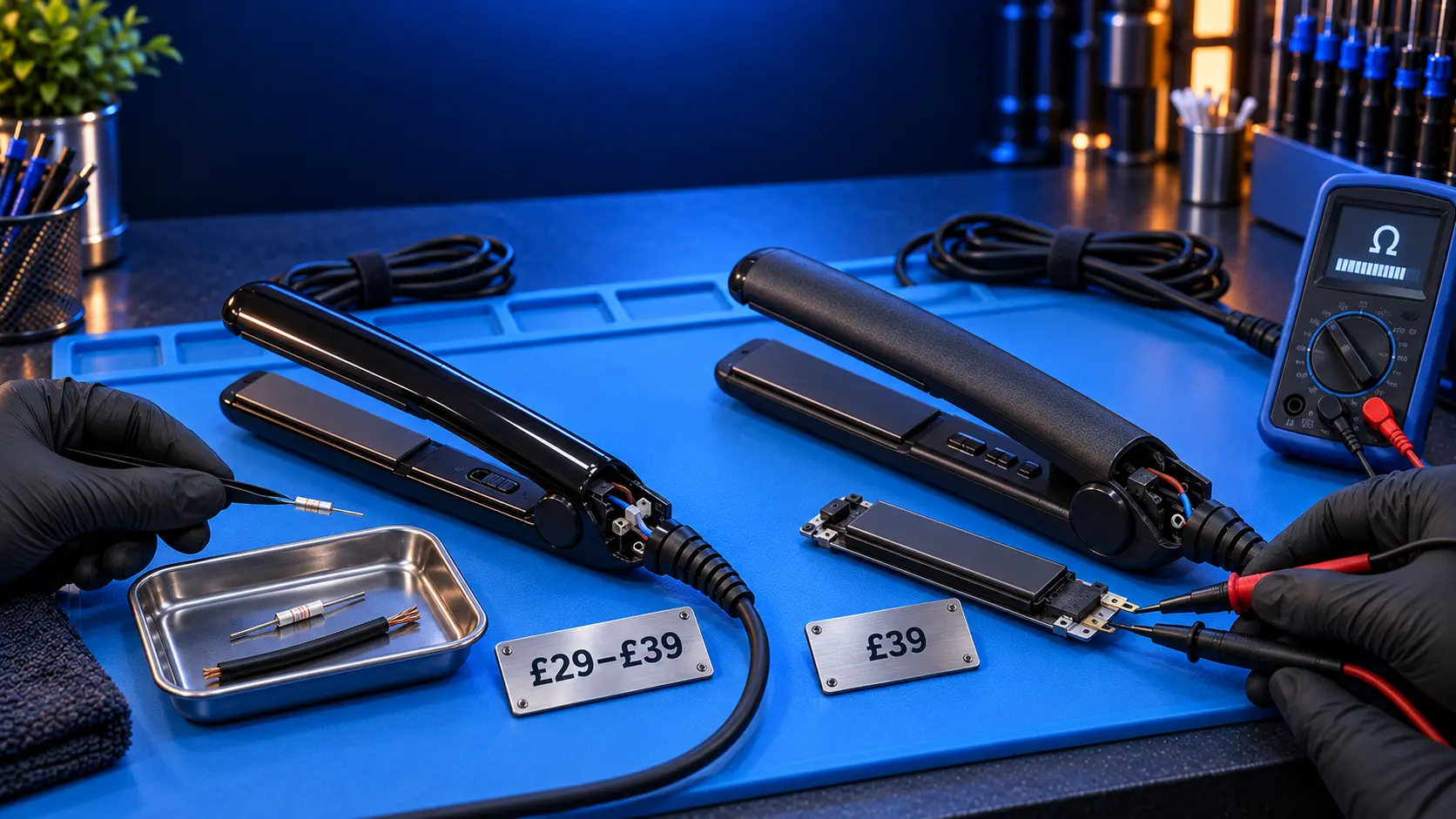
The only reliable way to get it right is to measure the resistance of a known-good heater in that same iron and match it.
Which is exactly what you've got. Your working plate is the reference. I measure it, order the matching value, and the repair is right first time.
When both plates have failed, that reference is gone, and it becomes a considerably more careful job. So the fault that feels like half a disaster is actually the straightforward one.
Which models I can repair
I take on the Original, Wide, Slim, Pro and Contouring irons. One dead plate on any of those is routine work.
I don't repair the Touch, Micro or Cordless. The parts position on those won't let me stand behind a twelve-month warranty, and I'd rather tell you now than after you've paid postage. If you're unsure which you've got, check the models I cover before sending anything.
What it costs
£39, all in. Parts, labour, return postage, a PAT safety test and a twelve-month warranty on the work — whether it turns out to be a heater, a fuse or the wiring. No diagnosis fee, no second bill.
Cloud Nine charge £99 for their own out-of-warranty repair. That includes a replacement iron if yours can't be fixed, which I can't match and won't pretend to. But a single dead plate is about as fixable as a fault gets, so most people paying the extra £60 are insuring against something that was never likely to happen to them.
If I can't fix yours, there's no repair fee: I refund what you paid, less £4.99 return postage to send it back.
Common questions
Can you just replace the one heater, or do both get changed?
I replace what's failed. If one heater has gone and the other measures healthy, there's no reason to change a good part — and the good one is what tells me which replacement to order.
Will the repaired side match the other one?
Yes, provided the right value goes in, which is the whole point of measuring first. Both plates should reach the same temperature, and I check that on the bench before it goes back.
It's not completely cold, just cooler than the other side. Same thing?
Not necessarily, and it's worth mentioning when you send it. A plate that's warm but underperforming points more towards a sensor reading incorrectly than a failed heater, which changes what I look at first.
Is it safe to keep using it like this?
There's no safety issue with one plate not heating — but you'll be going over the same hair repeatedly with a hot plate on one side to get a result, which isn't doing your hair any favours.
My straightners had one cold plate for months and now neither works. Have I made it worse?
No, you've just lost the reference. It's still repairable, it's still £39, and it's a more careful job at my end rather than a more expensive one at yours.
How long does a repair take?
The current turnaround is shown when you book. If a part needs ordering, I'll tell you as soon as I've diagnosed it and give you a realistic date.
Before anything else, heat it from cold, give it two full minutes, and check your temperature setting is where you think it is. It costs nothing and it rules out the one version of this that isn't a fault at all. Then hold a hand near each plate — near, not on — and you'll know within seconds which side has stopped.
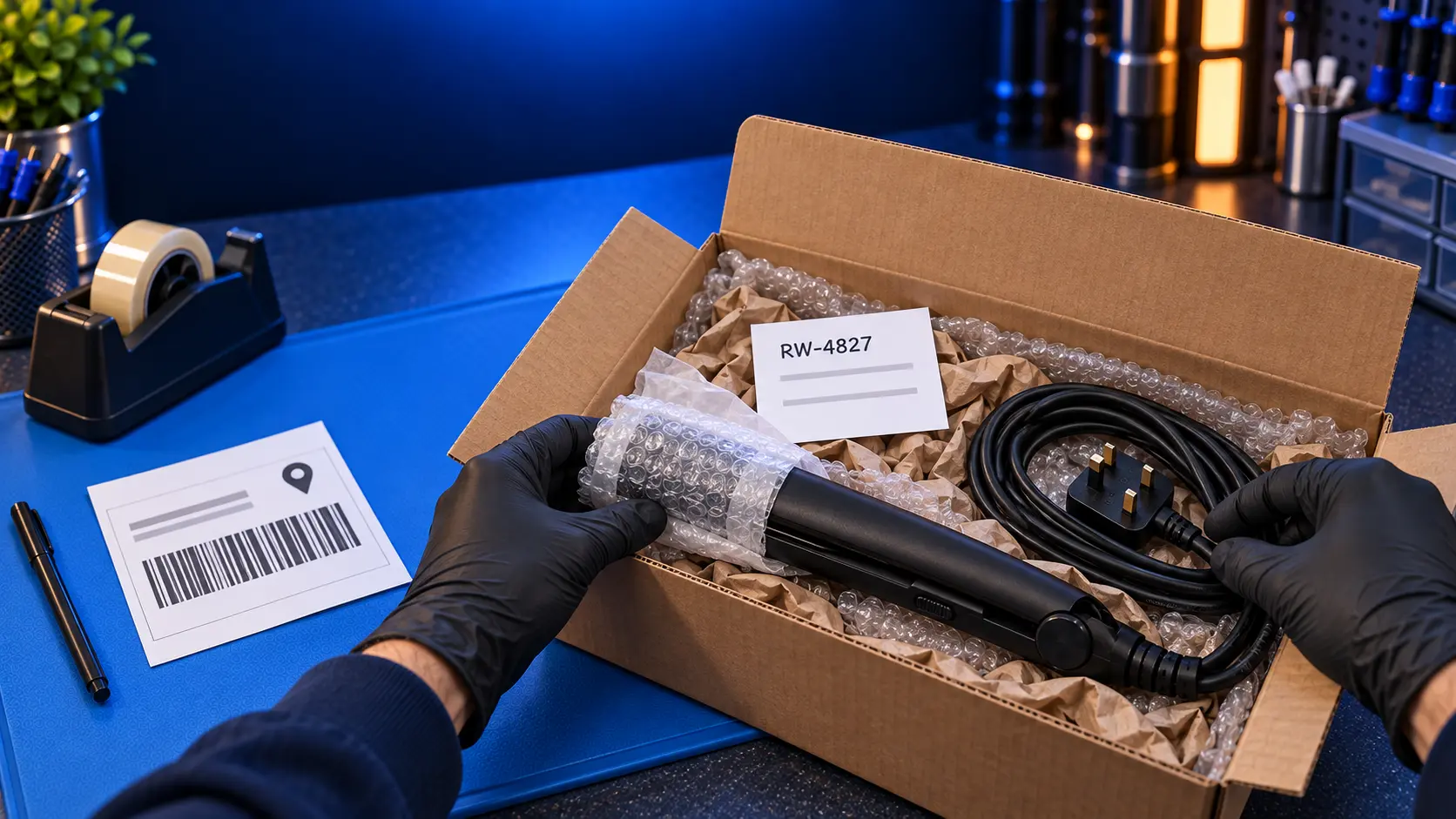
If one side is genuinely dead, send it in and I'll fix it. £39 all in, including the part, return postage, a PAT safety test and a twelve-month warranty, with a full refund less £4.99 return postage if I can't. Every repair is done by me personally, on my own bench, start to finish. And do send it while one plate still works — that working plate is the thing that makes getting the repair right straightforward.
The Repair Works is an independent UK repair service, run by me, Paul — 25 years of hands-on repair experience, working by post for customers across the whole country. Not affiliated with or endorsed by Cloud Nine.