Recapping is worth it when a console has symptoms that point to tired capacitors: quiet, crackly or missing sound, or a dim, wavy or unstable picture. On some consoles, notably the Mega Drive, it's a common fix for sound. On others it's rarely needed, and it's never a cure for every fault.
Here's how to tell which camp your console is in, and what it costs.
What a recap is
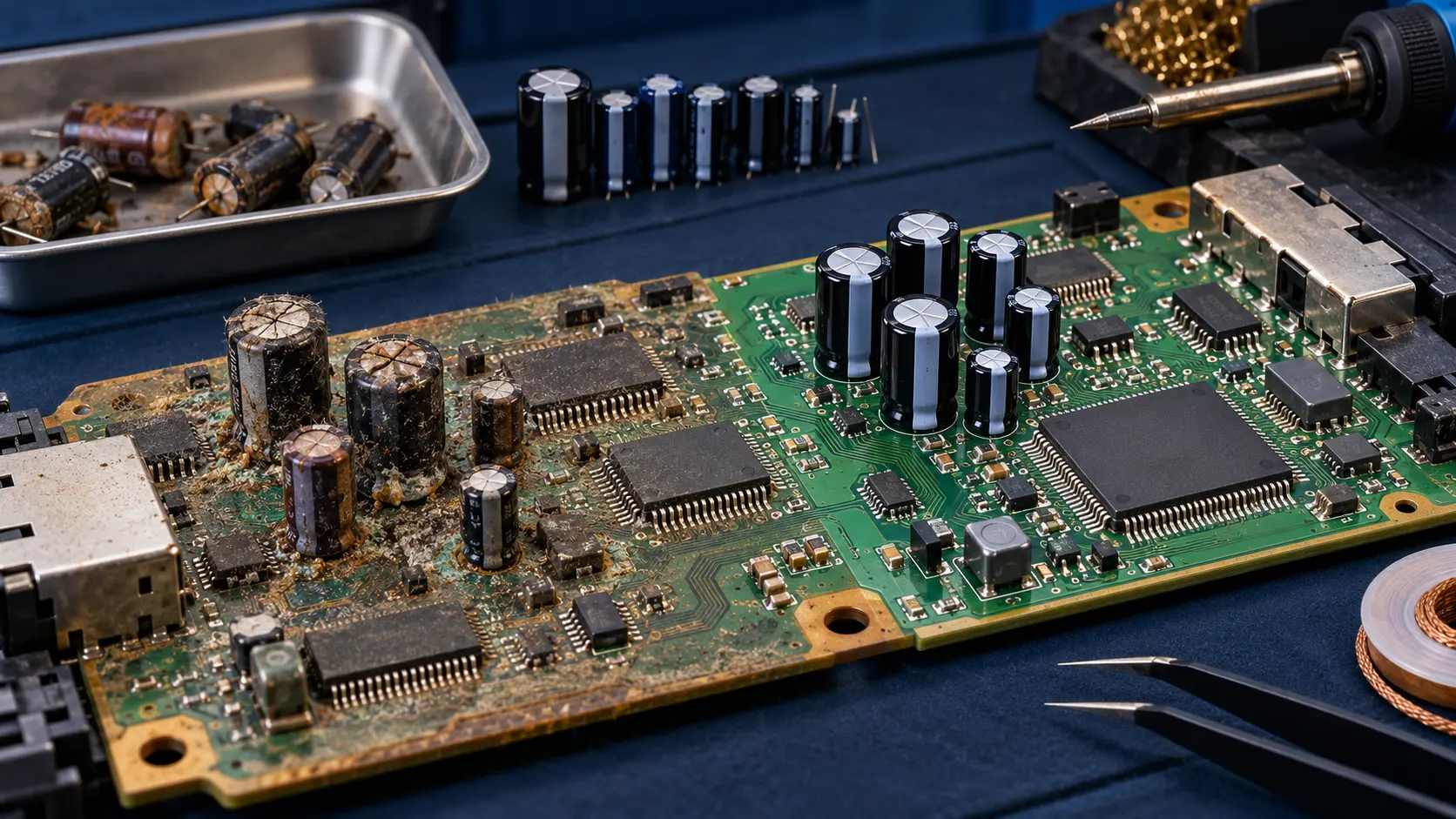
Old consoles use electrolytic capacitors: small components that store and smooth electrical charge on the board. They dry out over decades. A recap replaces them with new capacitors of the right values.
It's skilled board work. Each capacitor has to be removed without damaging the board, and the new one fitted the right way round with the right value. Done carelessly, it can cause more problems than it solves.
When a recap helps
Drying capacitors tend to show up as:
- quiet, crackly or missing sound;
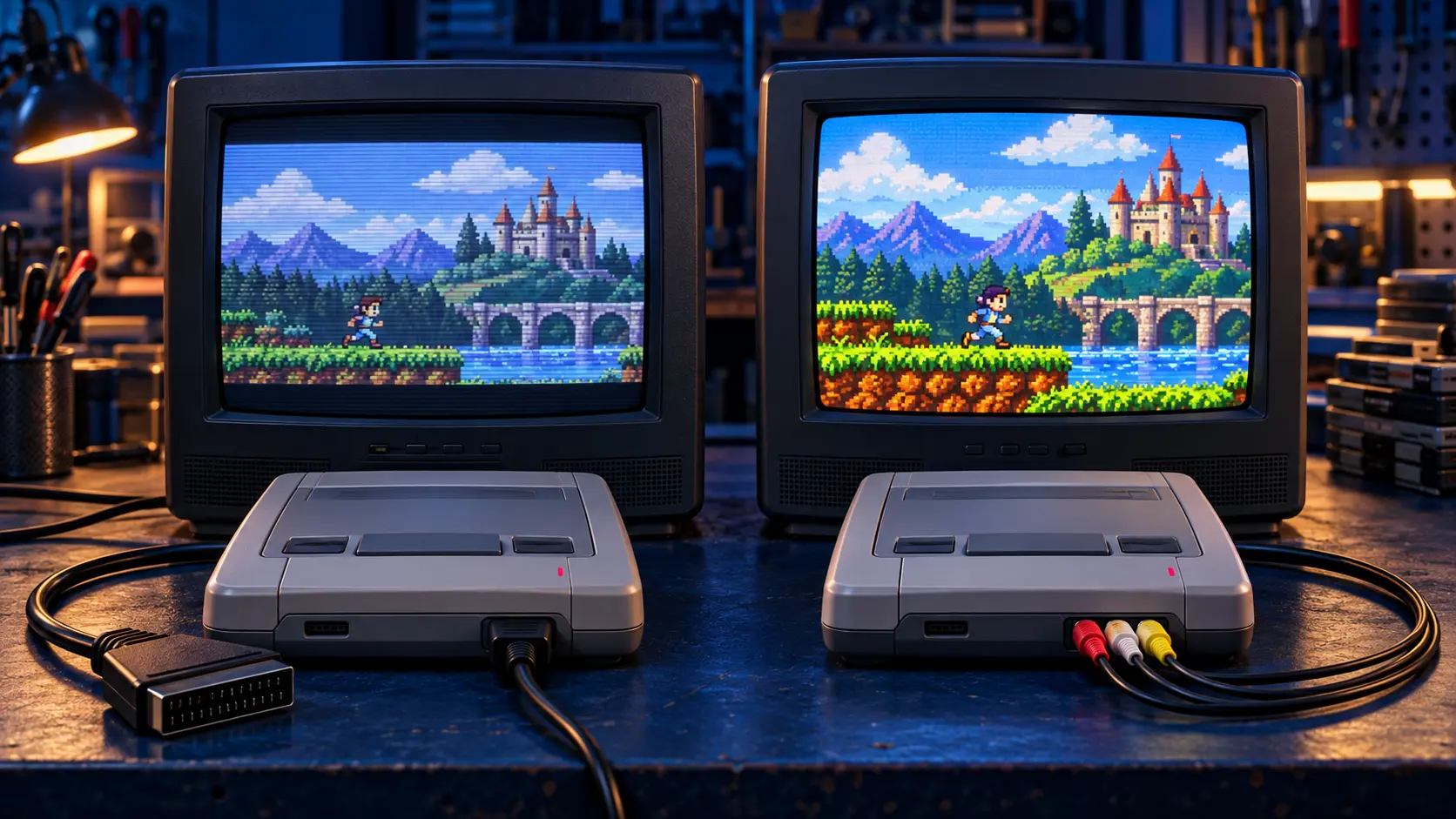
- a dim, wavy or unstable picture;
- sometimes, no power at all.
If your console has one of these and the simple checks (cables, TV settings, a different game) don't explain it, the capacitors are a sensible suspect.
The Mega Drive is the clearest example. Ageing capacitors are a well-known cause of poor sound on it, and a recap is the usual fix. My guide to Mega Drive sound problems walks through what to check first.
When a recap doesn't help
A recap only fixes faults caused by capacitors. It won't help with:
- a failed external power supply (the power brick), which is a common reason a console won't turn on;
- dirty cartridge contacts or a scratched disc;
- a worn laser on a PS1 or PS2;
- a missing Jumper Pak on an N64, the small insert in the top slot that the console needs to show a picture;
- a broken cable or a TV that doesn't like the signal;
- a failed chip or a damaged board.
That's why, for a console that won't turn on or has no picture, I'd point you to an assessment rather than a recap. You pay £4.99, I diagnose it, and I quote before any work. If you go ahead, the £4.99 comes off the repair.
Preventative recapping
On some consoles, owners recap before problems appear, because the capacitors are known to age badly on that model. The Mega Drive is the usual case. If it still sounds fine now, a recap is a reasonable way to look after it, but there's no rush.
On consoles where capacitor faults are rare, a preventative recap is usually money better spent elsewhere. Replacing parts that are working well adds a small risk of its own for little gain.
What it costs
- Mega Drive recap: £59.
- SNES recap: £55.
- Recap for other consoles, such as the Saturn, PC Engine or Mega CD: £4.99 assessment, recaps from £45.
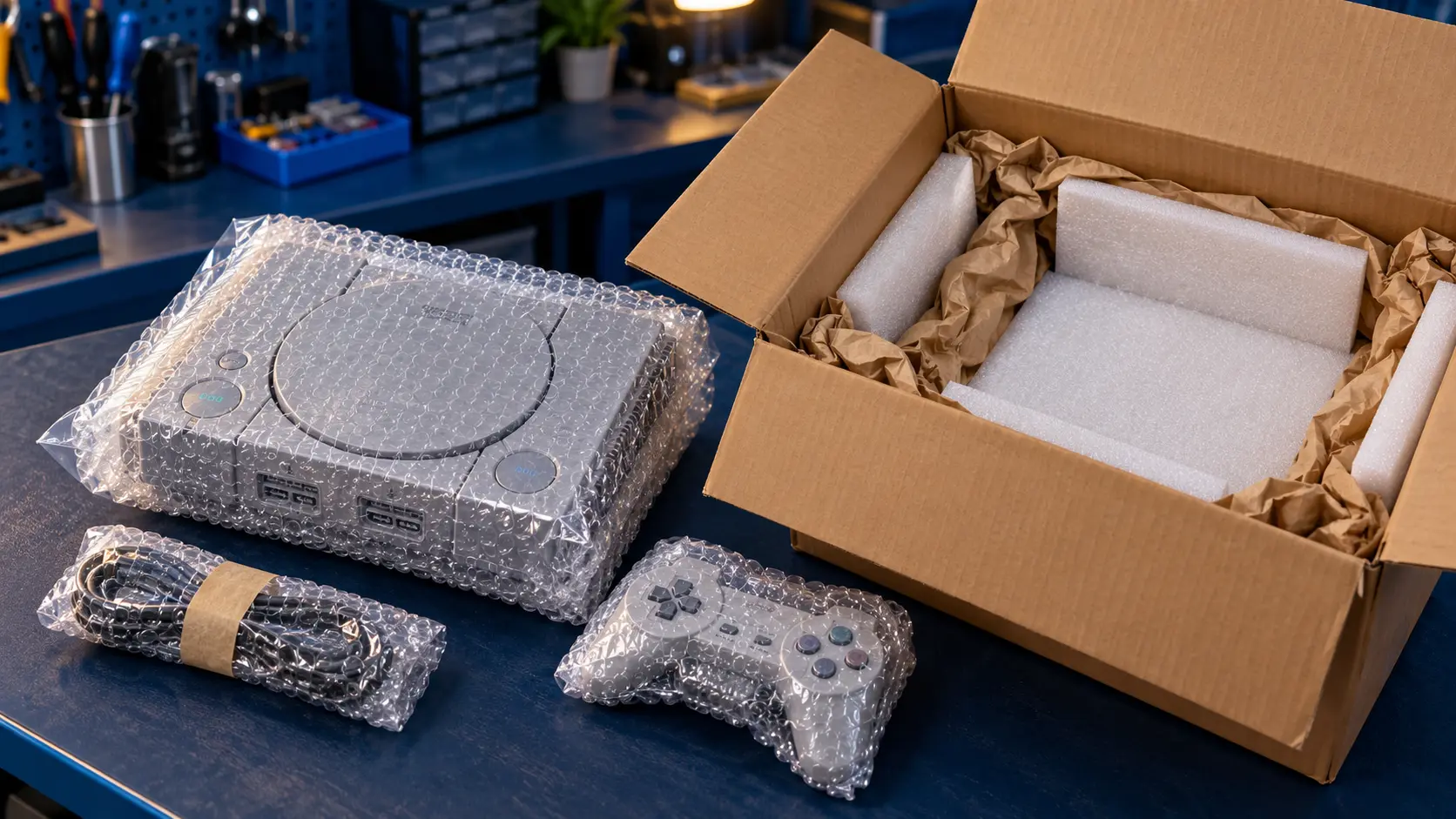
Those prices include the capacitors and the board work. You pay the postage to send the console in; the insured, tracked return is included.
So, is it worth it?
It's worth it if:
- the symptoms match (sound or picture problems that the simple checks don't explain);
- the console is one where capacitors are a known weak point, like the Mega Drive;
- you plan to keep playing it for years.
It's probably not worth it if:
- the console won't turn on and you haven't ruled out the power supply;
- the fault is disc reading, cartridge contacts or the picture connection;
- the console works well and capacitor faults are rare on that model.
If you're weighing up several jobs at once, my overview of retro console repair costs in the UK puts all the prices in one place.
Whatever you book, I test the console on my bench before it goes back. Every repair has a 12-month warranty, and if I can't fix it, there's no fix, no fee. You'll find every service on the retro console repairs page.
Frequently asked questions
Will a recap make my console look and sound like new?
If the problem is caused by the capacitors, a recap should restore normal sound or a steady picture in most cases. It won't change the console's original character, and it won't fix faults with other causes.
Do I need to recap my SNES?
Capacitor faults are less common on the SNES than on the Mega Drive. If yours has sound or picture problems that the simple checks don't explain, a recap is an option. If it works well, there's little need.
Can a recap fix a console that won't turn on?
Sometimes, but the power supply and the board's power section are more likely causes. An assessment is the better first step, so the fault is found before you pay for a repair.