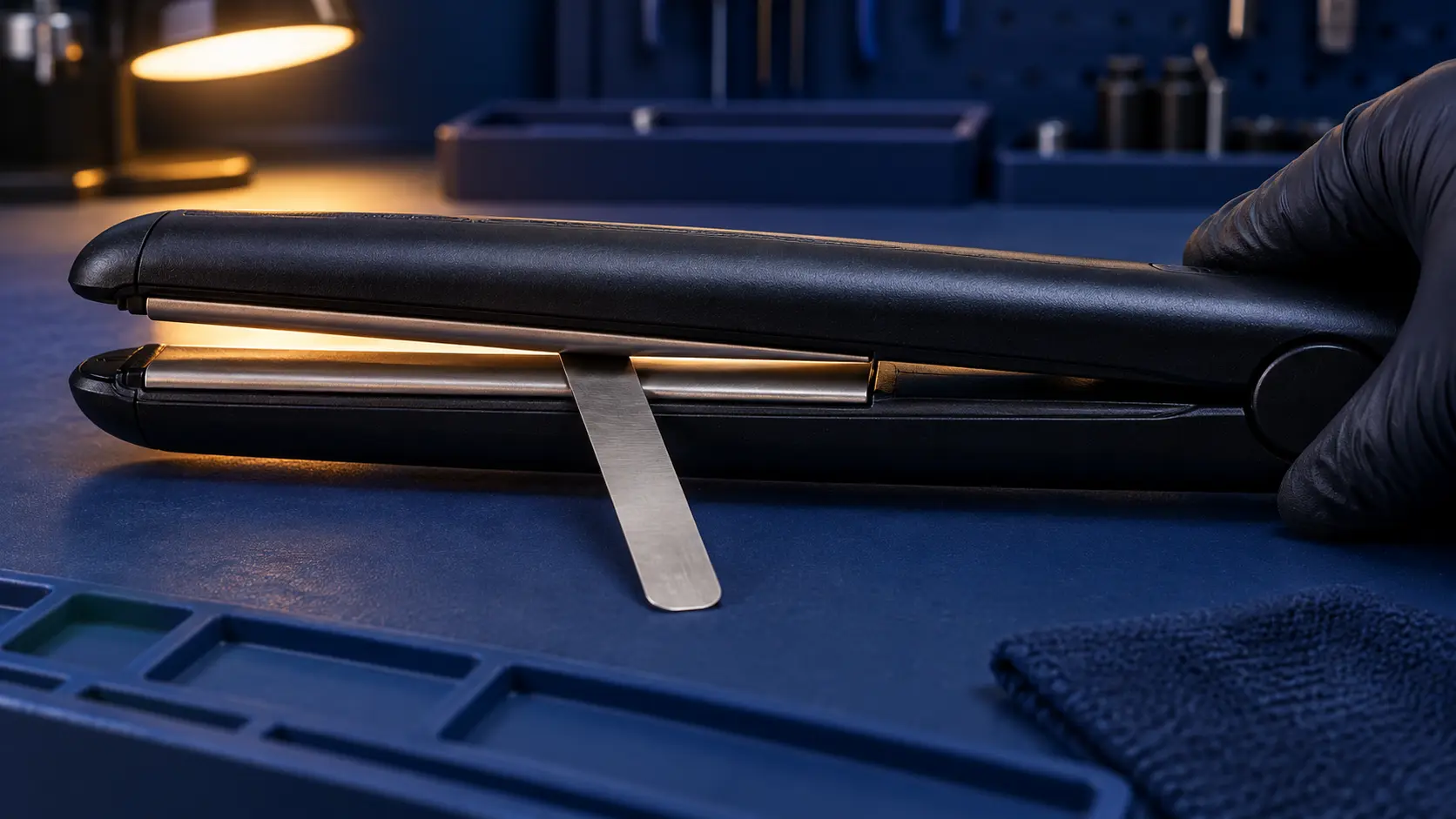
Not every GHD fault is electrical. Sometimes the straighteners heat and power up perfectly well, but there's a physical problem: the plates don't sit flush, there's a visible gap between them when closed, the hinge feels loose or wobbly, or the two halves seem misaligned. It's less alarming than a fault that won't heat — but it genuinely affects how well the straighteners work, and it's worth putting right.
I've been repairing electronics for over 25 years, so here's what causes plate and hinge problems, why they matter, and how they're fixed.
Why it matters (it's not just cosmetic)
It's tempting to live with a slightly wonky pair of straighteners, but a plate that doesn't sit flush actually undermines the whole point of them. GHDs work by pressing your hair evenly between two hot, flat plates. If there's a gap, or the plates are misaligned, the contact is uneven — so some of your hair gets properly straightened and some doesn't, you end up going over the same section repeatedly, and the results are patchy. As with under-heating, that repeated passing can mean more heat exposure for your hair overall, not less. So a mechanical fault is worth fixing for the finish as much as the feel.
What causes plate and hinge problems
Because this is a physical rather than electrical fault, the causes are mechanical:
A worn or loose hinge
The hinge is what the two arms of the straighteners pivot on, and it takes a lot of use over the years. Over time the hinge can loosen, wear, or develop play — giving you that wobbly, sloppy feel and letting the plates sit unevenly. In many cases the hinge or its fixings can be tightened or replaced to bring everything back into proper alignment.
Plates that have worked loose or shifted
The heated plates are mounted onto the arms, and their mounting can occasionally loosen or shift — from a knock, a drop, or simply age. When a plate is no longer sitting square on its mount, you get a gap or a misalignment even though the hinge itself is fine. Re-seating or re-securing the plate corrects it.
A spring or internal fixing issue
GHDs use internal springs and fixings to give the plates their "float" — the slight give that lets them press evenly on different thicknesses of hair. If one of those has failed or come loose, the plates can stop closing evenly. It's an internal fix, but a standard one.
Impact or drop damage
If your straighteners have been dropped or knocked, the casing, hinge or plate mounts can be knocked out of true. Whether this is repairable depends on the severity — a minor misalignment is usually fixable; a badly cracked casing may be beyond sensible repair. I'll always tell you honestly which side of that line yours falls on.
The one thing to check yourself first
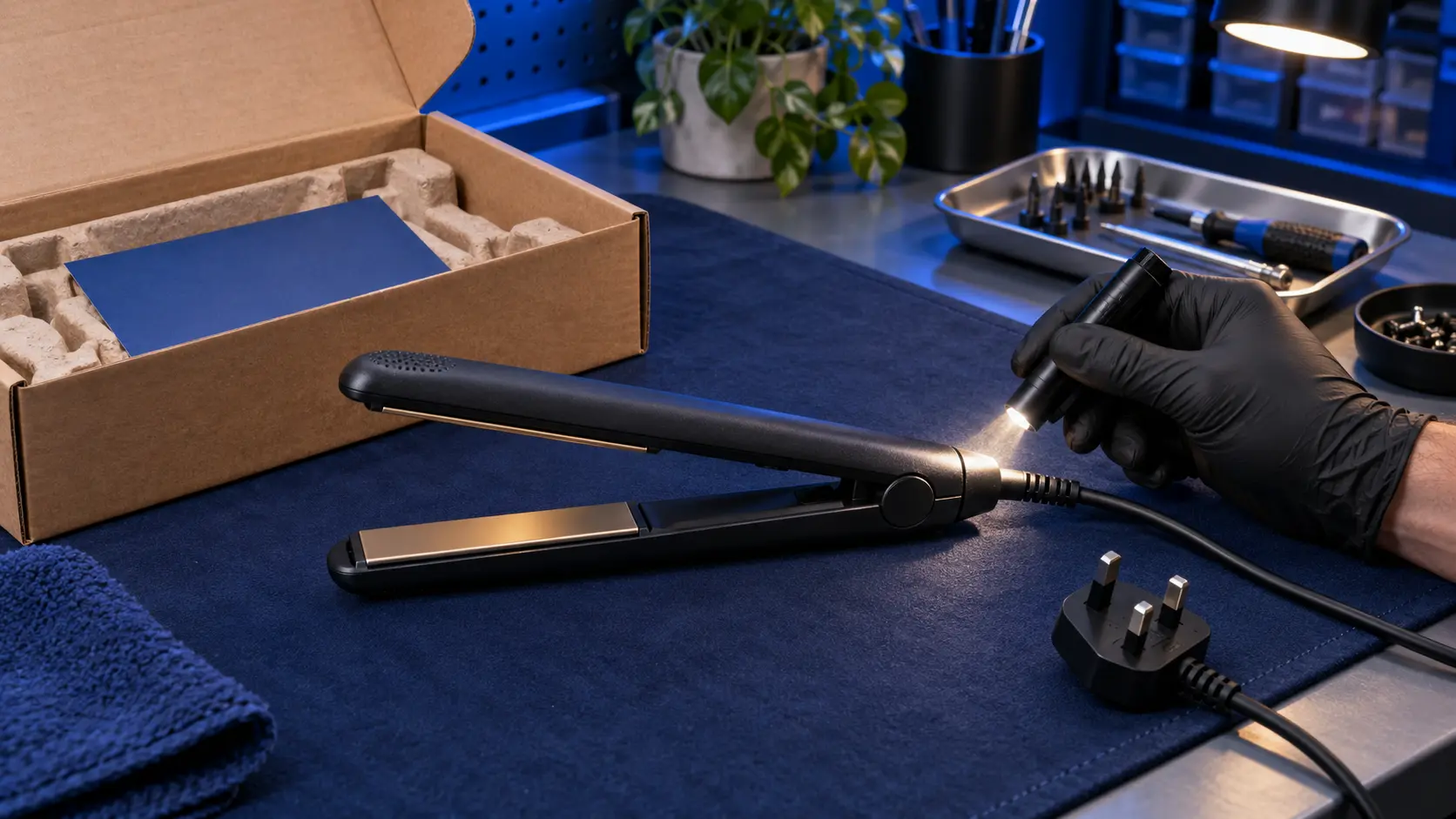
Before assuming a fault, one quick, free check: make sure there's no built-up hair, product or debris caught in the hinge or around the plate edges. It's surprisingly common for baked-on styling product or trapped hair to stop plates closing fully or make the action feel stiff. With the straighteners cool and unplugged, have a look and gently clean around the hinge and plate edges. If that frees things up, you've fixed it for nothing. If the plates still won't sit flush, it's a genuine mechanical fault.
How the repair works
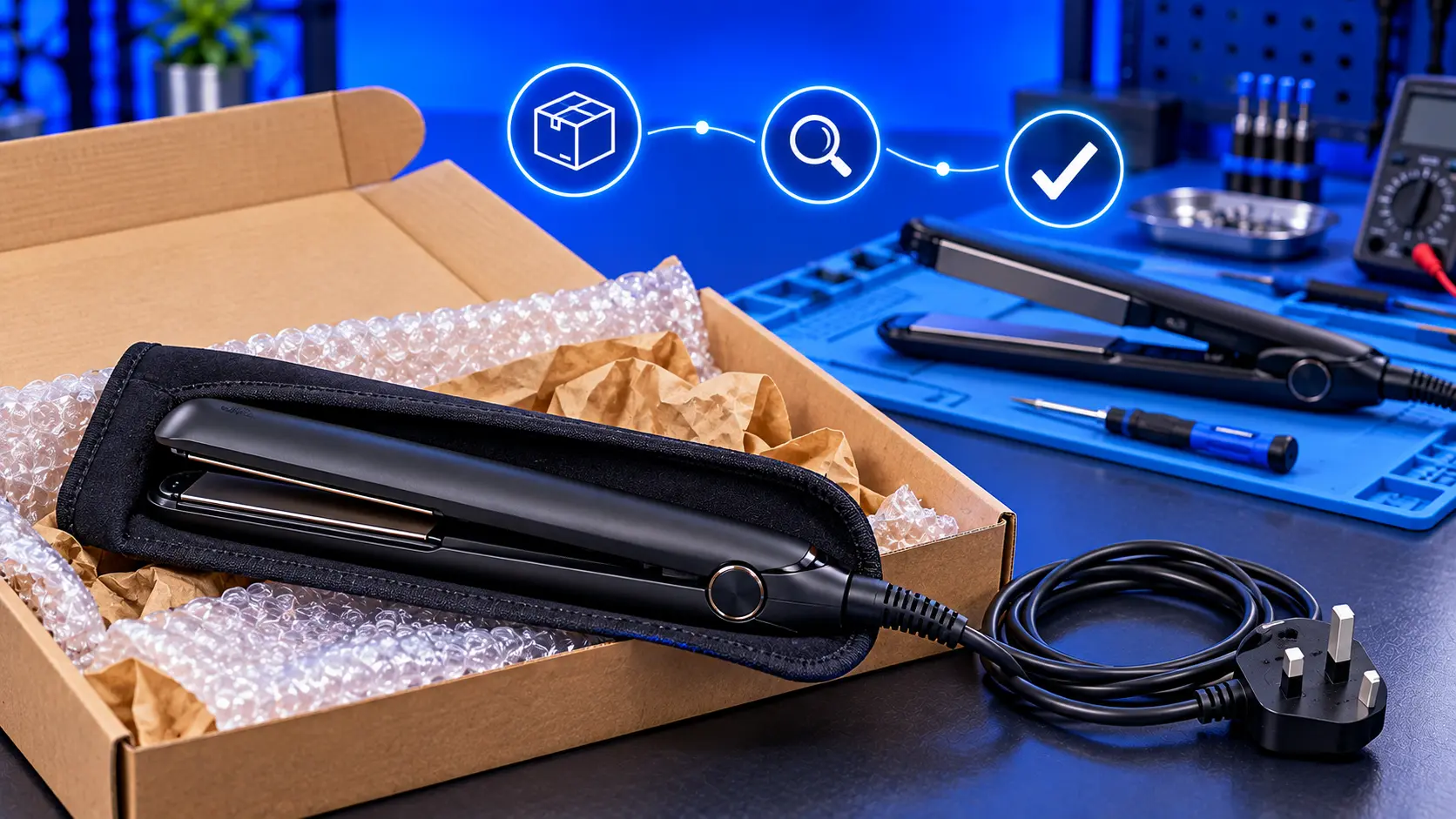
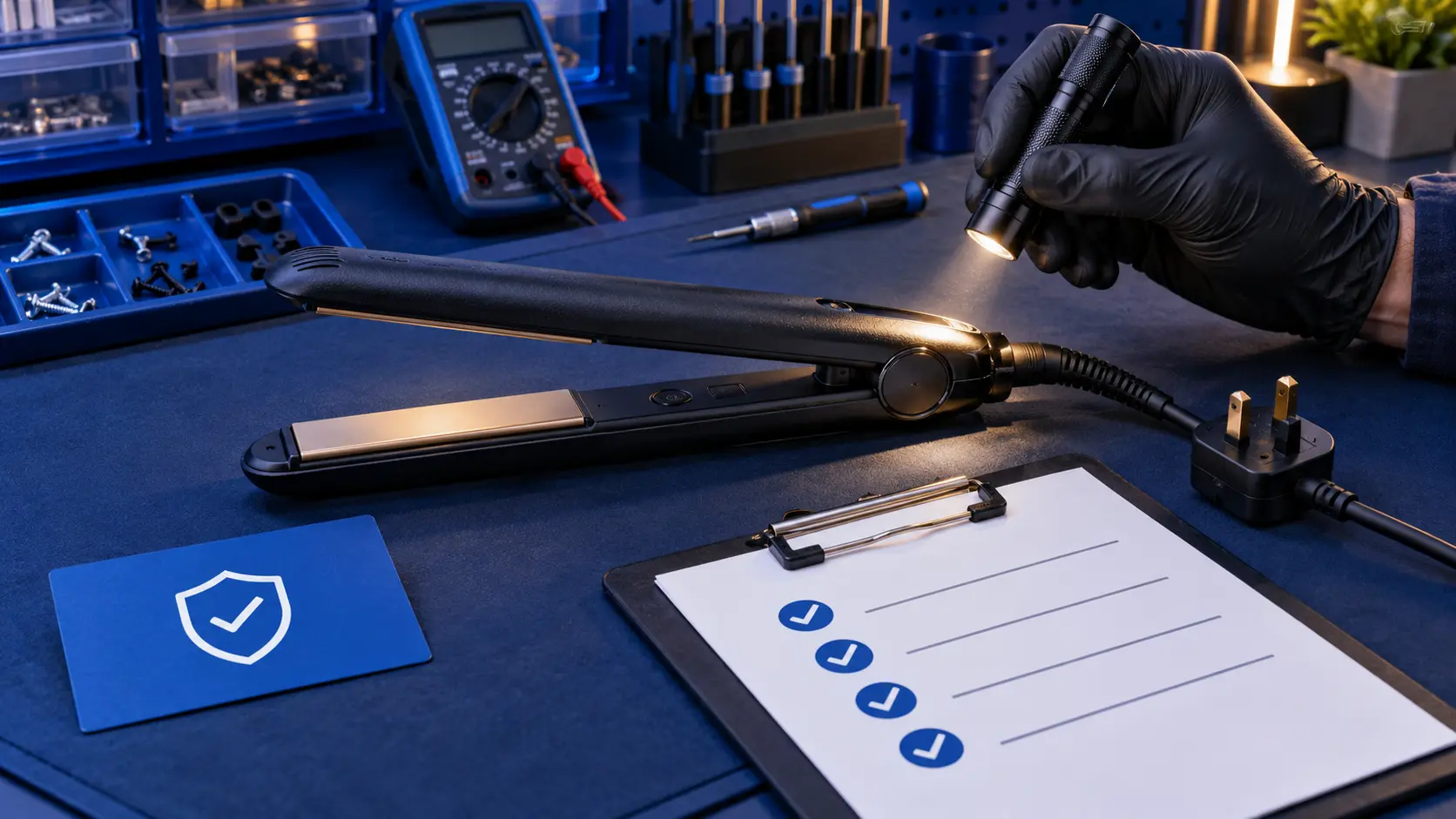
When straighteners with a plate or hinge fault come in, I identify whether it's the hinge, the plate mounting, an internal spring/fixing, or impact damage, and put it right — tightening, re-seating or replacing whatever's needed to get the plates sitting flush and closing evenly again. Even though this is a mechanical fault, the straighteners still get the same full heat test and PAT safety test before they come back to you, so you know they're working correctly all round, not just closing properly.
It's a flat £29 all-in for standard models (£39 for Gold, Max and Platinum+) — parts, labour, return postage and safety test included — backed by my no-fix-no-fee promise and a 12-month warranty.
Is it worth repairing?
For a hinge or plate-alignment fault, usually yes — it's typically a worn hinge or a loosened plate on an otherwise perfectly good, fully-working pair, and £29 to restore them beats £100-plus for new. The main exceptions are serious drop damage (a badly cracked or crushed casing may be beyond economical repair) and, as always, the sealed round-button Eclipse and Platinum (S8T261) models, whose internals can't be worked on. If yours is genuinely beyond fixing, I'll tell you straight rather than take on a lost cause.
If your GHD plates won't close properly or the hinge feels loose, and a clean-out hasn't sorted it, you can book a straightener repair here — I'll send simple instructions for posting them in and get them sitting flush again. Not sure which fault yours is? See all the GHD repairs I offer, or send them in and I'll diagnose it for you.
The Repair Works is an independent UK repair service, run by me, Paul — 25 years of hands-on repair experience, working by post for customers across the whole country. Not affiliated with or endorsed by GHD.