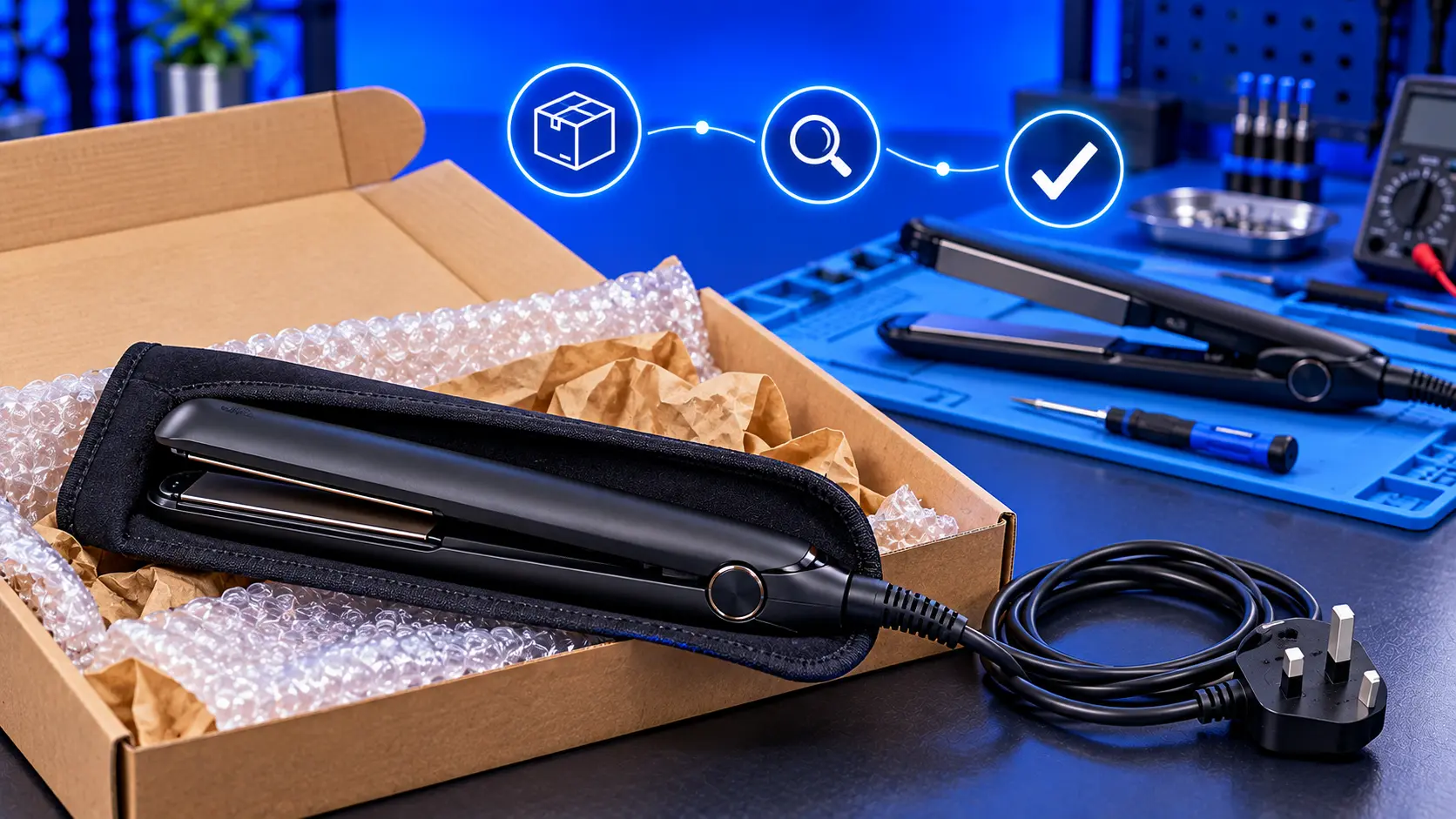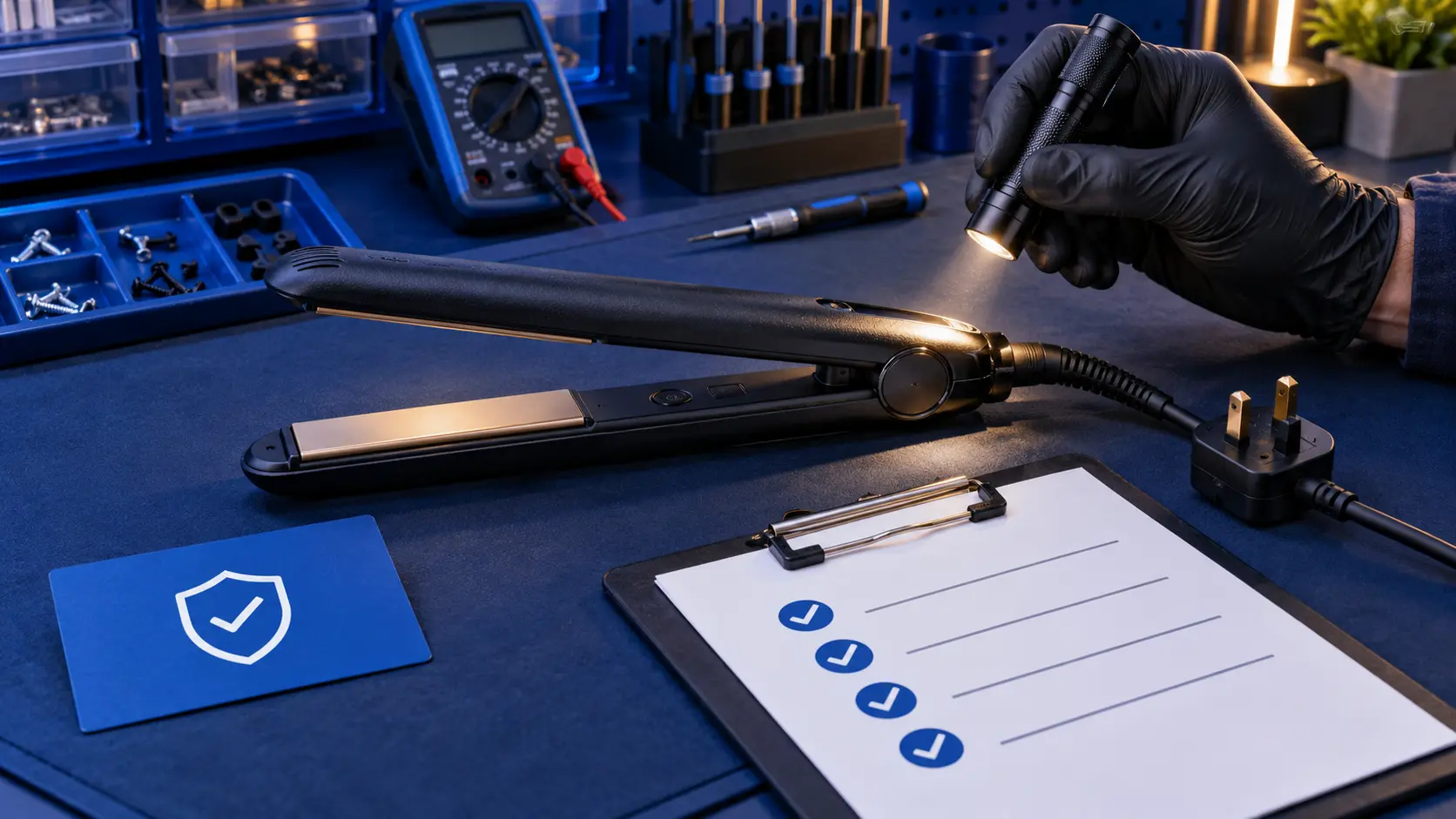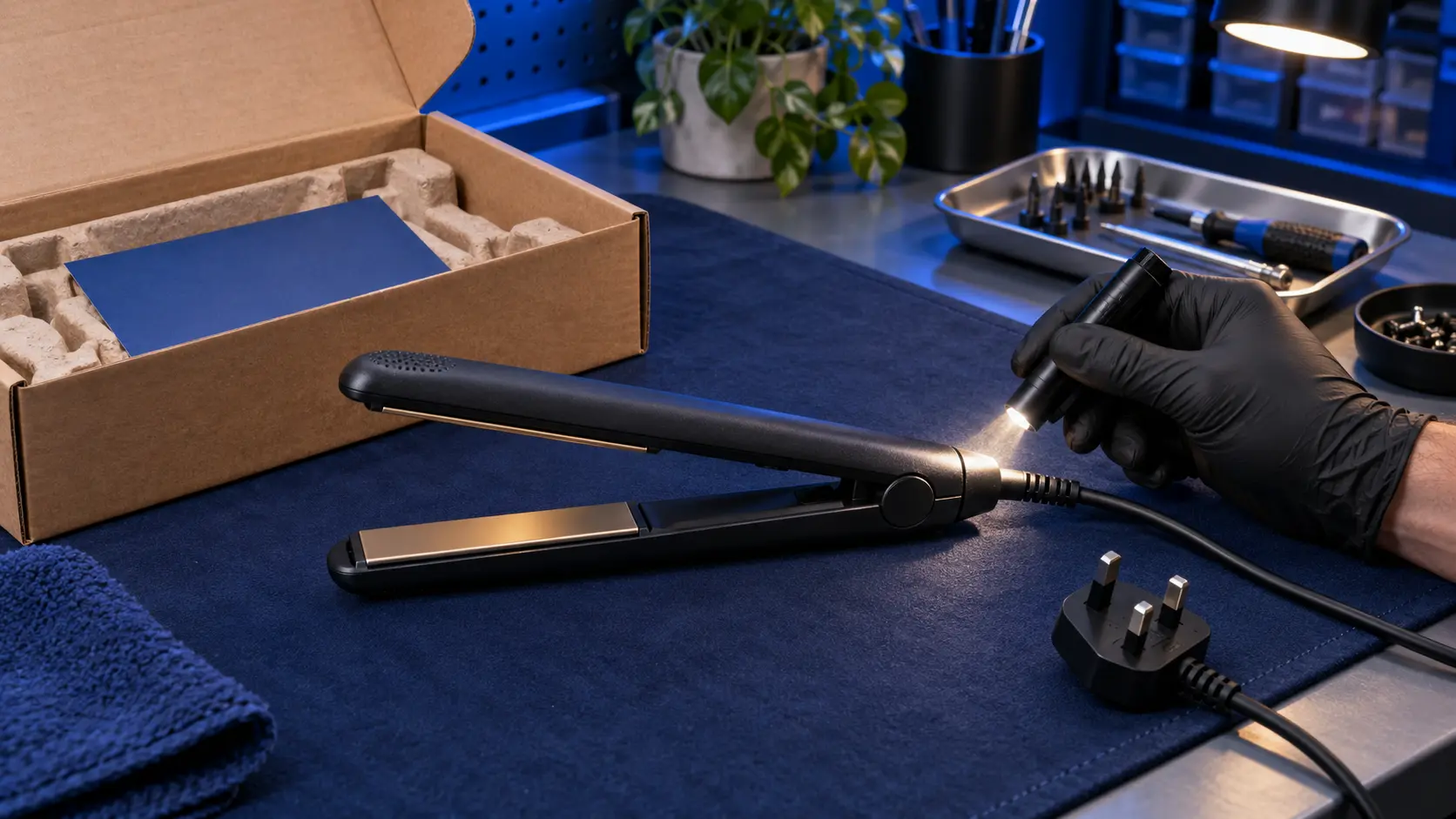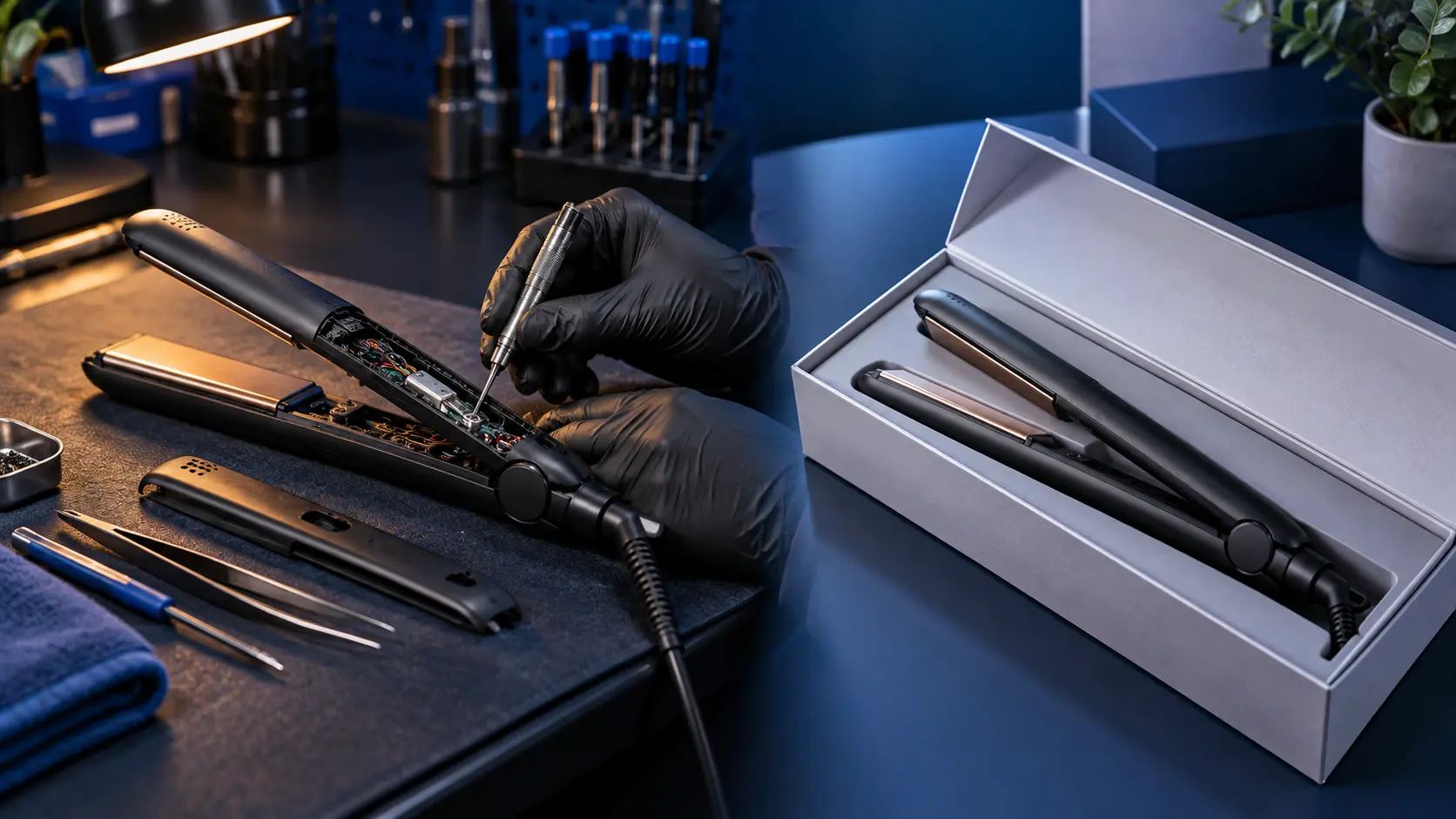
Your GHDs have stopped working, and you're weighing it up: is it worth getting them fixed, or should you just buy a new pair? It's a fair question — and as someone who's been repairing electronics for over 25 years, I'll give you the honest answer rather than just telling you to repair them. Most of the time repairing is the sensible choice, but not always, and it's worth knowing which situation you're in.
The short answer
For the vast majority of GHD faults, repairing is well worth it. A repair typically costs a fraction of a new pair, most faults come down to a single inexpensive part, and a good pair of GHDs is built to last far longer than the one component that's failed. The main exceptions are a couple of specific models that GHD deliberately designed to be unrepairable — more on those below.
The cost comparison
This is usually what it comes down to, so let's be plain about the numbers.
A new pair of GHDs generally costs somewhere from around £100 up to £180-plus for the premium models. A repair with me is a flat £29 all-in for standard models (£39 for Gold, Max and Platinum+) — and that includes the part, the labour, return postage and a full safety test, with no hidden charges.
So you're looking at roughly £29 to fix versus £100-plus to replace. Even if you'd quite fancy an upgrade, it's worth remembering that the straighteners you already own aren't worn out — they've usually just lost one small, cheap component. The plates, the build, the everything-else is still perfectly good.
When repairing makes sense (most of the time)
Repair is almost always the right call when:
The fault is a common one. A GHD that won't heat, cuts out, or only works when you hold the cable at an angle is nearly always a cheap, standard fix (a thermal fuse, a cable, a heater element). These are the bread-and-butter faults and they're very much worth repairing. If yours won't heat, I've explained the three most common causes here.
You like your straighteners. GHDs are a genuine bit of kit, and a lot of people are attached to the pair they've got used to. There's no reason to give that up over a £5 part.
You'd rather not add to the landfill. Too much good gear gets thrown away over a single fixable fault. A repair keeps a perfectly good pair of straighteners in use — which is better for your wallet and better for the planet.
When it might not be worth it (the honest bit)
I'd rather tell you straight than take on a job that doesn't make sense for you. Repair is not the right call when:
You've got a round-button Eclipse or Platinum (S8T261). GHD designed these models so that the internals genuinely can't be repaired — not by me, not by anyone. If the fault is internal, a repair isn't possible. The one thing that can still be done is a replacement mains cable, if the cable is what's failed. I've explained which models this affects and how to identify them here.
The straighteners have serious physical or liquid damage. A single failed component is one thing; a pair that's been dropped in water or badly crushed may be beyond sensible repair. If that's the case, I'll tell you honestly rather than charge you for a lost cause.
That's really the whole exceptions list. If your GHDs simply stopped working one day with no drama, the odds are strongly in favour of a cheap, worthwhile fix.
Why my repair is a safe bet either way
Part of what makes repairing the low-risk choice is how the service works. Every repair I do is backed by a no-fix-no-fee promise — if I can't fix your straighteners, you don't pay for the repair. So there's no gamble in sending them in: worst case, you're no worse off; best case (and by far the most likely), you've got a working pair back for £29.
On top of that, every repair comes with a 12-month warranty against the same fault returning, and everything is heat-tested and PAT safety-tested before it comes back to you. And because I work at component level in-house — I do the actual repair myself, on my own bench — I can fix faults that some shops won't attempt.
The bottom line
For a standard, repairable GHD with an everyday fault, repairing is almost always worth it: around £29 versus £100-plus, a good pair kept out of landfill, and no risk thanks to the no-fix-no-fee promise. The only real reasons not to are the unrepairable Eclipse/Platinum models or serious damage — and if you're in one of those situations, I'll tell you straight.
Not sure whether yours is worth fixing? You can see all the GHD repairs I offer here, or book a repair and I'll send simple instructions for posting your straighteners in. If it turns out it's not worth repairing, I'll let you know before any work is done.
The Repair Works is an independent UK repair service, run by me, Paul — 25 years of hands-on repair experience, working by post for customers across the whole country. Not affiliated with or endorsed by GHD.