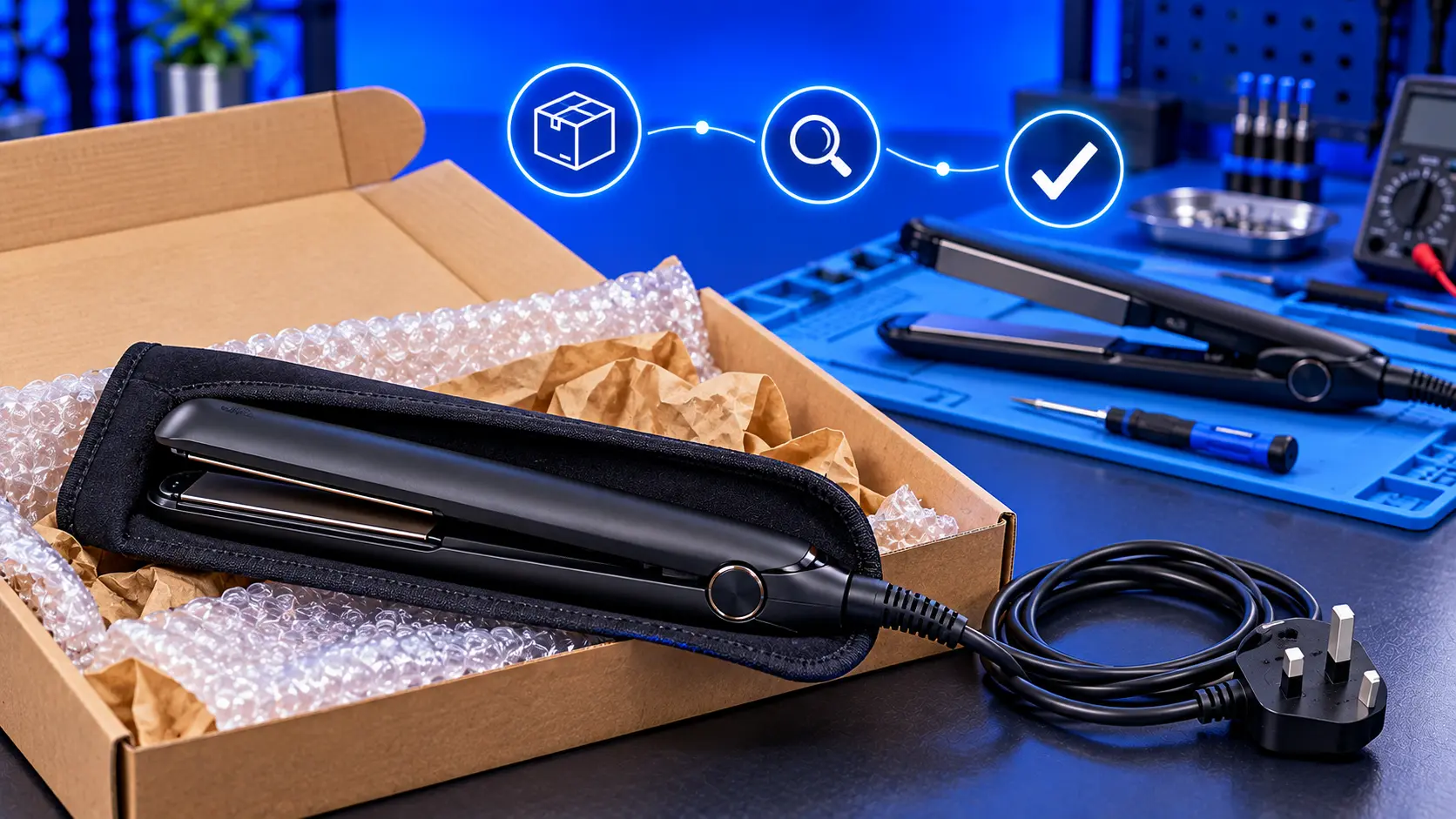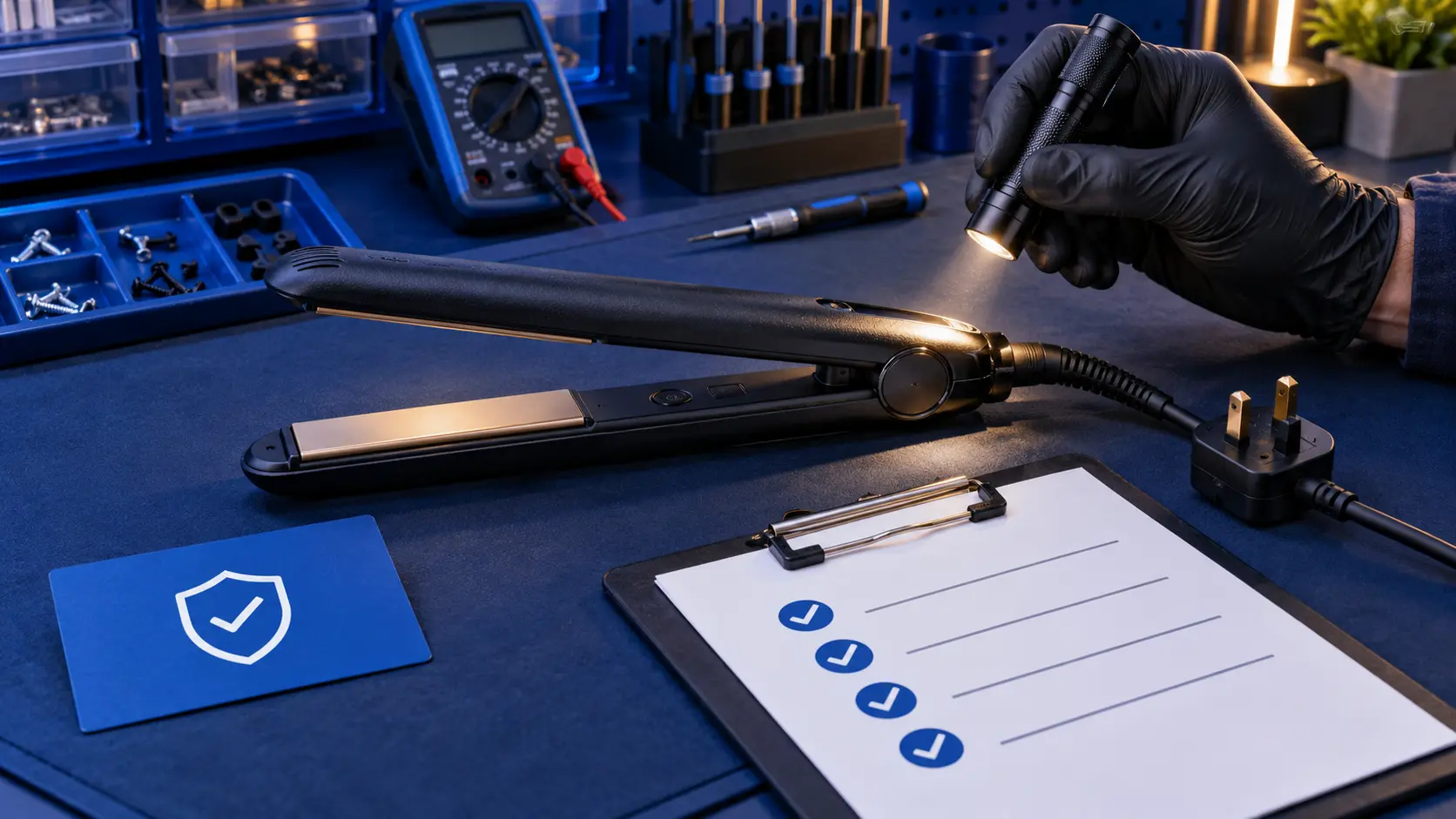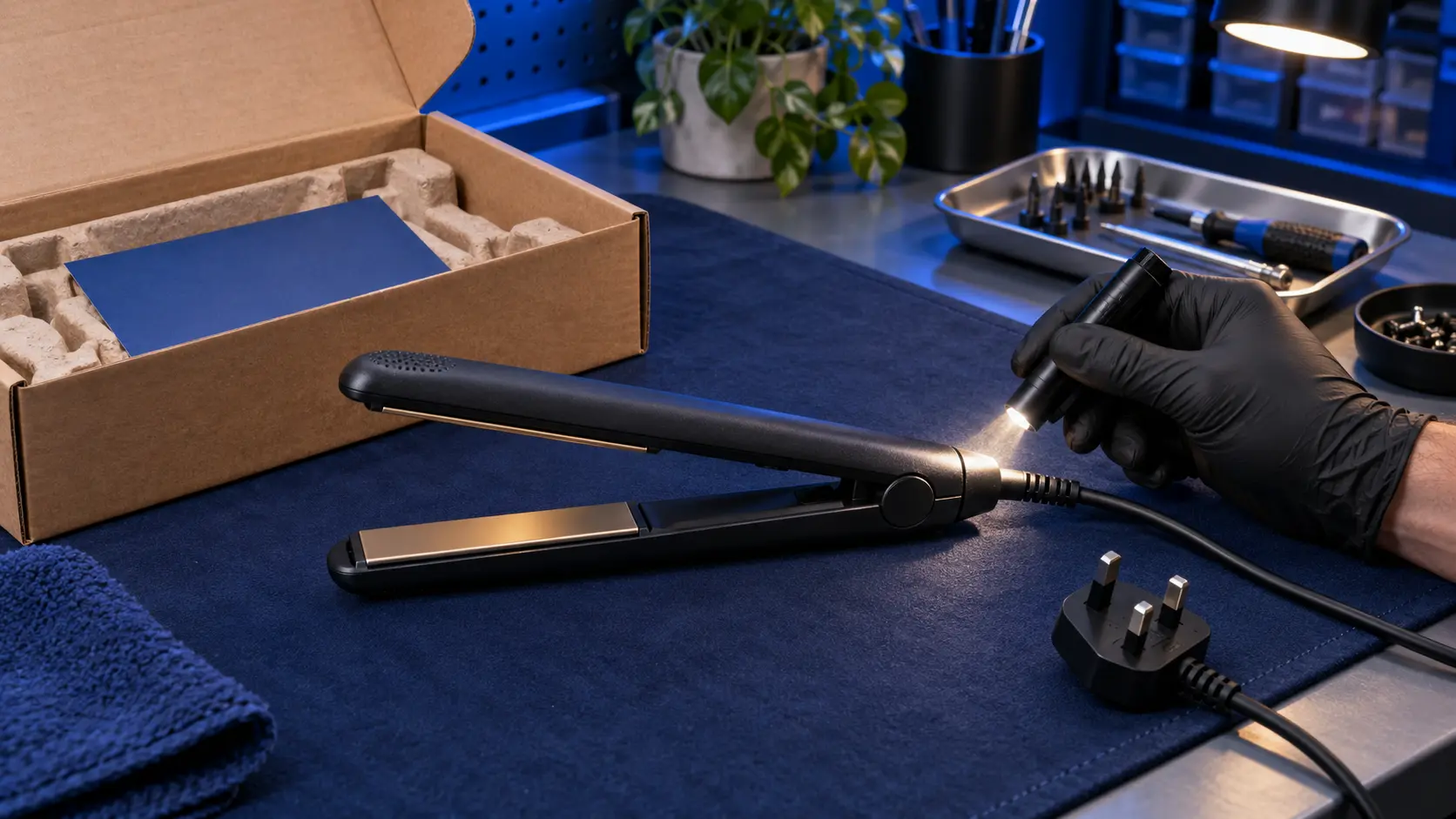
A good pair of GHDs is built to last many years — but how long they actually last has a lot to do with how they're treated day to day. As someone who's been repairing electronics for over 25 years, I can tell you that most straightener faults aren't down to bad luck or poor manufacturing — they're down to everyday wear that a few simple habits would prevent. So here are the care tips that genuinely make a difference, starting with the single most important one.
1. Look after the cable (this is the big one)
If you take away one thing from this whole article, make it this: the cable is the number-one cause of GHD faults, and the number-one thing you can protect.
The damage happens where the cable flexes near the iron. Every time you wrap the cable tightly around the hot plates to put your straighteners away, you're bending and stressing that spot — and over months and years, the thin wires inside fatigue and break. That's what causes straighteners to cut out, only work at a certain angle, or die completely.
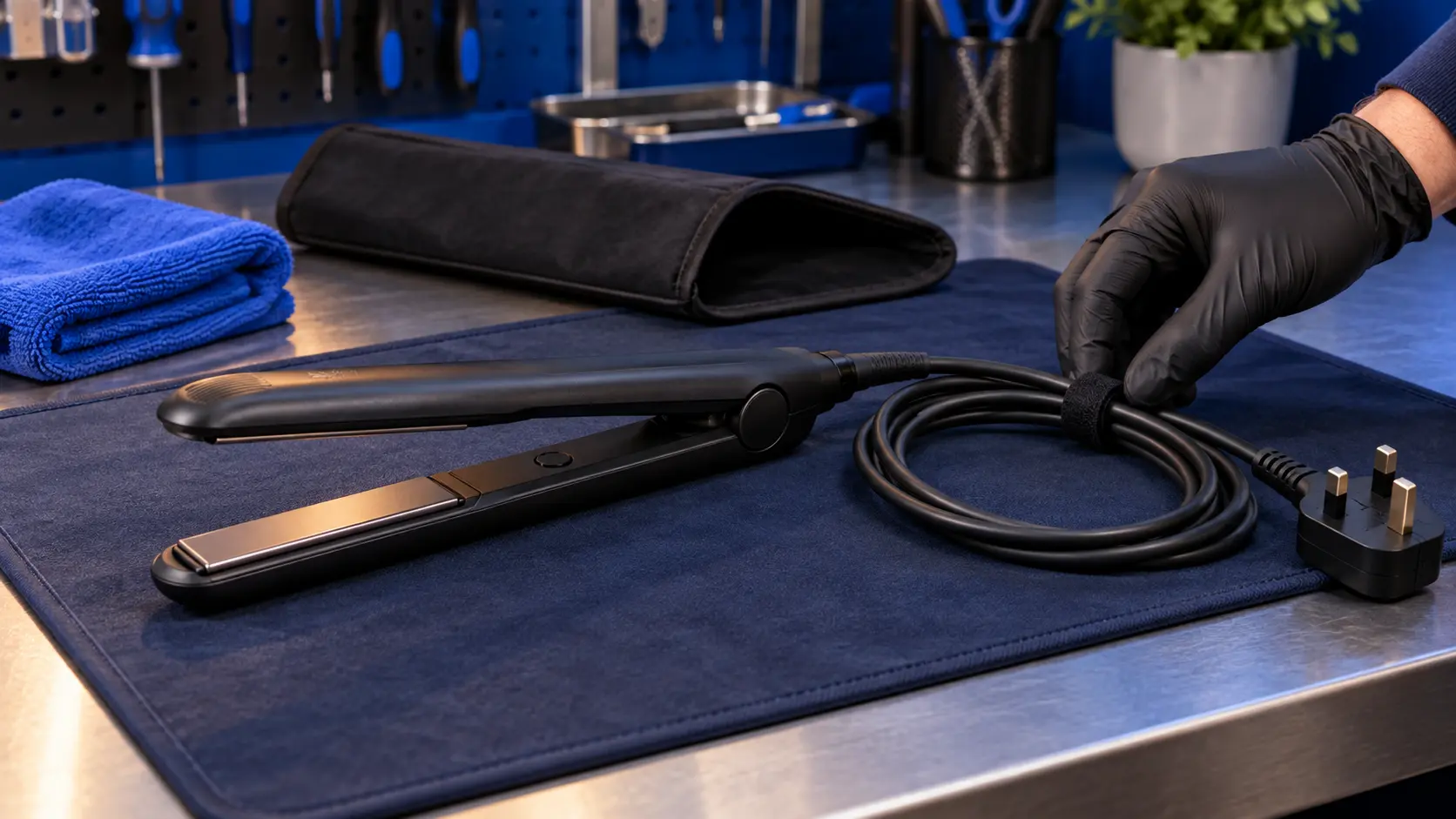
The fix is simple: don't wrap the cable tightly around the straighteners, especially while they're still warm. Let them cool, then loop the cable loosely — or better, coil it gently on its own without wrapping it round the body. This one habit prevents one of the most common GHD repairs. I've written more on how cable faults happen in my guide to GHD cable problems, and there's a dedicated guide to storing and wrapping them properly.
2. Let them cool before putting them away
Beyond the cable, putting hot straighteners straight into a drawer, bag or heat-proof pouch traps heat against the components and the cable, and stresses everything unnecessarily. Give them a few minutes to cool down after use before you put them away. It's a tiny wait that saves a lot of wear.
3. Use the auto-shutoff — but don't rely on leaving them on
GHDs have an automatic shut-off for safety, which is brilliant — but repeatedly leaving them on to time out, every single use, means they're running hot far longer than needed. Switching them off when you're done reduces the total heat cycles the components go through over their life. (And it's safer.)
4. Keep the plates clean
Baked-on product doesn't just dull the plates and drag on your hair — a thick build-up can affect how evenly they heat and make them work a little harder. A gentle wipe every week or two keeps them in good shape. There's a right and a wrong way to do it (abrasive cleaners wreck the plate coating), which I've covered fully in how to clean GHD straighteners.
5. Store them somewhere dry
Moisture is an enemy of electronics. Storing straighteners in a steamy bathroom, or somewhere damp, over months and years isn't ideal — humidity can work its way into the electrics and contribute to faults. A dry drawer or cupboard is far kinder to them than a damp windowsill or shower shelf.
6. Don't yank the plug — and mind the socket
When unplugging, pull the plug itself, not the cable — tugging the flex adds to the very cable stress that causes faults. And avoid trapping the cable under the straighteners or in a drawer where it's pinched.
7. Handle the temperature honestly
Most modern GHDs run at an optimum styling temperature by design, and that's fine — but if you've got a model with settings, there's no benefit to always blasting the highest heat "to be quick". More heat means more thermal stress on the components (and more damage to your hair). Using an appropriate temperature is kinder to both.
8. Don't ignore early warning signs
This one's about catching small problems before they become big ones. If your straighteners start to cut out occasionally, feel loose at the hinge, take longer to heat, or make an unusual noise, don't just push through it. Those are early signs of a developing fault, and dealing with them early is almost always cheaper and easier than waiting until they fail completely — and in the case of anything electrical (cutting out, buzzing, a burning smell), continuing to use them can be a safety risk.
The honest truth about GHD longevity
GHDs are genuinely well made, and with a bit of care — above all, kindness to the cable — a pair can easily last a decade or more. The common faults are largely preventable ones: cables broken by tight wrapping, moisture damage from damp storage, plates worn by harsh cleaning. Treat them gently and they'll reward you with years of service.
And if a fault does develop despite your best care — as it eventually might on any well-used device — it's almost always a single inexpensive component rather than the end of the road. A repair keeps a good pair going for a fraction of the cost of replacing them, which is rather the point of looking after them in the first place.
If your GHDs ever need attention, you can see the GHD repairs I offer here — but for keeping a healthy pair healthy, these simple habits (and a gentle touch with that cable) will take you a very long way.
The Repair Works is an independent UK repair service, run by me, Paul — 25 years of hands-on repair experience, working by post for customers across the whole country. Not affiliated with or endorsed by GHD.