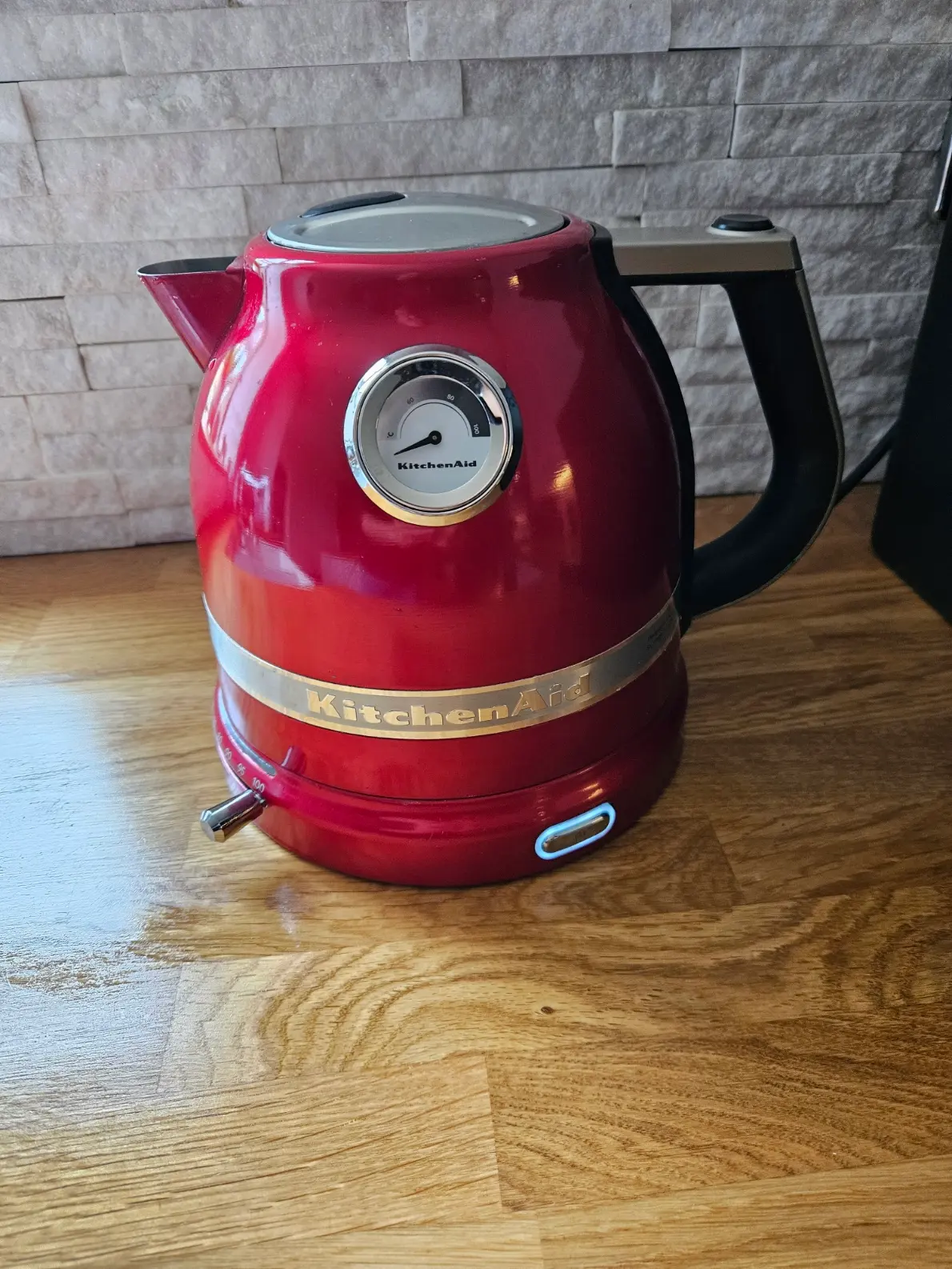
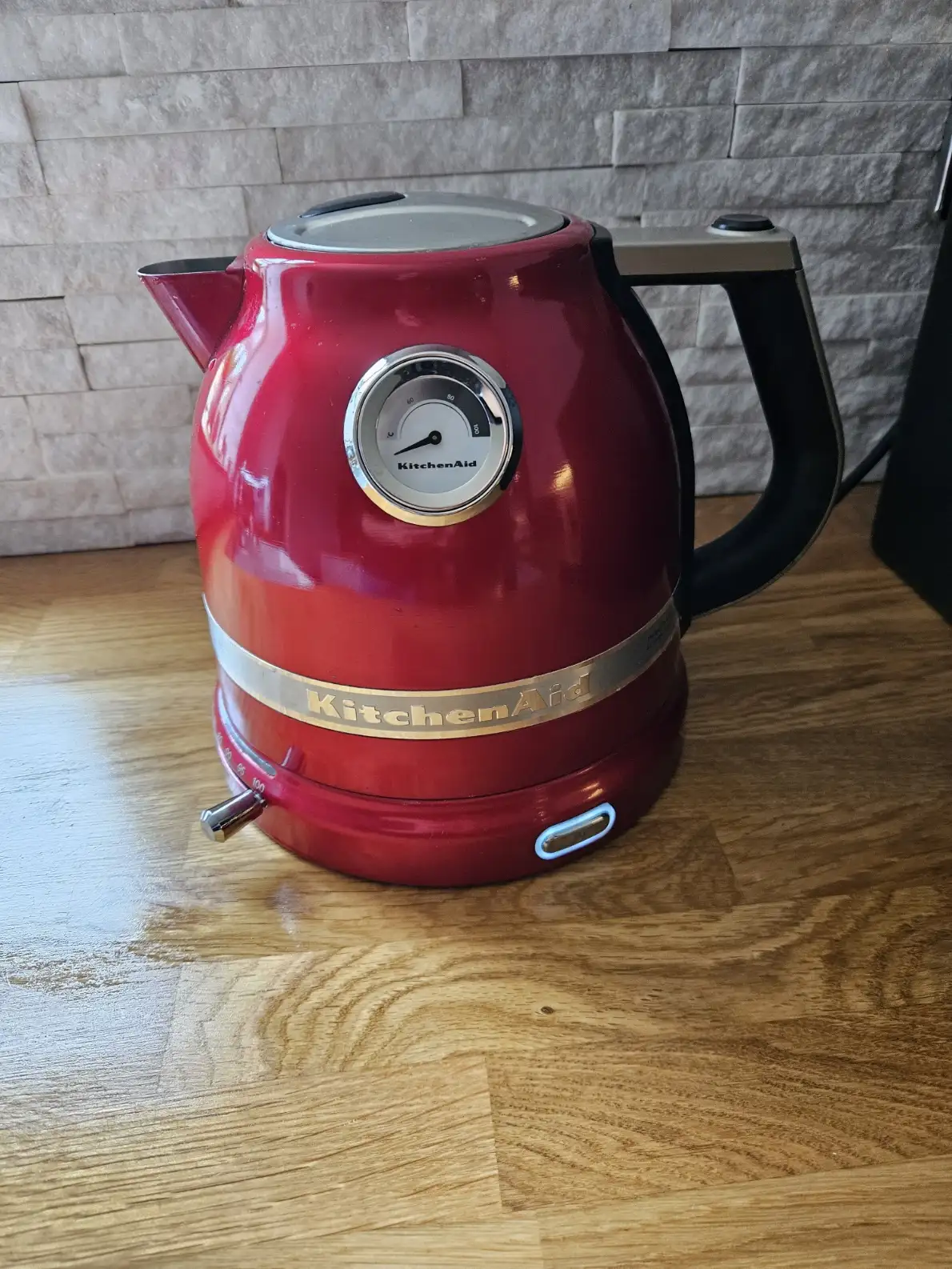
My own KitchenAid kettle developed a fault recently. It's the red Artisan with the temperature dial, model 5KEK1522. It's been in daily use for about ten years without a moment's trouble, which says a lot about how well these kettles are built. When I switched it on, it made a crackling, snapping sound from where the kettle sits on its base. It still boiled, but that sound is an electrical warning, not a quirk. So I opened it up on the bench to find out what was going on.
The cause turned out to be simpler than I expected, and it's a good example of why it's worth checking before you replace anything.
Crackling while boiling, or crackling at the base?
Not every crackle from a kettle is the same, and the difference matters.
- Crackling or popping from inside the kettle as the water heats up is usually limescale on the heating element. In hard-water areas, mineral deposits build up on the element, and water trapped underneath boils in tiny bursts. It's usually harmless, and descaling the kettle usually quietens it down.
- Snapping or crackling from where the kettle sits on its base, especially the moment you switch it on, is electrical. That's what mine was doing, and it isn't something to live with.
If the noise is coming from the base rather than the water, or you ever see sparks or smell burning, treat it as electrical and read on.
What the crackling means
A kettle draws a lot of current, around 13 amps for a 3kW kettle like this one. All of that passes through the connector between the kettle and its base: a set of spring contacts in the base, and matching rings on the underside of the kettle.
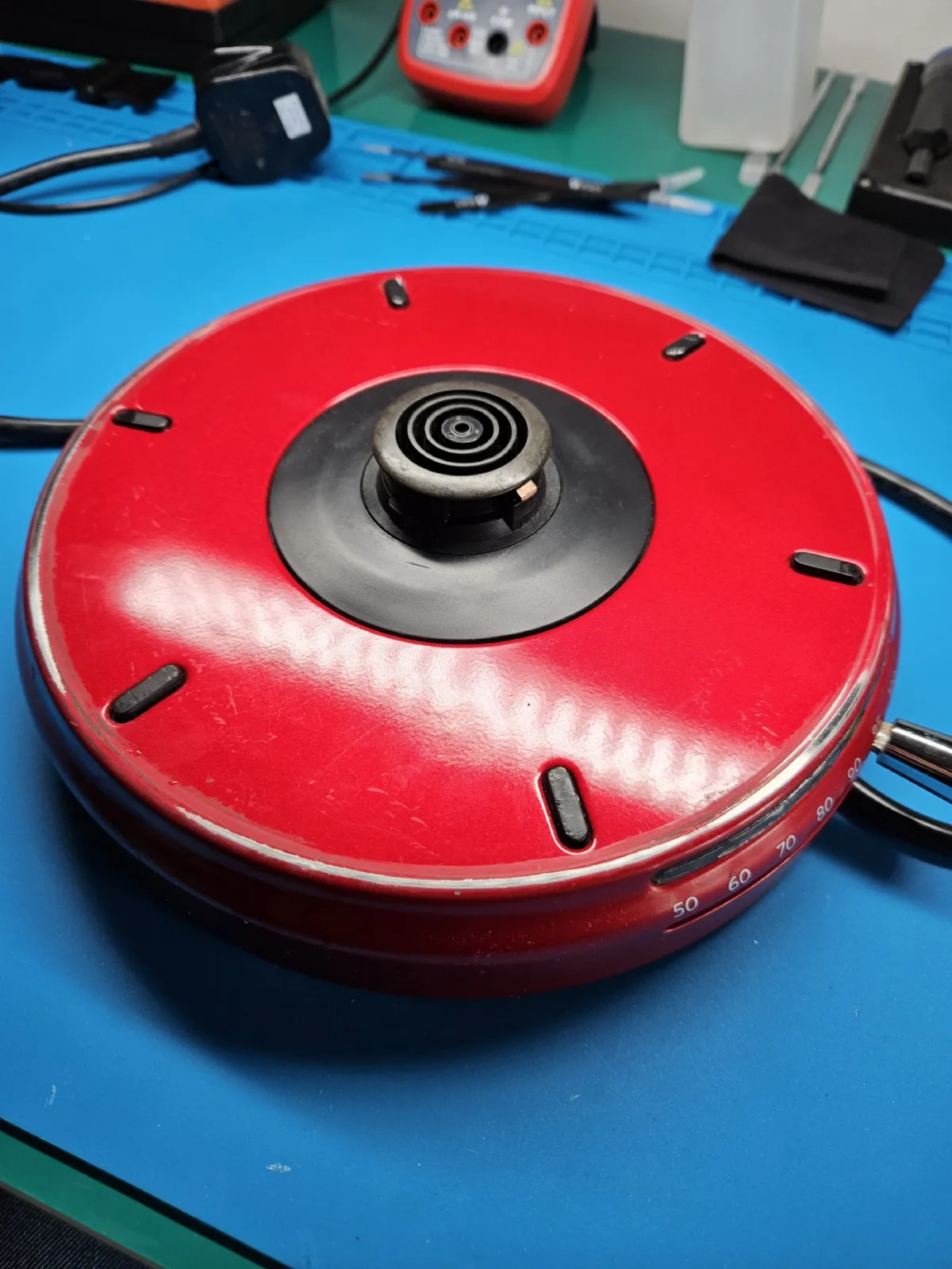
When those contacts are clean and pressing firmly together, the current flows quietly. When something gets between them, the current jumps the gap in tiny sparks. That's the crackling you hear. It's called arcing, and it's the part that matters: every spark leaves a little carbon behind, the carbon makes the connection worse, and a worse connection causes more sparking. Left alone, it gets hotter and worse until the plastic around the contacts can start to melt.
So if your kettle crackles, buzzes or snaps on its base, stop using it and unplug it, even if it still boils.
What I found inside mine
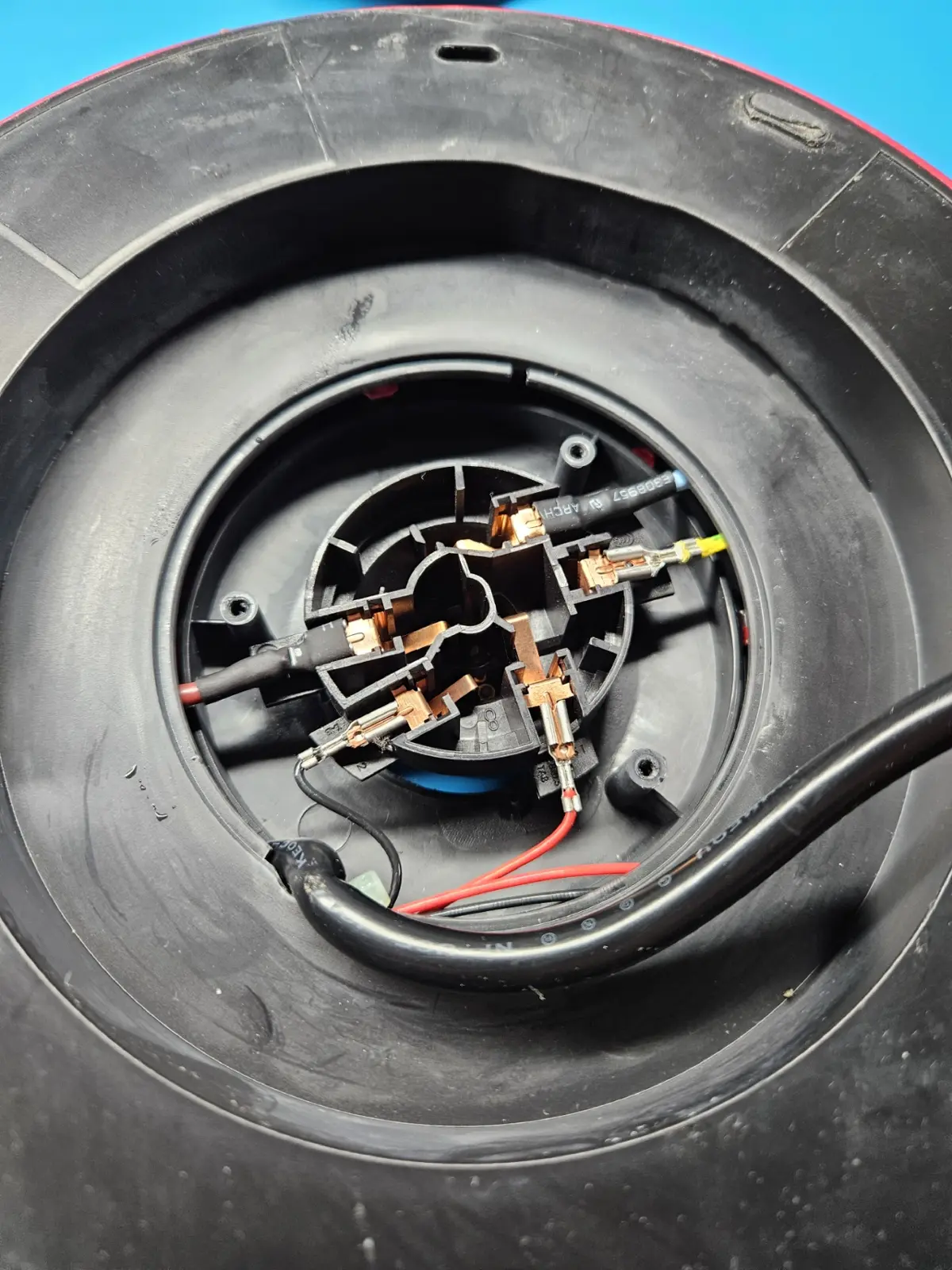
The base of this kettle uses a Strix connector, a P76C1. Strix makes the connectors in a large share of the UK's kettles. Because the KitchenAid has a temperature dial in the base, it's a multi-contact connector rather than the simple three-contact type in a basic kettle.
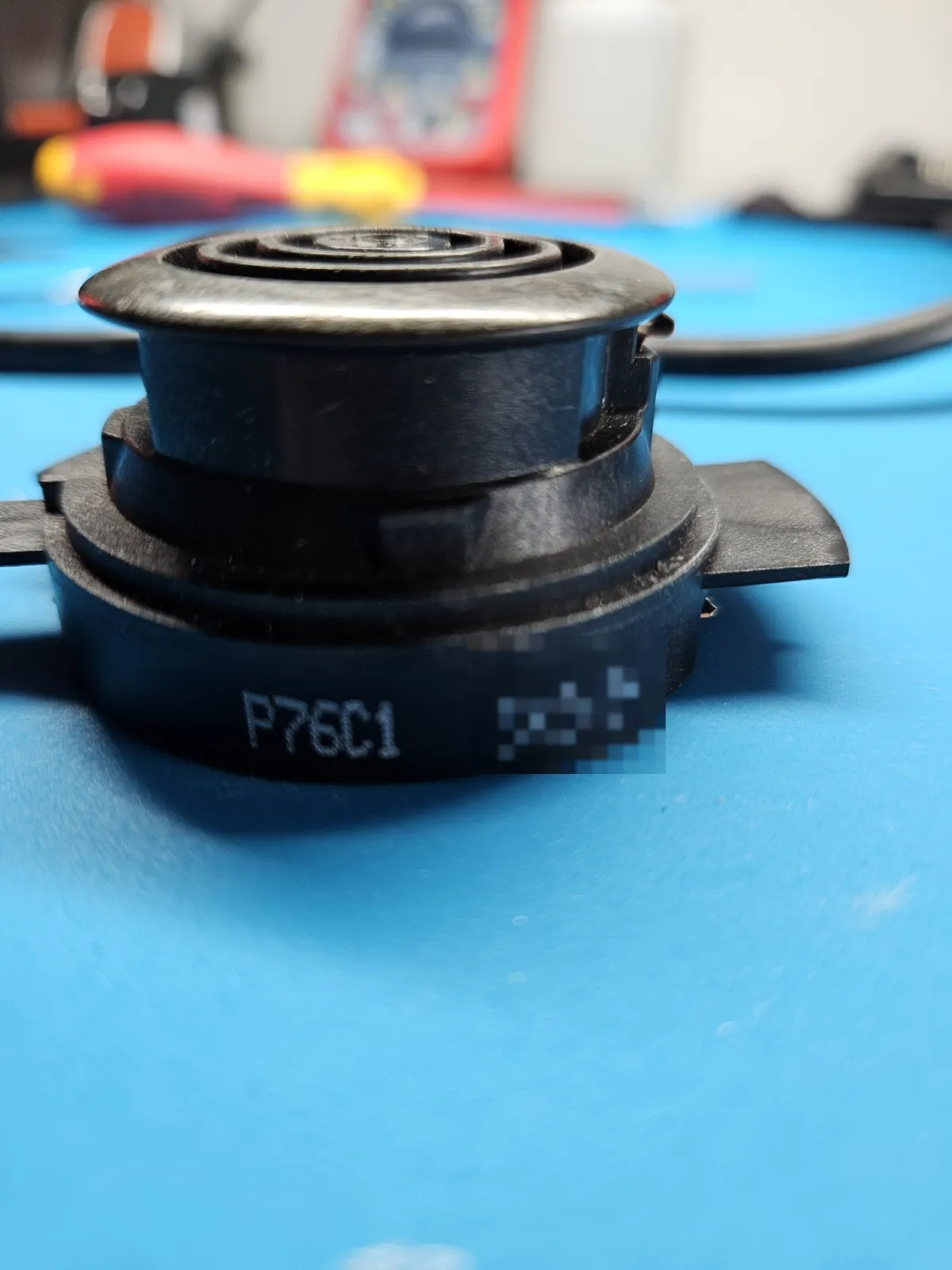
Once the base was open, the problem was obvious. The contacts had a layer of carbon built up on them from arcing, enough to stop them making a clean connection. There was no pitting, no melting and no heat damage to the plastic, just carbon.
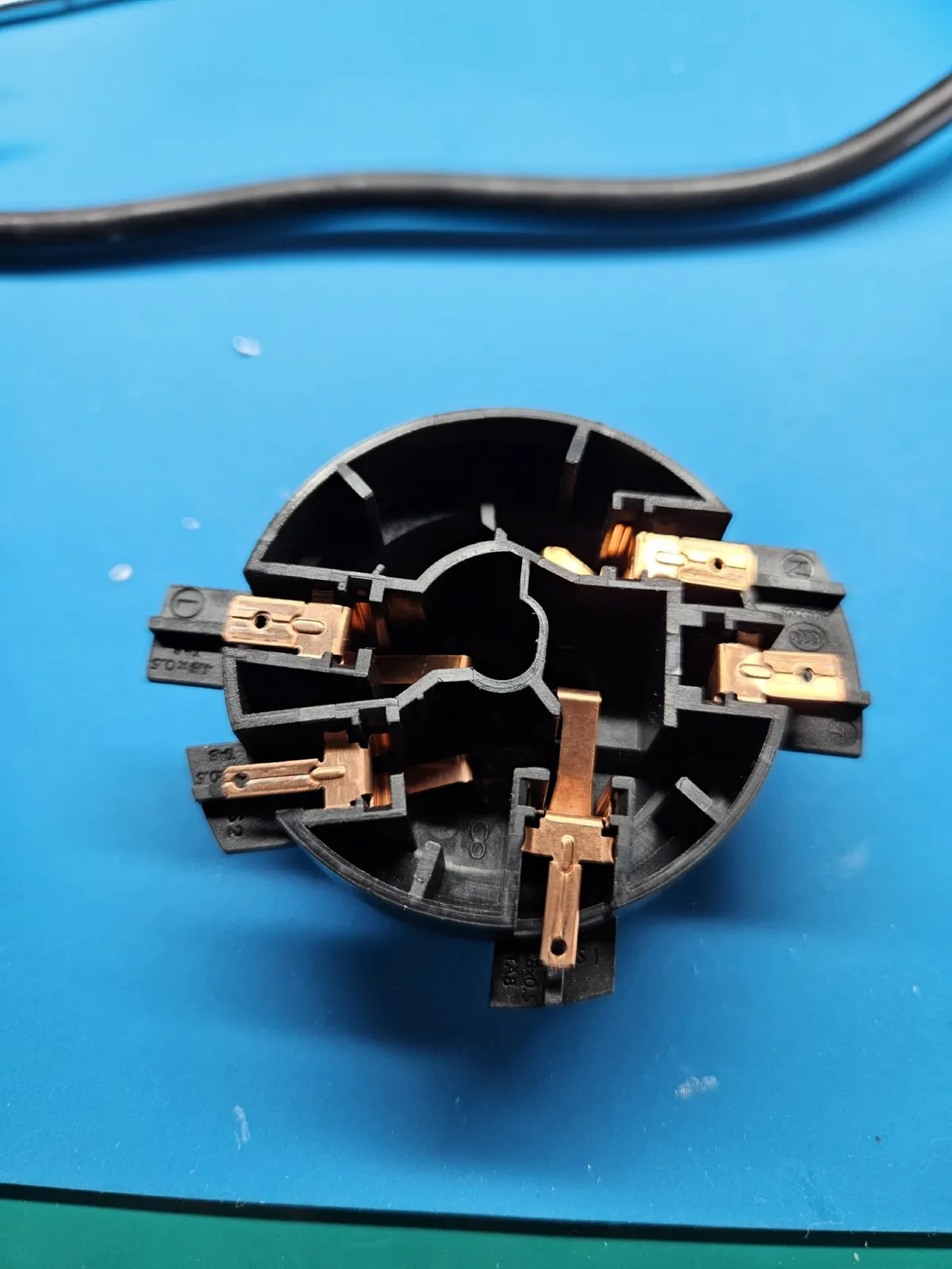
That matters because it meant the connector wasn't broken. It needed cleaning, not replacing.
How it was fixed
I cleaned the carbon off the contacts with a fine abrasive, then finished them with contact cleaner to leave a clean metal surface. With the contacts clean and the kettle reassembled, I PAT tested it to make sure it was electrically safe before using it again.
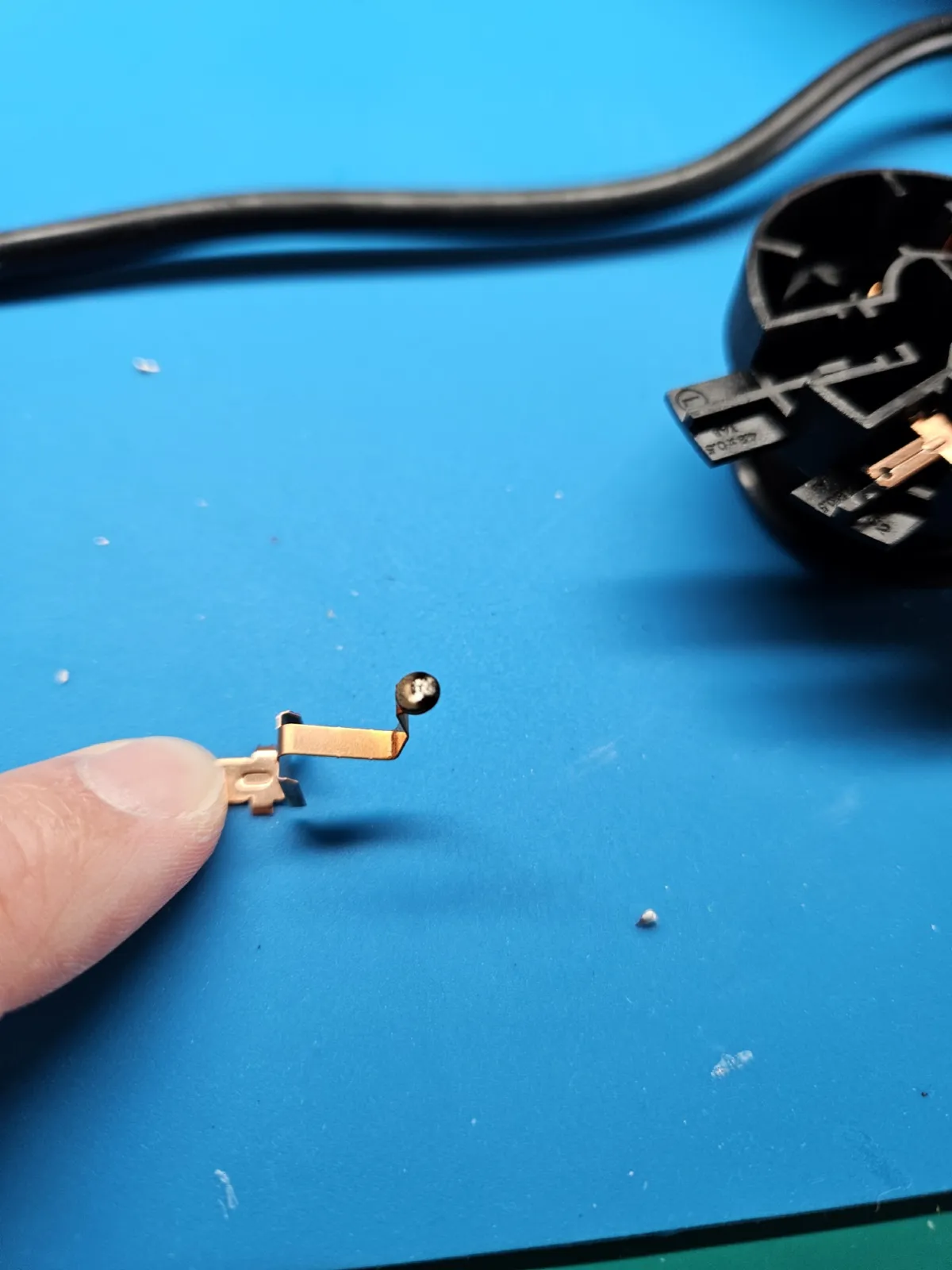
The crackling stopped completely. The whole job took about half an hour, with no parts needed.
I'm deliberately not giving step-by-step instructions for opening the base. A kettle is a mains appliance that sits next to water, and a mistake in reassembly can make it dangerous. If you're not confident with mains electrical work and safety testing, this is a job for someone who is.
Clean or replace?
Cleaning works when the problem is surface contamination, like the carbon on mine. It isn't the answer when the connector itself is damaged. The connector should be replaced if you see:
- Melting or deformed plastic around the contacts, in the base or on the kettle
- Severely pitted, burnt or eroded metal on the contacts, rather than a surface layer that cleans off
- Scorch marks or a burning smell
- Loose or weak spring contacts that no longer press firmly
If a connector does need replacing, fit a genuine part of the correct type, and replace both halves, the base and the kettle side, together. Arcing damages both, and a new half against a worn half tends to start the problem again. The part number is printed on the connector itself, which is why it's worth checking before you order anything. Generic connectors sold online are not all the same shape, rating or contact count, and a multi-contact KitchenAid base won't take a basic three-contact part.
Why it happens
Carbon builds up on kettle contacts over time, and a few things speed it up:
- Lifting the kettle off the base while it's still switched on. Breaking the connection under load causes a spark.
- Spills and steam around the base, which leave residue on the contacts
- Limescale and grime working their way into the connector
- Weak spring contacts as the kettle ages
Letting the kettle switch itself off before lifting it, and keeping the base dry and clean, both help.
A note on the KitchenAid recall
You may come across a KitchenAid kettle recall when searching for this problem. That was a 2018 recall of the 5KEK1722 model, for a handle that could come loose. It's unrelated to crackling bases, and it doesn't cover the 5KEK1522. If you have a 5KEK1722, check whether yours was part of it.
Is it worth fixing?
A KitchenAid Artisan kettle isn't cheap to replace, and it's built to last. Mine had given about ten years of daily use before this first fault. A crackling base is often a small fault like mine: dirty contacts, or a connector that can be replaced for far less than a new kettle. The one thing not to do is carry on using it while it crackles.
Need a hand?
I'm Paul, and I run The Repair Works, a UK mail-in repair service. I don't list kettle repairs as a standard service, but if your KitchenAid kettle is crackling or has stopped working and you'd rather not open it yourself, get in touch and tell me the model and what it's doing. I'll let you know honestly whether it's worth repairing.
My recommendation
Treat a crackling kettle base as a warning and stop using it until it's checked. On my Artisan 5KEK1522, the cause was carbon on the contacts, and a careful clean fixed it in half an hour with no parts. If yours shows melting, burning or badly damaged contacts, the connector needs replacing, both halves, with the correct genuine part. Either way, it's usually a much smaller job than buying a new kettle.
The Repair Works is an independent UK repair service, run by me, Paul — 25 years of hands-on repair experience, working by post for customers across the whole country. Not affiliated with or endorsed by KitchenAid.